post

Siyadat of Abdul-Qadir Al-Gilani

Question 281: Salaam to everyone! Can u plz answer the following question? From which imam (as) do the Galani sayeds descend from? Jzk everyone.

Answer 281: Abdul-Qadir ibn Abi Salih Musa ibn Abdullah ibn Al-Gilani titled Muhyiddin (the Reviver of the Religion)[1] was born in the north of Iran. He grew up in Baghdad and was buried there.[2] According to Qamoos al-A’laam wa Tabaqat of Sha’rani, Abdul Qadir Gilani was a descendant of Imam Hasan Mujtaba (a.s), thus he was a Hasani Sayed.[3] He is one of the sixth century mystics and a controversial personality of the Islamic world. He was born on a Wednesday the 10th Rabi at-Thani in 471 AH, 1077 AD, and died on Saturday night 1166 (8th Rabi’ al-Awwal 561AH) at the age of ninety years (by the Islamic calendar), and was entombed in a shrine within his Madrassa in Baghdad.[4]

At the youth age he went to Baghdad (488 A.H.),[5] where he pursued the study of Arabic with Abu Zakariya Razi.[6] Al-Gilani received lessons on Hadith and Fiqh from Abu Sa’d al-Mubarak bin Ali bin al-Hussain al-Mukharrimi al-Baghdadi.[7]

He also learned the mystical order from him.[8]

Some works in jurisprudence and legal theories are ascribed to him namel: “Bashaerul Khairat (Glad-tidings of Good Deeds)”; “Al-Ghunya li-talibi tariq al-haqq wa al-din (Sufficient Provision for Seekers of the Path of Truth and Religion)”, “Al-Fath ar-Rabbani (The Sublime Revelation)”, “Malfuzat (Utterances)”, “Futuh al-Ghaib (Revelations of the Unseen)”, “Al-Fuyuzat al-Rabbaniyah fil Awrad al-Qaderiyah”, “Adab al-Suluk wat-Tawassul ela manzil al-Muluk” and a “Collection” of his poems which is known as “A Collection of Ghaus-e A’azam’s Poems”.[9]

Ibn-e Arabi has made mention of Abdul Qadir Gilani’s name in many of his works with respect and dignity.

His Sufi order named after him is generally thought to be one of the most renowned Sufi orders of the Islamic world. He himself enjoyed a special place in the chain of Sufi orders.

Finally, in reply to your question about his relation with Imam Sadiq (a.s.), we must say that historically there is a huge time gap between him and the Imam; he lived very much after the period of the Imam (a.s.). Therefore, the allegation that he opposed Imam Sadiq (a.s) is untrue and baseless.

Note: Unfortunately, there is not enough reliable sources about Abdul Qader Gilani! That’s why we see many different opinions about Him.

According to the Book History of Sufism (Vol. 1, Pg. 168), He was a follower of Ashari Aqeedah (opinion) in Usul al-Deen and a follower of Hanbali and Shafi’i in Furu al-Deen.

For further information in this regards, please refer to the following answer:

Index: The difference between Sayyid and Mirza, answer 562.

Index: Zakat and difference between Sayyid and non-Sayyid holms, answer 040.

[1] . Ali Akbar Dehkhuda, Dehkhuda Dictionary, Vol.10, (Shams Abad, Ali), p.15713, Tehran University Printing and Publication Institute, 2nd edition of new edition, 1998.

[2] . Martyr Mutahhari Collection of Works, vol.14, pg.570, vol.23, pg.57, Noor Software Program.

[3] . Dehkhuda Dictonary, vol.10 (Shams Abad Ali) p.15713.

[4] . Muhammad Ma’sum Shirazi, Taraequl Haqeq, (edited by Muhammad Ja’far Mahboob), vol.2, pg.32, Sinai Publications, 2nd edition.

[5] . Abdul Qadir Gilani, Futuhul Ghaib, pg.10, Darul Hadi Publications, Beirut, 1428 A.H. – 2007.

[6] . Dehkhuda Dictionary, vol.10, (Shams Abad ali), pg.15713.

[7] . Futuhul Ghaib, pg.10. ibid.

[8] . Taraequl Haqaeq, vol.2, pg.362, ibid.

[9] . Dehkhuda dictionary, vol.10 (Shams Abad Ali) p.15713.

post

keeping or hanging pictures ascribed to the Imams

Question 144: What is the Shia view on religious and non-religious pictures (like for creative arts or illustration)? What about depictions of the Prophets (saws), and Imams (a.s)? I want to know the permissibly of these things, as well as whether they are liked or makrooh.

Answer 144: The religious authorities’ (grand jurists) answer in this regards: As per the Islamic law, there is no problem to keep or hang those pictures which are ascribed to the Infallible Imams (a.s) and the Holy Prophet (pbuh) in our houses or Hussainiyah, if it is not considered desecrating or disrespectful according to Urf (custom) nor opposed to the status of them.

According to Ayatollah Sistani, If it does not involve desecration of them, there is no problem.

Note: The jurists have said: Offering prayers is makrooh (abominable) at certain places including “facing the picture or statue of living creatures, unless it is covered. It is makrooh to offer prayers at a place where there is a picture, even if it may not be placed in front of the person who offers prayers”.[1]

For further information in this regards, please refer to the following answer:

Index: Rules on drawing according to Islam, answer 226.

[1] . Ajwabat al-Istiftaat (Answers to Religious Queries), vol.2, pg. 38. Tauzihul Masail of Sayyid Roohollah al-Moosavi al-Khomeini (with connotation), vol.1, issue No.898.

post

Egyptian Pharaohs / List of pharaohs

Question 246: https://www.youtube.com/watch?v=wfpnULtcLvA. Salaam Alaikum,I came across this video on the internet, can you please help answer the questions raised?

A book was written by the Egyptologist concerned, but I have not gone through it. I simply do not know, my knowledge is very weak regarding ancient egypt. Also there is a biblical history, and I don’t know ANYTHING about the bible

I want to know firstly who that Pharoah was Ramses or his son. Secondly I want to know if the objections raised are founded.

Answer 246: The dynasties of the Egyptian Pharaohs were 26 in number.[1] They had the power for about three thousand years. The most famous Pharaohs were as under:

  1. A) Sanan: who was at the time of Abraham (as).[2] B) Ubayd b. al-Rayyan b. al-Walid, at the time of Hadhrat Yousef. C) Qaboos bin Mus’ab, who was contemporary with the birth of Hadhrat Moses (Musa). D) Walid bin Mus’ab or Walid bin Qaboos, the Pharaoh of the time of Musa when He exited.[3]

In the Holy Quran the word Pharaoh was mentioned 74 times. There has not mentioned in any verses of the holy Quran saying any name of Pharaoh of the time of the Prophet Musa (as), however, according to other sources we ought not to accept nor to reject, it is said the Ramesses II, the son of Seti I was the one who were contemporary with the Prophet Musa (as).[4]

Note: According to the ‘Ask Shia’ Inquiry Guidelines (N 3, 5 and 9) I cannot prepare a detailed answer in this regards.

Considering that I am unable to guarantee the validity of the following information regarding “Ramesses II and his father”, please refer to the following links:

(https://en.wikipedia.org/wiki/Seti_I)

(https://en.wikipedia.org/wiki/Ramesses_II)

(https://en.wikipedia.org/wiki/List_of_pharaohs)

For further information in this regards, please refer to the following answer:

Index: First idol worshiper, answer 006.

[1] . Al-Tahqiq fee Kalemat al-Quran al-Karim, Vol. 9, Pg. 65.

[2] . Atyab al-Bayan fee Tafseer al-Quran, Vol. 10, Pg. 202.

[3] . Aa’lam al-Quran (Shabestary, Abdul Hussain), Pg. 783.

[4] . Comparing between the Bible, Quran and knowledge, translator: Mahmood Noor Muhammadi, Pgs. 319 – 320.

post

Returning Fadak to Imam Hasan and Hussain (pbuth)

Question 244: Why didn’t Imam Ali (as) give Fadak to Imam Hassan (as) and Hussain (as)?

Answer 244: “Fadak” was a thriving and flourishing village located near Khaybar, 140 kilometers from Medinah. In the seventh of hijrah, the fortresses of Khaybar were conquered one after another and the central power of the Jews was overthrown. The residents of Fadak surrendered and promised to give the prophet (pbuh) half of their lands and orchards on condition of no fighting and keep the rest for themselves. In addition, they accepted to do the farming of his lands for a wage. Read More

post

Disownment by parents / How to deal with them

Question 280: I know we are to be kind and compassionate to our parents and to see after them in their old age, I moved my parents in with me in 2009, my dad passed in 2010, and my mom remains with me, she has now gotten to a point where she needs more than I can provide is it permissible for me to find a quality nursing home to place her in? What does Islam say about Disownment by parents?

Answer 280: Disownment by parents means to do an act that would make them angry, cause them distress and injure their feelings. Certainly, hurting one of them also causes the child to be disowned.[1] Although parents enjoy special respect in all religions and cultures, Islam has enumerated, over and above to the rights considered by other religions, a wide range of moral rights for the parents. The rights considered by Islam for the parents are so extensive that even hurting them is regarded as a kind of violating their rights. In addition to the moral rights, Islam has considered a number of jurisprudential rights for the parents which a child should uphold and fulfill. For example, if a child’s parents are needy and helpless, it is obligatory on him to take care of them and pay for their maintenance (food, clothing and medical expenses).

There are different interpretations relating to the parents’ rights on the child. For example, God, the Exalted, says:
“And your Lord has commanded that you shall not serve (any) but Him, and goodness to your parents. If either or both of them reach old age with you, say not to them (so much as) “Ugh” [fie] nor chide them, and speak to them a generous word.”[2]

As it is clear from the above verse, in addition to belief in God and not ascribing any partners to Him, God, the Exalted, has commanded us to be kind to our parents and not to cause them distress by even using a word of contempt while talking to them. Although the narrations have counted disownment by the parents as one of the great sins[3], they have not fixed any limits for it in the same way as the Quranic verses. The narrations simply state that causing distress and discomfort to the parents is forbidden.[4]

Hence, therefore if an action causes distress to the parents, it can be considered as a criterion for violating parents’ rights. [5]If a child disagrees with his parents on some matters which cause them distress, he has provided the means for his disownment by his parents. However, sometimes disagreeing with parents or disobeying them is not severe to the extent that may cause them distress, in this case it is better for him to act in accordance with their opinion.

Yes, there are various cases which are not considered to be a part the child’s obligation to obey his/her parents. For example, if a man’s parents order him to do an act which is against the divine command or religious and Islamic law, it is not necessary for him to obey them. This disobedience does not cause the child to be disowned.

Therefore, we can conclude that the criterion with respect to the parents’ rights is to fulfill their demands to the extent that not doing them does not morally cause them distress and discomfort and that their orders should not involve doing a religiously forbidden act or avoiding an obligatory one. Certainly, there are certain acts which are not obligatory but it is better, not wajib, to get the parents’ consent in them. In order for a person to know the Islamic viewpoint about each case, one should refer to his own Marja’ (the religious authority whom he follows) and act according to his fatwa (verdict).

As a result, if it is possible for you to see after her at your house you are supposed to satisfy her as much as you can. Otherwise, if it is better for her to be at the nursing home and you are sure such act wouldn’t make her angry, cause her distress and injure her feelings there would be no problem to do so.

[1] . Muhaddith Qommi, Shaykh Abbas, Nuzhat al-Nawzer fi Tarjomat Ma’den al-Jawaher, pg. 128, Islamic Publications, Tehran, 1st edition.

[2] . Al-Isra, 23.

[3] . Ubaid bin Zurarah says: ‘I asked Imam Sadiq, peace be upon him, about the great sins. Imam Sadiq (a.s.) replied: “In the book of [Imam] ‘Ali, they are seven: disbelieving in Allah; killing a person; causing distress to one’s parents; dabbling in usury; unlawfully confiscating the property of the orphan; running away from the battle-field in jihad; at-ta’arrub ba’d al-hijra.” Then he asked, “So these are the most major of sins?” See: Amili, Muhammad bin Hasan, Wasail al-Shi’ah (translation of Chap. Jihad against the Carnal Soul), translation by Sehat, pg. 198, Nas Publications, Tehran, 1364 (1985).

[4] . Imam Sadiq, peace be upon him, said: “If there was anything less than “fie” to cause distress and discomfort to parents, he would prohibit it and “fie” is the lowest level of hurting parents. One of the instances of causing distress is to gaze at the parents. See: Muhammad bin Ya’qub, Usul-e Kafi (translated by Mustafavi), vol.4, pg. 50, Islamic Book Store, Tehran, 1st edition.

[5] . Some Istiftas (religious enquiries) also refer to the same point. Here are some questions which have been asked from the religious authorities: “What does ‘disownment by parents’ mean? How does disownment take place? What are the effects of disownment?” Answer: “Any act that causes distress and discomfort to the parents amounts to disownment by parents except for the cases where there is an obligatory duty to be done or a haram act to be avoided. If the parents order the child not to do an obligatory act or to do a haram act, it is not necessary for the child to obey them even if it causes distress to them.” See: New Questions and Answers (Ayatollah Makarem Shirazi), vol.3, pg. 559. Another example: If a mother orders her son to divorce his wife, otherwise he would become a disowned child and her milk would be haram to him, what is the son supposed to do?” Answer: “In the Name of God: It is not obligatory on him to obey his mother in such matters.” See: Serat al-Nijat (Ayatollah Tabrizi), vol.6, pg. 257.

post

Symbol of the crescent moon in Islam

Question 182: The crescent with the moon and the star used by Muslims, what is the genesis of this symbol and when during the time of our noble Prophet (saws) did the Holy Prophet (saws) use this symbol on mosques?

Answer 182: The crescent moon and star symbol actually pre-dates Islam by several thousand years. Information on the origins of the symbol are difficult to ascertain, but most sources agree that these ancient celestial symbols were in use by the peoples of Central Asia and Siberia in their worship of sun, moon, and sky gods. There are also reports that the crescent moon and star were used to represent the Carthaginian goddess Tanit or the Greek goddess Diana.

The city of Byzantium (later known as Constantinople and Istanbul) adopted the crescent moon as its symbol.

According to some reports, they chose it in honor of the goddess Diana. Others indicate that it dates back to a battle in which the Romans defeated the Goths on the first day of a lunar month. In any event, the crescent moon was featured on the city’s flag even before the birth of Christ.

The early Muslim community did not really have a symbol. During the time of the Prophet Muhammad (peace be upon him), Islamic armies and caravans flew simple solid-colored flags (generally black, green, or white) for identification purposes.

In later generations, the Muslim leaders continued to use a simple black, white, or green flag with no markings, writing, or symbolism on it.

It wasn’t until the Ottoman Empire that the crescent moon and star became affiliated with the Muslim world. When the Turks conquered Constantinople (Istanbul) in 1453, they adopted the city’s existing flag and symbol. Legend holds that the founder of the Ottoman Empire, Osman, had a dream in which the crescent moon stretched from one end of the earth to the other. Taking this as a good omen, he chose to keep the crescent and make it the symbol of his dynasty.

There is speculation that the five points on the star represent the five pillars of Islam, but this is pure conjecture. The five points were not standard on the Ottoman flags, and as you will see on the following page, it is still not standard on flags used in the Muslim world today.

For hundreds of years, the Ottoman Empire ruled over the Muslim world. After centuries of battle with Christian Europe, it is understandable how the symbols of this empire became linked in people’s minds with the faith of Islam as a whole.

Based on this history, many Muslims reject using the crescent moon as a symbol of Islam. The faith of Islam has historically had no symbol, and many refuse to accept what is essentially an ancient pagan icon. It is certainly not in uniform use among Muslims.

Related Link: Facebook.

post

Shia answers: Tafsir of Imam Al-Askari A.S

Question 243:  Asslaoalakum! I need to know about the book called “Tafsir Imam Alaskari A.S”, is it an authentic book? I came to know about this book by a “whabi” Shia type person, so i want to make sure if it’s safe for me to go through this book because I’m but a learner.

Answer 243: Despite Imam Hasan al-Askari (as) being martyred in the year 260 A.H, there hasn’t been any mention that this Tafsir was attributed to the Imam (as) among prominent scholars such as Sheikh Kulaini, Ali bin Abraham Qomi, Ahmad Barqi, Ahmad bin Edris, Ibn Qulawayh, Muhammad bin Hamam Baghdadi or Muhammad bin Abraham Nomani.

In the middle of the fourth century, Muhammd bin Qasim Jorjani Astar Abadi, who was known by some nicknames such as Mufasser (interpreter) and Khatib (orator), has quoted some content of this Tafsir to Sheikh Tawhid Sadouq. Sheikh Sadouq in some of his books like Uyūn akhbār al-Riḍā, Amali and Man lā yahduruhu al-Faqīh mentioned some parts of this Tafsir, but some of the Shia prominent scholars don’t mention any of this tafsir.

At the beginning of the fifth century, Ahmad bin Hussain Ghadayeri mentioned this tafsir and its author, but considered the author (Jorjani) as a liar and introduced his book as a fake book.[1]

During the age of Safawi, Fakhr al-Din Ali bin Hasan Zawarei, the student of Ghiyath al-Din, translated this Tafsir from the Arabic language into Farsi, as Shah Tahmasib Safawi had ordered him to do so.

He has chosen “Athar al-Akhyar” as the name of this tafsir when it was translated into the Farsi language. This Tafsir is now available at the library of Shahid Mutahari Schools.

Those who accepted this Tafsir and quoted many parts of it, are as follows: Sheikh Tousi and Sheikh Mufid have narrated this tafsir from Sheikh Sadouq and Muhammad bin Qasim Jorjani AstarAbadi.[2]

Abu Mansour Tabarsi, in the book al-Ihtijaj, mentioned some topics from Imam Hasan al-Askari (as) with Sanad. He also added some traditions from the Holy Prophet (pbuh) concerning this tafsir.[3] In the book Monyatul Morid Shahid Thani, it has been narrated many traditions from this tafsir.

According to Ibn Shahrashoub, “This tafsir is certainly attributed to Imam Hasan al-Askari (as).”[4]

According to Allamah Hasan Zadeh Amoli, “This tafeer was attributed to Imam Hasan Askari (as) and became available in Tehran in 1268 A.H. It contains 309 pages and I have it in my library.”[5]

According to Mohaqiq Karaki, Ali bin Hasan Zawari’s professor, “This is one of the most authentic tafsir.”[6]

Sheikh Al-Hurr al-Aamili said, “Although this tafsir contains some traditions that are against the Shia belief, Ibn Babawayh trusted it; in his books was narrated many traditions from this tafsir.”. [7]

Mirza Hussain Noori, Mirdamad, and Ibn Ghadayeri are some of those scholars who criticized this book and didn’t accept that this tafsir is attributed to Imam Hasan al-Askari (as). [8]

It should be noted that until now the Farsi translation of this book hasn’t been published yet. Athar al-Akhyar is the only version of this tafsir available in some famous Iranian libraries and other countries libraries.

[1] . Biharul Anwar, Vol. 107, Pg. 123.

[2] . Wasael al-Shia, Vol. 20, Pg. 59.

[3] . Al-Ihtijaj, Tabarsi, Pgs. 14 & 55.

[4] . Manaqib A’ale Abi Talib (as), Ibn Shahrashoub Mazandarani, Vol. 2, Pgs. 300, 313 and 339.

[5] . Sahifeh Mobin Magazine, 1994, Pg. 7.

[6] . Mostadrak al-Wasel, Vol. 3, Pg. 661.

[7] . Wasael al-Shia, Vol. 20, Pg. 59.

[8] . Mostadrak al-Wasael, Vol. 3, Pg. 661; Majma al-Rijal, Qahpaee, Vol. 6, Pg. 25.

post

Reasoning for believing Imamat of the Infallible Imams

Question 619: Aselam akeyikum werahmetullah. Is believing in Imamiya part of an Aqida for Shi’ism? Meaning, any Muslim who doesn’t believe in Imamiya knowngly a Kaffir, otherwise a Fasiq?

Thanks a lot!

Answer 619: Imamate plays a crucial role in Islam. From the Holy Quran’s point of view, imamate is the final stage of human evolution, to which only Messengers of God have reached. The Holy Quran says about Prophet Abraham (a): ”Remember when Abraham’s God examined him with different means, and he successfully passed all those tests, so that God told him that he was appointed as the people’s Imam and leader, and Abraham (a) asked God to appoint his descendents as Imams as well, but God replied that imamate could not be handed over to tyrants, and only those of his offspring who were pure and sinless would deserve such a grace.”.[1]

This verse shows that imamate has a very high status and rank, since Prophet Abraham (a) was appointed as an Imam while he was already a Prophet. This happened only after he passed many difficult tests and trials.

The position of Imamate is sometimes combined with Prophethood, so that an eminent Prophet such as Abraham (a) becomes an Imam. Another evident reason is the combination of Prophethood and Imamate in the Prophet of Islam (s).

It also occurs that Imamate is separated from a Prophetic mission, such as what occurred in the case of the Shia Imams (a) who were only Imams, without being subject to direct divine revelation.

Reasoning for the Imamate of the Infallible Imams

Since the Imams are appointed by God, there is a need of rational reasoning to recognize the individuals who are actually imam. For instance, human logic can distinguish between an Imam and other people by witnessing characteristics such as knowledge, justice, courage, sinlessness and so forth in the Imam, and a lack of such characteristics in others. In addition, Quranic verses and authentic traditions also prove the imamate of an individual.

The following are some verses and their interpretations which are about the issue of imamate:

  • [2]«انما انت منذر و لکل قوم هاد», which means, “Your duty is to advise people, and there is a leader for every group.”

Shia interpreters and some Sunni ones, including Imam Fakhr Razi, says, “Here the term advisor refers to the Holy Prophet (s) and the leader to Imam Ali (a), since Ibn Abbas said that the Holy Prophet (s) put his hands on his chest and said that he was the advisor, and then pointed to Ali (a) and added «و انت الهادی یا علی…» that means Ali (a) was the leader and shall continue to lead people after the Prophet (s).”[3]

In Al-Durrul-Manthur, one of the famous Sunni commentaries, several interpretations of the above verse are introduced, in which it is written that upon the revelation of this verse, the Holy Prophet (s) put his hand on his chest and said that he was the advisor, and then pointed to Ali (a) and added that Ali was the leader.[4]

Other similar traditions from other theologians can be found in various other sources such as from Hakem Neyshabouri in “Mostadrak”, Dhahabi in “Talkhis”, Fakhr Razi and Ibn Kathir in their commentaries and Ibn Sabagh Maleki in “Alfusulul-Muhimmah” and Ganji Shafei in “Kifayatul-Taleb”, and Tabari in his commentary, and Ibn Hayan Andolosi in “Al-Bahrul-Muhit” and Neyshabouri in his commentary and Hamvini in “Faraed Olsamtin” and as well as many others. To become familiar with the sources of such traditions and their evidences, see the book Ihghagh Olhagh, Vol. 3, pp 88-92.

  • «با ایها الذین آمنوا اتقوا الله و کونوا مع الصادقین[5] Which reads, “O, believers, avoid antagonism (toward God’s commands) and be with the loyal people.”

Imam Fakhr Razi interpreted the phrase ‘loyal people’ as meaning infallibles. He also added, “By infallible the verse refers to the whole nation in its entirety.”[6] This is while no Arab speaker, at the date of revelation of this verse, was using this phrase to refer to the nation; therefore, such an interpretation does not seem to be valid.

We should accept that in every era, there are loyal people who do not make any mistakes in their deeds and speeches, whom we should follow.

Moreover, many Sunni interpreters have quoted Ibn Abbas as saying that the above-mentioned verse is referring to Imam Ali (a). Allamah Tha’alabi in his book of commentary, Ganji in “Kifayatul-Taleb”, Allamah Sibt Jowzi in “Tadhkirah”, all interpret this verse as referring to Imam Ali (a) and his household. Ibn Abbas added, “Ali (a) is the most loyal man.”[7]

Many other traditions quoted from the members of the prophetic household confirm this same interpretation.[8]

  • «اطیعواالله و اطیعوا الرسول و اولی الامر منکم»,[9] Says: “Obey God and obey the Messenger of God and the Holders of Authority.”

Shia interpreters unanimously believe that by the ‘Holders of Authority’, the verse is referring to the Infallible Imams (a).

In addition, the Hanafi Sheikh Soleiman Qanduzi in his book “Yanabi’ul-Mawaddah” quoted the book “Mujahid” as saying that the verse refers to Ali (a) when the Holy Prophet (s) appointed him as his substitute in Madinah when he himself was involved in the Tabuk war.

It is also quoted from Imam Ali (a) as referring to this verse in a debate with the Mohajerin and Ansar, so that they admitted to the legitimacy of his rule.[10]

In “Shawahidul-Tanzil” of Hakem Haskani, a Sunni scholar, the interpretation of the same verse includes a quotation from Imam Ali (a) as saying that he once asked the Holy Prophet (s) about the meaning of “ruler”, to which the Holy Prophet (s) replied, “You are the first of them.”

Islamic beliefs are like a connected chain, such that if one part is missing, then the whole chain will be useless and have no benefit.  In other words, believing in Allah has its entailments; belief in these entailments is what makes the difference and brings about Allah’s satisfaction.  If you examine the story of Satan being expelled from heaven, you will find that he asked Allah for the chance to live until the Day of Judgment to deviate man.[11]  Therefore, it is understood that Satan believed in Allah and the Day of Judgment but Allah still names him a Kāfir.[12]  So just believing in Allah is not enough for one’s belief to be accepted, but one must also stay firm in regard to the results and implications of this belief.  One of the results of one’s belief in Allah is belief in His messengers meaning the prophets, in such a way that denying them would be like denying Allah.  Also, believing in the Imams, meaning the prophets’ successors, is the inevitable result and reflection of one’s belief in the prophet, because the Imams are the prophet’s successors that were appointed by himself and denying them is like denying the prophet himself.  Therefore, one cannot believe in the prophet and not believe in the imams.  It is the same between each one of the imams, meaning that denying one of them is like denying all of them, for the reason that proves the Imamate of each one of them is the same and applies to all of them; all of them are the successors of the prophet and each Imam has been approved of by the previous one and has introduced the next Imam.  Therefore, denying one of them leads to the denial of the previous one and because all of them were appointed by the prophet, denying them is denial of the prophet.

Finally, we will mention a few ahadith in this regard: Imam Sadiq narrates from his great ancestors, meaning the previous Imams, that they narrated from the prophet that he said: “My successors are twelve individuals, the first is Ali bin Abi Talib and the last is the ‘Ghā’im’, they are my successors, vicegerents, the leaders after me and my Hujjats (reasons) over my Ummah, whoever bears witness to their imamate is a Mu’min (Believer), and whoever denies their Imamate is a kāfir (disbeliever).”[13]

It is narrated in another hadith by Imam Sadiq that: “One who does not follow our words has rejected Allah’s words, and one who rejects Allah’s words is a polytheist”.[14]

Also, it is mentioned in another hadith by Imam Kadhim that: “One who has hate for us resents the prophet of Allah and he actually has hate for Allah, and one who has hate for Allah deserves the hellfire and will not receive help from anyone.”[15]

For further information in this regards, please refer to the following answers:

Index: The Wilayah of Imam Ali (as) / Political Authority in Ghadir Khumm, answer 470.

Index: “Ashhadu anna aliyyan waliyyullah” in Adhan and Iqamah, answer 276.

Index: Shia Ithna Ashari is Jafari school of thought, answer 111.

Index: The differences and similarities between Shia and Sunni, answer 187.

Index: Shia answers: The Term Shia in Quran, answer 129.

Index: Shia Believe Ahlus Sunnah are Muslim not Kafir!

[1] Surah Baqarah, Verse 124

7 Surah Ra’ad, Verse 7

[3] Tafsir Kabir, Fakhr Razi, Volume 19, Page 14

[4] Al-Durrul-Manthur, Jalaladdin Suyuti, Volume. 4 Page 45

[5] Surah Bara’at, Verse 119

[6] Commentary of Fakhre Razi, volume 16, Page 221

[7] Ihqaqul-Haqq Volume. 3 Page 297

[8] Commentary of Noor Al Thaqalain Volume 2 Page 280,

[9] Yanabi’ul-Mawaddah, Page 114 – 115 – 116

[10] Shawahidul-Tanzil, Volume 1, Page 148

[11] “قالَ رَبِّ فَاَنظِرنِي ِالَي َيوِم يُبعَثُون …” Hijr:36; Sād:79.

[12] Baqarah:34; Sād:74.

[13] “عَنْ جَعْفَرِ بْنِ مُحَمَّدٍ عَنْ آبَائِهِ عَنِ النَّبِيِّ ص قَالَ الْأَئِمَّةُ بَعْدِي اثْنَا عَشَرَ أَوَّلُهُمْ عَلِيُّ بْنُ أَبِي طَالِبٍ وَ آخِرُهُمُ الْقَائِمُ فَهُم خُلَفَائِي و أَوصِيَائِي و أَولِيَائِي وَ حُجَجُ اللَّه عَلَي اُمّتِي بَعدِي الْمُقِرُّ بِهِمْ مُؤْمِنٌ وَ الْمُنْكِرُ لَهُمْ كَافِرٌ”، Sheikh Saduq, Man lā Yahduruhū al-Faqīh, vol. 4, book of wasiyyah (i.e., making a will), the chapter on the will of Adam (as), pg. 180,…hadith 5406, Jame’eye Mudarresin Publications, Qom, 1413 AH. Of course, the term ‘kufr here is to be taken in its literal sense, which is to hide and conceal the truth, and not in its common usage.

[14] “الرَّادُّ عَلَينَا الرَّادّ عَلَى الله وَ هُوَ عَلَى حَدِّ الشَّركِ بِاللهِ…” Kuleini, vol. 1, chapter of difference in hadith, pg. 68, Dār al-Kutub al-Islamiyyah Publication, Tehran, 1365 (solar calendar).

[15] “ألا يا عبد الرحمن من أبغضنا فقد أبغض محمدا و من أبغض محمدا فقد أبغض الله جل و علا، و من أبغض الله جل و علا كان حقا على الله أن يصليه النار و ماله من نصير” Majlisi, Muhammad Baqir, Bihār al-Anwār, vol. 97, pg. 122, Al-Wafā’ Institute, Lebanon, 1404 AH.

post

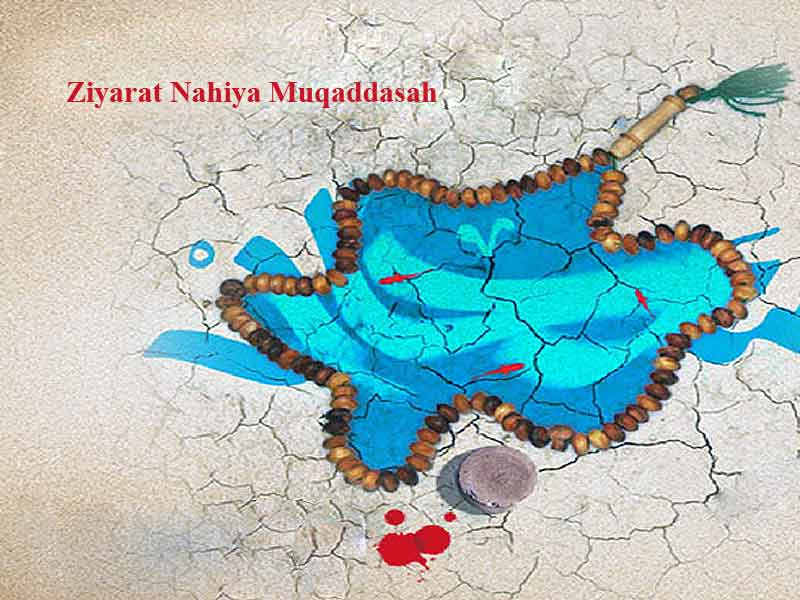
Ziyarat Nahiya Muqaddasah

Question 147: I was reading Ziyaret Nahiyah and I came across a part of the Ziyaret that says, “I will continue to weep morning and evening and weep for you with tears of blood.” Can someone give me the tafsir on this Ziyaret and the meaning of this statement?

I was reading Ziyaret Nahiyah and I came across a part of the Ziyaret that says, “I will continue to weep morning and evening and weep for you with tears of blood.” Can someone give me the tafsir on this Ziyaret and the meaning of this statement?

Answer 147: The ziyarah of Nahiyah Muqaddasah is an ‘absolute’ or ‘unconditional’ ziyarah, meaning that it can be recited anytime; on Ashura or any other day. Read More

post

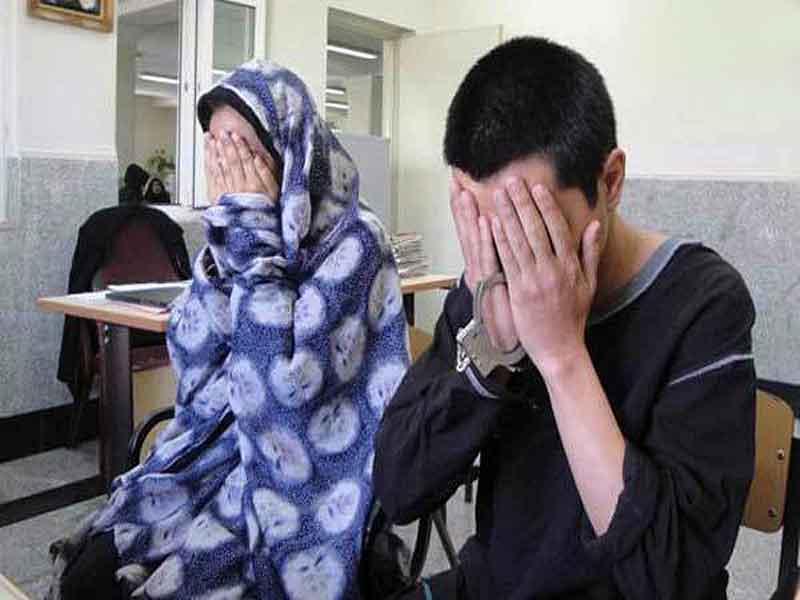
Rules on adultery and its punishment

Question 238: Assalam aleikum wa rahmatu Allah wa barakatuhu. I would like to ask a question concerning rape. I live in Finland and now there have been lots of reports of rapes happening. In all the cases the rapist is an asylum seeker. Latest rape happened in Sweden where a swedish woman was raped and after she was raped she walked for 100 meters and was raped again by another asylum seeker. This made me think, what is the punishment of rape according to ahlulbayt (as)? May Allah bless you all.

Answer 238: Adultery is a great sin according to the Quran. God, the Exalted, says: “Nor come nigh to adultery: for it is a shameful (deed) and an evil, opening the road (to other evils).”[1] In this short verse, three important points have been mentioned:
A) The verse says “do not get near adultery” which not only incorporates an emphasis but it also connotes that the evil of adultery normally has certain preliminaries which drives a man to adultery gradually. An unlawful gaze, nudity, immodesty, reading sex stories, watching porn movies, bad company, privacy with a non-mahram (a man’s being together with a woman in a private place) and finally not taking action for marriage and unreasonable restrictions imposed by both sides in this regard serve as preliminaries leading a person to adultery. The aforementioned short verse forbids all of the above in an implicit manner. However, the Islamic traditions forbid each one of them separately.

  1. B) The sentence “إِنَّهُ كانَ فاحِشَةً” [verily, it is a shameful (deed) and an evil] consists of three emphasis (The term ‘verily’ plus the past tense of the verb ‘kana’ and the term evil) makes further tangible the greatness of this tangible sin.
  2. C) The sentence “ساءَ سَبِيلًا” [it is a bad way] indicates that this evil act opens the road to other evils in society.”[2]

In any event, both zina (which is intercourse taking place between a man and woman who aren’t married (permanently or via mut’ah) and the other acts that lead to it and are usually done before it are great sins, and the practical difference between the two is that in the former (zina), the Islamic governor or judiciary can carry out the hadd on the fornicating individual (which is a punishment specified in the Quran)[3].

On the other hand, if the man and woman haven’t committed zina and what they have done are other unchaste acts between each other, they have still sinned and the judiciary can punish them; the punishment’s harshness depending on the greatness of what they have done (this type of punishment is called ta’zir).

Note: If a man has raped a woman he would be executed, according to Islam.[4] If the woman has no choice but to kill him there would be no problem to do so. Considering the man’s blood is wasted, if she kills him there is no need to pay his blood money.[5]

Related Link: Facebook.

[1] . Isra (Night Journey), 32, وَ لا تَقْرَبُوا الزِّنى إِنَّهُ كانَ فاحِشَةً وَ ساءَ سَبِيلًا As for the prohibition of adultery/fornication, see: Al-Furqan, 68 and 69; Al-A’raf, 33; Al-An’am, 151; Kulayni, Ya’qub, translated by Mustafavi, Sayyid Jawad, Usul-e Kafi, vol.3, pg. 391, Wafa Publications, 1382 (2003); Najafi, Muhammad Hassan, Hurr Amili, Wasail al-Shi’ah, vol.28, Kitab al-Hodud, Jawaher al-Kalam, vol.41, pg. 260 and 258, Dar Ihya al-Turath al-Arabi, Lebanon, 1981.

[2] . Tafsir Namuneh, vol.12, pg. 103.

[3] . Nur:2 “الزَّانِيَةُ وَ الزَّاني فَاجْلِدُوا كُلَّ واحِدٍ مِنْهُما مِائَةَ جَلْدَةٍ وَ لا تَأْخُذْكُمْ بِهِما رَأْفَةٌ في دينِ اللَّهِ إِنْ كُنْتُمْ تُؤْمِنُونَ بِاللَّهِ وَ الْيَوْمِ الْآخِرِ وَ لْيَشْهَدْ عَذابَهُما طائِفَةٌ مِنَ الْمُؤْمِنينَ” (As for the fornicatress and the fornicator, strike each of them a hundred lashes, and let not pity for them overcome you in Allah’s law, if you believe in Allah and the Last Day, and let their punishment be witnessed by a group of the faithful).

[4] . Imam Khomeini, Tahrirul Wasilah, Vol. 2, Pg. 439, Hadd al-Zina, al-Ikrah ala al-Zina; Khuei, Sayyid Abul Qasim, Mabani Takmelah al-Minhaj, Pg. 194, question 153. There is no difference between Mohsen (married man) and other than that.

[5] . Makarem Shirazi, Naser, Istiftaat (legal advice) Jadid (new), Vol. 3, questions 899 and 900, the school of Imam Ali bin Abi Talibs (as) publication, Qom, second edition, 1427 A.H.