post

Permissibility of getting Divorce when your partner has lied

Question 295: Salam, I am a shia- asnashari recently as per islamic gudielines I married a girl who claimed to be a syed, (had seen isteqara based on the name as given in profile but her name was different) after marriage I found that neither the girl is a syed, was married earlier and there is no compatablity and as this marriage is based on falsehood I want to divorce her, (dowry is not a issue as I have not demanded any thing before or after marriage I am financially well off and dont need any thing) I have paid the mehar at the time of marriage. what is the procedure of initiating a divorce. the marriage lasted less then a week and I have sent her home to her family. I had based this marriage on truth and had not hidden any facts with respect to my age, qualifications, family, income, etc. marriage from my side was based on facts and from her side was based on falsehood. please inform me how to get myself out of this mess.

Answer 295: The biggest capital in a couple’s life is truthfulness and honesty. If there is honesty in a family there would be no ground for any misunderstanding and misconception. The biggest problem can be ironed out through honesty and honest relationships.

On the other hand, wives and husbands must be kind to each other, have forgiveness and overlook the mistakes of one another in order to have a lovely and healthy living.

If the characteristics you’ve mentioned truly exist in their immoral sense in your wife, you should make her recognize such actions with soft, loving and kind words.

If she accepts her faults and truly ask forgiveness of Allah (SWT), then turn to Him you are recommended to forgive her, overlook [her ignorance] and live with each other, as in the holy Quran Allah, the Almighty says: “So pardon them and turn away Surely Allah loves those who do good (to others)”.[1]

Also, we as Muslim are supposed to follow what has been stated by the holy Prophet (pbuh). He (s) says: “The best of you is the one who is best among his family and I am the best to my family among you”.[2] So, you can overlook her ignorance and live together.

If you think it is impossible to live together in any way you are able to divorce her, because divorce is despised when it is done without an acceptable excuse, but if there is a good excuse for divorce, it will no longer be hated, and that is what divorce is for; for when there is no other way out.

How to get divorce:

Divorce is a one-sided contract (which is one of the unilateral obligationsiqa’at“) and it is carried out by the husband unilaterally even though the woman may not consent to it.” Therefore, a man can divorce his wife one-sidedly in accordance with the rules prescribed by the religion.

Divorce contract must be recited with the correct Arabic words in a way such that two just men listen to it. If the man wants to recite it by himself and his wife’s name is Fatimah, he should say:
“زَوْجَتِى فٰاطِمَةُ طالِقٌ”

Which means, my wife Fatimah is freed. If he appoints someone to recite it, the attorney should say[3]:[4]
“زَوْجَةُ مُوكِّلى فٰاطِمَةُ طٰالِقٌ”

For further information in this regards, please refer to the following answers:

Index: Living away from home for a long time is not considered as the reason for Divorce, answer 468.

Index: Conditions of divorce and Validity of getting divorce by SMS, answer 423.

[1] . Surah al-Maedah, verse 13.

[2] . Sheikh Saduq, Man la Yahduruhu al-Faqih, vol. 3, pg. 555, Jame’eh Mudarresin Publications, Qom, 1413 AH.

[3] . Imam Khomeini, Tawzih al-Masaeil (al-mohasha), ibid, p 522, question 2508, compiler: Bani Hashemi Khomeini, Syed Muhammad Hussain, the office of Islamic propagation, Qom, eighth edition, 1424 AH.

[4] . Adopted from answer 468 (Index: Living away from home for a long time is not considered as the reason for Divorce).

post

Saying Ameen during prayer invalidate the prayer

Question 017: How do I explain to my Muslim brothers that responding loudly after the Sheikh, during prayers is not part of Islam?
Answer 017: As for the Islamic laws, such as prayer, khums, zakat and etc., can only be determined by the divine legislator (share’: i.e. the acts of worship in which the contents (of prayer and etc.) are determined by the Holy Quran and traditions from the Holy Prophet (pbuh) and his household) which is called Ahkam Tauqifi, one who even has deep knowledge about Islam is unable to add anything other than what has been ordered by the divine legislator.

In prayer, one must not recite anything other than ‘ḏikr’; otherwise the prayer would become void. Just as the Shia have obtained all the rest of their teachings through the instructions and commandments of the Prophet and his household (pbuth), in this matter too they act in accordance to their instructions.

Based upon narrations, the Ahlul Bayt (pbuth) have told us that ‘saying ‘Ameen’ after reciting sūrah ‘al-Hamd’ is not part of the prayer, hence it is not permissible to say it’. It is narrated from Imam Sadiq (pbuh): ‘Whenever you are praying in congregation, and the leader of the congregation finishes reciting ‘Al-Hamd’, do not say ‘Ameen’, say instead ‘Alḥamdulillāh rabbi al-ʿālamīn’. [1]

The maraji’ have given the following fatwa based on the mentioned narration: ‘Of the acts which invalidate the prayer; is saying ‘Ameen’ after reciting ‘al-Hamd’, although if someone says it mistakenly or out of ‘taqīyah’ (dissimulation), the prayer is not void’. [2]

Finally, it is necessary to mention that according to Shīʿah Islamic law, it is not actually compulsory to say ‘Alḥamdulillāh rabbi al-ʿālamīn’ after ‘al-Hamd’; it is just mustahabb (recommended) . However, most Sunni schools of thought consider it an obligatory part of prayer, hence the onus is upon them to verify their claim through the Qur’ān and Prophetic Traditions.

Note: The traditions concerning the saying of Āmīn in prayer are of two types:

1) Traditions in which the chain of narrators includes Abu-Hurayrahh; e.g. “It is narrated from the Prophet (saws) that he said, ‘When the Congregation leader recites ‘walāḍ ḍāllīn’, you should say ‘Ameen’ because the angels [also] say ‘Āmīn’. Therefore every person who says Āmīn alongside with the angels will have all of his past sins forgiven.’”[3]

This group of traditions cannot be trusted due to the fact that the chain of narrators includes Abu Hurayrahh.[4]
Alī (as) says the following about Abu Hurayrah, “The most dishonest person in relation [to attributing lies] to the Prophet (saw) is Abu Hurayrah”[5] (i.e. he fabricated many traditions and attributed them to the Prophet (saw)).

2) Traditions in which the following people are included in the chain of narrators (of which none meet the criterion for being acceptable in terms of ‘hadīth’ narration): Ḥamīd ibn ‘Abd al-Raḥmān ibn Abī Laylī, Ibn ‘adī, ‘Abd al-Jabbar bin wa’il, Suhayl ibn Abī Suhayl, ‘ala’ ibn ‘Abd al-Raḥmān, and Talha ibn ‘Umar. Ḥamīd ibn ‘Abd al-Raḥmān ibn Abī Lalī possessed a weak memory and is considered ‘weak’ (in terms of narrating Hadīth), Ibn ‘adī is an unknown figure (majhul), ‘Abd al-Jabbār bin Waa’il cannot narrate from his father since his father died six months before he was born (in this respect the tradition is weak). Regarding Suhayl ibn Abī Suhayl and ‘Ala’ ibn ‘Abd al-Raḥmān, Abu Haatam says, “Their narrations are recorded (written down), however they bare no authority and Talha ibn ‘Umar is not usable (for narrating hadith), his traditions are extremely weak.”[6]

With the existence of such weak and unreliable narrators in the chain of narrations, these narrations have no credibility and cannot be trusted.

Some [scholars] have tried to justify saying Āmīn in prayer with the following explanation: “[We] say Āmīn because the phrase ‘Ihdinā ṣ-ṣirāṭ al-mustaqīm’ is a du‘a (supplication).”

In reply to this, it must be stated that this phrase only becomes a supplication if it is recited with the intention of supplicating, however those reciting it intend for it to be a part of the prayers and the Quran recited therein, not as a supplication.
Furthermore, if it were permissible to recite every supplicatory phrase for example ‘rabbanā aghfir lanā wa qinā ‘adhāba al-nār’ with the intention of supplicating, then it should also be permissible to recite Āmīn after every supplication, yet no one [of the scholars] holds this view.[7]

For further information in this regards, please refer to the following answer:

Index: Number of things which invalidate the prayer, answer 547.

[1] Tusi, Muhammad bin al-Hasan, al-Tahdhib, vol. 2, pg. 74.

[2] Tawdih al-Masa’il (annotated by Imam Khomeini), vol. 1, pg. 617. This ruling is agreed upon by all the respected jurists.

[3] . Baydawi, Naasir al-Din Abu al-Khayr Abdullah ibn Umar, Anwaar al-Tanzil wa Asraar al-Ta’wil, vol. 1, p. 32, Ihyaa’ al-Turaath al-Arabi Press, Beirut, 1418 AH.

[4] . Abu Hurayrah Abd al-Rahmaan ibn Sakhr al-Azudi (22 BH-59 AH): eight hundred Sahaabis and Taabi’is have narrated from him. During his rule, Umar appointed him as governor of Bahrain, but due to his weakness in character and leniency, he was dismissed from this responsibility. He spent most of his life in Medinah. Taqiyuddin Sabki has a booklet entitled “Fataawaa Abi Hurayrah”, and Abd al-Husayn Sharafuddin has a book entitled “Abu Hurayrah” on him. (Al-A’laam 4/80, 81). Hujjati, Asbaab al-Nuzul, p. 216.

[5] . See: Ibn Abi al-Hadid Mu’tazili, ‘Izz al-Din Abu Hamed, Sharh Nahjul-Balaghah, vol. 4, p. 68, Library of Ayatullah Mar’ashi Najafi, 1956, first edition.

[6] . See: Sultani, Abd al-Amir, Hukm al-Ta’min fi al-Salah, Ahlul Bayt World Assembly, second edition.

[7] . See: Sabzawari, Ali Mu’min Qummi, Jaami’ al-Khilaaf wa al-Wifaaq bayn al-Imaamiyyah wa bayn A’immat al-Hijaaz wa al-Iraaq, Zamineh Saazane Zuhure Imam Zamaan Press, 1421 AH, first edition, Qum.

post

Number of things which invalidate the prayer

Question 547: Can you please tell us those things which invalidate the prayer?

Answer 547: There are a number of things which invalidate the prayer. They are called mubtilat, as follows:

1, The minor and major pollutions, (i.e., urine, feces, Janabat, etc.) They invalidate the prayer whenever they occur in the prayer, though at the time of reciting the letter “mim” which comes in the Salam (at the conclusion of the prayer), regardless whether it is done deliberately, erroneously or inadvertently, to the exclusion of one suffering from incontinence in urination, stool or a Mustahadah (a woman having undue menses), as has been mentioned earlier. Read More

post

The curriculum of Hawzah / the first Shia Marja

Question 543: Salam. Sea of knowledge. Please, give me great information about DAR’s e kharijh or most hank rank class in hawza. Tell me the name of first marjhe in shiat history, who delivered this class firstly. In past whose marjhe great famous of DAR’s e kharijh in hawza?

What is the specific duration of that great class? Becase, this class grown of shait? Why in ahle sunnat not existing this type of class. Plz make a brief article on that topic

Answer 543: This is the current curriculum that the Hawzah follows:

1- The introductory level or Level 1 of the Hawzah (Islamic Seminary) which takes about six years to be completed.  The first three years are usually spent for studying Arabic literature and other lessons, Islamic rules, Principles of faith, and the next three years are spent  for studying general fiqh (Islamic Law) using the book Sharhul-Lum’ah and the principles of fiqh using the book usulul-fiqh of Mudhaffar.

Read More

post

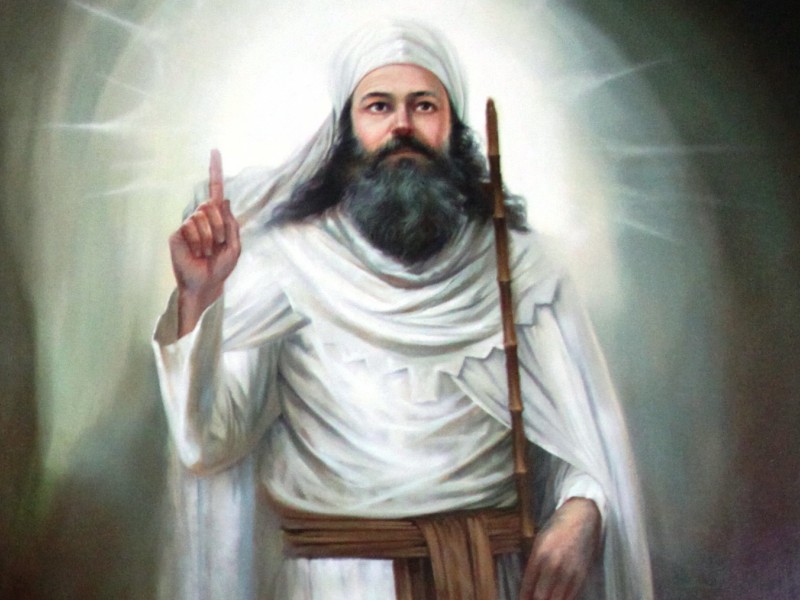
Zoroaster The prophet of the Zoroastrian faith, Magus the followers of Zoroastrianism

Question 489: Salaamun Alaikum.  I read from Allamah tabatabai that Mazdeists are classified as Ahl Al Kitab, is it lawful to say that their messenger (Zarathustra), in the case he existed, he’s a legitimate prophet?

Thanks in advance.

Answer 489: Allama Tabatabaee (ra) said: the term ‘Magoosh’ are called “Magus”, which refers to the followers of Zoroastrianism.[1] It has only been mentioned once in the holy Quran[2], and considering the fact that it has been used in a way that shows it is in contrast with shirk and the mushriks and is next to other divine religions like the Jews and the Nazarenes, it can be concluded that it has been a substantial religion with a prophet and holy book. Read More

post

Who were behind the Martyrdom of Lady Fatimah al-Zahra (sa)

Question 486: Asallamu alaikum. My questiön is: Who were behind the Martyrdom of Lady Fatimah al-Zahra (sa)?

Answer 486: This historical truth (i.e. the intrusion of Lady Fatimah’s (sa) home and her martyrdom) has been preserved in historical and hadith sources. Great Sunni scholars, such as Ibn Abi Sheybah, Baladhari, Ibn Qutaybah, Ibn Abd Rabbih, Tabari, Tabarani, Nadham, Mas’udi, Ibn Abi Darem and Abdul-Fattah Abdul-Maqsud, have revealed this fact as Umar and Abu Bakr were actually behind the Martyrdom of Lady Fatimah al-Zahra (sa). Read More

post

Hijab of Sayeda Fatima al-Zahra (sa)

Question 492: Did Lady Fatemeh (peace be upon her) covering her face and hands? Please, explain in detail about Hijab of Sayeda Fatima (sa).

Answer 492: Qena was prevalent among women by which some of them covered their face at the advent of Islam. According to some traditions narrated from our Infallibles (PBUTH), Lady Fatimah al-Zahra has used such coverage in front of non-Mahram. Qena means something by which women covers their face.[1]

Imam Baqir (AS) has said that Jaber bin Abdullah Ansari was with the Holy Prophet (PBUH). They went out of house in order to meet Fatimah al-Zahra (SA). “When we reached there, the Holy Prophet (PBUH) pushed the door and said: Assalamu Alaikum. Lady Fatimah (SA) replied: Wa Alaika assalaam ‘O the messenger of Allah (PBUH). The Prophet said: Could I come in? She (SA) replied: Yes, come in. The Prophet said: there is one person whom come along with me. Is he also allowed to come in? No, I don’t have a proper cover. Meaning that she didn’t have Qena on her face.[2]

Arabic version: لیس علی قناع

It is said that during the Fadak event, when Fatimah (SA) wants to go out of house she always covered her face with Borgha’.[3]

The Arabic version of this narration: فَتَجَلْبَبَتْ بِجِلْبَابِهَا وَ تَبَرْقَعَتْ بِبُرْقِعِهَا

When it is proved that Abu Bakr forcefully took Fadak and didn’t want to give it back to Lady Fatimah (SA), she covered her head with a veil and was going toward the Holy Prophet’s (PBUH) mosque. While she was among some religious women and her relatives, her clothes were long in a way that all of her body and feet were covered. She walked like the Holy Prophet (PBUH). When she reached the mosque, the people of Muhajir and Ansar created a place for her that men were unable to see her.[4]

Arabic version:

لما بلغ فاطمه علیهاالسلام اجماع ابی بکر علی منعها فدک، لاثت خمارها، و اقبلت فی لمه من حفدتها و نسا قومها، تطا فی ذیولها، ماتخرم مشیتها مشیه رسول اللَّه صلی اللَّه علیه و آله حتی دخلت علی ابی بکر و قد حشد الناس من المهاجرین و الانصار، فضرب بینها و بینهم ریطه بیضا

It is understood from historical sources that women were observing hijab in the time of the Holy Prophet (s) (PHUTH), but not complete hijab because the Arab women would wear a scarf, but they would place the ends behind their head so that their earrings, neck and chest would show since their dresses were most often v-necked. They used to wear dresses with open collars leaving their necks and part of their chests visible.[5]

Lady Fatimah (SA) is the best example for all women from all around the world to follow her. She (SA) observed hijab completely, even when a blind man entered her house with the Holy Prophet (PBUH), she went out of the house in order that the man cannot even smell her. Also, she made a will to Imam Ali (AS) that when I die, shroud and bury me at night. O Ali, (AS) make a coffin for me that could hide my body.[6]

Lady Fatimah al-Zahra (SA) preferred to stay at home, however she went out (when necessary) while observing hijab completely in a way that nobody could see her as she was among some of her relatives and women of Muhajir and Ansar. Also, when she attend the mosque there was a place where she (SA) stood that nobody could see her.

[1] . Mojam al-Wasit, word of Qena.

[2] . Al-Kafi, Vol. 5, Pg. 528, al-Nikah Book.

[3] . Sheikh Sadouq, Elal al-Sharae’, Vol. 1, Pg. 163, Qom, Davari bookshop.

[4] . Sharh e ibn Abi al-Hadid, Vol. 16, Pg. 211 & 249; Ihtiyajat Tabarsi, Vol. 1, Pg. 131, Najaf publication.

[5] . Mutahhari, Murteza, Works Collections, vol.19, pg. 484 – 485.

[6] . Rawzatul Waedhing, Vol. 1, Pg. 151; Biharul Anwar, Vol. 43, Pg. 214.

post

Moon Sighting: Finding First of Ramadãn and Shawwãl

Question 544: Salam alaykum, I’m Galih from Jakarta, Indonesia. If government announce day of Eid which different day with Moon sighting from Shia Observers and Methods from our Religious Authority or Marja. an I perform taqiyya when I get back to my birthplace Hometown because it will make quarrel with my family or I should travel outside my town first to break my fast? Thanks and regards, Galih P

Answer 544: The first of every month is established by ocular vision (of the moon), even if the moon is seen by a single person (whether he is Shia or Sunni or other sect you make sure of his opinion), though it is more useful if it is confirmed by several persons and general opinion, or by passage of thirty days from the preceding month, or through legal evidence which consists of the testimony of two morally sound persons, or the decision of a judge when it is not known to be mistaken or to have an erroneous basis, but no regard is to be paid to the statement of the astrologers, or the encirclement of the moon, or its disappearance after the evening glow in proving that the moon belongs to the last night, though it may help in such assumption.   If you only become sure about the saying of Shia authorities that (for example) tomorrow is Eid al-Fitr, you have to follow their opinion in this regards. Otherwise, you can follow every other person or any organization and government you become sure about their opinion.

Considering that you follow Shia authorities, you are not allowed to eat, drink or do those things which invalidate your fast, unless you travelled 22.5 Km away from your home before the noon prayer and eat or drink there.

Note: The point that traveling begins (in order to count 22.5 Km from) should be considered at a place where you cannot see the walls of city and hear the sound of Adhan. It is the limit of Tarakhkhus. [i]     Related Answers:

Index: Things invalidate fast and its Kaffarah, answer 372.

Index: Meaning of Tarakhkhus and Qasr and Complete Prayers, answer 466.


[i] . Tahrir al-Wasilah of Imam Khomeini, Vol. 1, Procedure of Finding First of Ramadãn and Shawwãl;  Tawzih al-Masael of maraja (with annotation of Imam Khomeini), Vol.1, issue. 1312.

post

Importance of Marifat Imam / Definition of Marifat

Question 283: What is marifat? I would like to know about the importance of Marifat Imam? If someone have deep marifat about Ayema do have he authorized to perform extra things in worship. Like some people accurse on enemies of ayema in namaz?

Answer 283: Philosophers define Marifat as the True Justified Belief. But, John Locke explains it as Understanding. As for the latter, marifat includes Tasavor (Perception) and Tasdiq (assertion), though it doesn’t include tasavor according to the philosophers definition. Some say it describes the mystical intuitive knowledge of spiritual truth reached through ecstatic experiences, rather than revealed or rationally acquired. Read More

post

Takattuf: Praying with closed hands

Question 016: How do I explain to my Muslim brother that folding the arms during prayers is not part of Islam? Is praying with closed hands a method that didn’t exist during the prophet’s time?

Answer 016: Takfir or Takattuf, which means putting one hand over the other in the way it is done by others than ourselves (i.e. the non-Shi’ahs). It invalidates the prayers, according to the stronger opinion, if done deliberately, but not if done inadvertently, though it is more cautious to offer the prayer again. There is, however, no objection if it is done by way of Taqiyyah. [1]

Praying with closed hands is a method that didn’t exist during the prophet’s time, because the prophet (pbuh) himself would pray with open hands,[2] and since the Shia solely believe in following the prophet (pbuh) and the Imams (as) in all fields, they also pray with open hands, and regard praying with closed hands as bid’ah or forbidden innovation. This method of praying was innovated during the second khalifah’s rule, became the formal prayer style then,[3] and was continued till today, to the extent that most Sunnis still pray the way the second khalifah had ordered in his time.[4] The Imams (as) have said that this method resembles that of the kafirs and the Maji and have asked their followers to pray with open hands; the same way the prophet (saws) would pray.

Abi Hamid Sae’di has described the prophet’s (saws) prayer in a hadith in full detail, from the beginning of the tahbiratul-ihram till the end of the salam, yet hasn’t mentioned anything about him closing his hands, and instead says that after saying the takbiratul-ihram, he brought his hands down by his sides.[5]

At the same time, one can’t say that closing the hands isn’t obligatory in the prayer and is only mustahab, and that is why the prophet (saws) wouldn’t close them, because it is impossible for him not to perform this “mustahab” act all his life.

In yet another hadith, Hammad ibn Isa asks Imam Sadiq (as) to portray the full and correct prayer for him. The Imam (as) stood towards the Qiblah, observing all of the mustahab acts, said the takbiratul-ihram and began reciting and went on to finish the prayer the way the Shia currently pray, ending it with the salam.[6] In this hadith, the Imam (as) was showing Hammad how the prophet (pbuh) would pray, yet there is no sign of the closing of the hands, and if this act was to truly be a tradition of the prophet, he would have surely included it in his description of the prophet’s (pbuh) prayer.

There are also multiple hadiths by the imams that say this act resembles that of the Maji and the kafirs and one shouldn’t practice it; here we will list a few:

محمد بن مسلم ،عن الصادق (ع) او الباقر (ع) قال: قلت له: الرجل يضع يده فی الصلاة -و حکی- اليمنی علی اليسری؟ فقال: ذلک التکفير لا يفعل. [7]

روی زراره عن ابی جعفر (ع) انه قال: و عليک بالاقبال علی صلاتک، و لا تکفر ،فانما يصنع ذلک المجوس.[8]

روی الصدوق باسناده عن علی (ع) انه قال: لا يجمع المسلم يديه فی صلاته و هو قائم بين يدي الله عز و جل يتشبه باهل الکفر، يعنی المجوس [9]

For further information, please read:

Index: Number of things which invalidate the prayer, answer 547.

Ayatullah Jafar Sobhani, Al-Insaf fi Masaela Dama fihal- Khilaf, vol. 1, pg. 169-193.

[1] . Tawzih al-Masael of maraja’ (with annotation of Imam Khomeini), Vol. 1, Pgs. 614-634;  Tahrir al-Wasilah of Imam Khomeini (ra), Vol. 1, Pgs. 212-217.

[2] . The hadith for this subject will come later in the article.

[3] . Sahl ibn Sa’d’s hadith on this matter that Bukhari has narrated is good proof for this claim: “The people were told that men should put there right hand on their left arm in prayer” (Fathul-Bari fi Sharh Sahihil-Bukhari, vol.2, pg.224) because if the prophet (pbuh) had ordered the people to do so, the hadith would have said that the prophet (pbuh) had ordered them, not that “the people were told…”

[4] . The Hanafiyyah, Shafi’iyyah and Hanabilah all consider closing the hands mustahabb (Al-Fiqh alal Madhahibil-Khamsah, pg.110).

[5] . Sunan Beyhaqi, vol.2, pp. 72, 73, 101, 102; Sunan Abi Dawud, vol.1, pg.194.

[6] . Al-Wasa’el, vol.4, first chapter of the chapters on the actions of prayer, hadith 1.

[7] . Al-Wasa’el, vol.4, chapter 15 of the chapters on the things that break the prayer, hadith 1.

[8] . Al-Wasa’el, vol.4, chapter 15 of the chapters on the things that break the prayer, hadiths: 2, 3, and 7.

[9] . Jafar Subhani, Fiqhul-Shia al-Imamiyyah wa Mawadhi’il-Khilaf Beynahu wa Beynal-Madhahibil-Arba’, pg.183.