post

Pretending to cry over our Sins, for Imam Hussain (as) or Fear of Allah (SWT)

Question 048: What is the ruling of one who desires to cry for his sins, but is unable to do so, so he pretends to cry? Is pretending recommended? What procedures does one have to go through in order to be able to shed tears?

Answer 048: When you want to pray, supplicate or fear Allah, the Almighty you had better to cry or pretend[1] to cry. This act is a psychological example of an artificial effect on our soul.

According to a hadith, in order that your prayers be granted by Allah, the Most High you should cry or pretend to cry. Also, try to have at least one drop of tear coming out of your eyes, even by remembering a memory of one of your relatives who has passed away. In this regards, there is a hadith narrated from the holy Prophet (pbuh) that if one cries or pretends to cry while reciting the holy Quran or hearing it, he will certainly go to the Heaven. Furthermore, if you fear Allah (SWT), the punishment of Hell and desire to go to the Heaven you are supposed to cry or pretend to cry especially at the time of offering prayers, ta’qibat, supplications, dhikr, and during the practices of hajj, especially in Sa’y, stay in Arafa, and on top of Marwa Mount.[2]

Read More

post

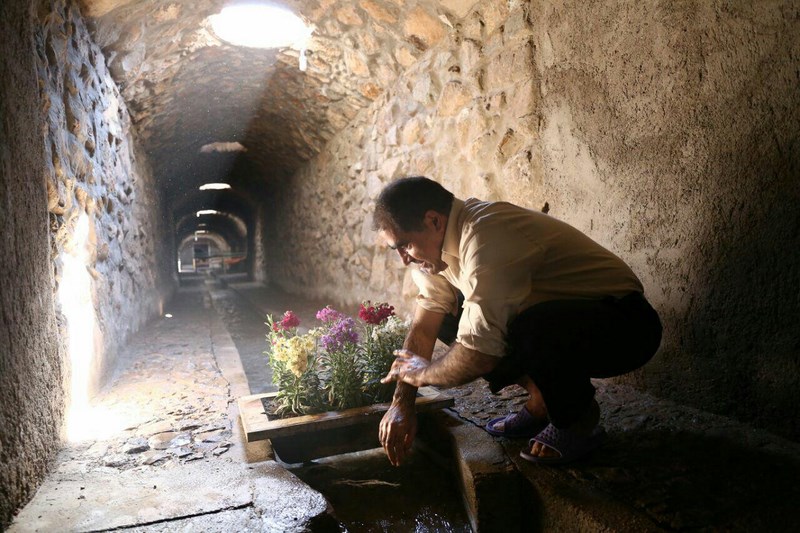
Imam Hasan and Hussain teach an old man how to make Wudu

Question 024: Did Imam Hasan and Hussain teach an old man how to make wudu? Did they artificially dispute with each other in order to teach the old man how to make wudu?

Answer 024:  It has been narrated in some resources that Imam Hasan and Imam Hussain (pbuth), as children, taught an old man, in a good manner, how to make wudu properly, as follows:

One day an old man came to Medina. At the time of prayers he began to make wudu, but he was making his wudu incorrectly. Imam Hasan and Imam Hussain (pbuth) immediately realized that the old man was not doing his wudu correctly. They wanted to correct him, but hesitated to tell him directly. Perhaps the old man would feel humiliated by two young boys correcting him, or he might even lose interest in the act of worship.

Imam Hasan and Imam Hussain (pbuth) came up with a plan. They went to the old man and said, “My brother and I disagree over who amongst us performs wudu the best. Would you mind watching us make wudu and be the judge to see which one of us indeed performs wudu correctly? Could you please correct us wherever we are wrong?” The man watched carefully trying to judge who is better.

The boys performed their wudu under his supervision, one after the other. When they had finished, he realized the wudu done by the boys was methodical and correct. It was his own wudu which was incorrect. Turning to Imam Hasan and Imam Hussain (pbuth), he gently said: “The wudu done by you is correct. I am grateful that you chose to guide me in such a beautiful manner.”

Imam Hasan and Imam Hussain (pbuth) neither criticized the old man, nor reproached him for his ignorance of the ruling of Islam. They did not refer to his way of performing wudu as wrong, nor did they call his action void. Rather, they performed wudu themselves and taught the old man its correct way indirectly. The result of this polite and wise criticism was that the old man confessed to his mistake explicitly, learned how to perform wudu correctly, and thanked them with kindness and pleasure.[1]

[1] . Ibn Shahrashub, Mazandarani, Manaqeb Al –e- Abi-Taleb (a.s), Vol. 3, Pg. 400, Qom, Allamah publication, first edition, 1379 AH; Majlesi, Muhammad Baqer, Biharul Anwar, Vol. 43, Pg. 319, Beirut, Dar –e- Ehya al-Torath al-Arabi, second edition, 1403 AH.

post

Satans are chained during the Holy Month of Ramadan

Question 061: Is the saying authentic that, ” Satans are chained during the Holy Month of Ramadan ”?

Answer 061: In some authentic traditional sources like Al-Kafi and Tahzib, there has been mentioned a tradition regarding the blessings of the Holy Month of Ramadan from the Holy Prophet (PBUH) as follows, “When the Holy month of Ramadan enters, the outcast Satans are chained.” This tradition has been narrated by Imam Baqir (AS) by his grandfather. The Arabic version of the hadith is as follows:[1]
«أَحْمَدُ بْنُ مُحَمَّدٍ عَنِ الْحُسَيْنِ بْنِ سَعِيدٍ عَنِ الْحُسَيْنِ بْنِ عُلْوَانَ عَنْ عَمْرِو بْن شِمْرٍ عَنْ جَابِرٍ عَنْ أَبِي جَعْفَرٍ (ع) قَالَ كَانَ رَسُولُ اللَّهِ ص يُقْبِلُ بِوَجْهِهِ إِلَى النَّاسِ فَيَقُولُ يَا مَعْشَرَ النَّاسِ إِذَا طَلَعَ هِلَالُ شَهْرِ رَمَضَانَ غُلَّتْ مَرَدَةُ الشَّيَاطِينِ وَ فُتِحَتْ أَبْوَابُ السَّمَاءِ وَ أَبْوَابُ الْجِنَانِ وَ أَبْوَابُ الرَّحْمَةِ وَ غُلِّقَتْ أَبْوَابُ النَّارِ وَ اسْتُجِيبَ الدُّعَاءُ وَ كَانَ لِلَّهِ فِيهِ عِنْدَ كُلِّ فِطْرٍ عُتَقَاءُ يُعْتِقُهُمُ اللَّهُ مِنَ النَّارِ وَ يُنَادِي مُنَادٍ كُلَّ لَيْلَةٍ هَلْ مِنْ سَائِلٍ هَلْ مِنْ مُسْتَغْفِرٍ اللَّهُمَّ أَعْطِ كُلَّ مُنْفِقٍ خَلَفاً وَ أَعْطِ كُلَّ مُمْسِكٍ تَلَفاً…» Read More

post

Making Wudu when you are going to bed

Question 032:  I have read two things: 1) It is recommended to be in wudu when you go to bed at night and 2) certain things invalidates wudu, including being unconscious/asleep. So, why is it recommended to go to bed in wudu when you just have to redo it when you wake up? Is there some sort of narration that says wudu protects you during sleep? If not, then what is the purpose in this practice.
Answer 032: Although, a sleep which overwhelms the senses of sight and hearing (as a result of which the eyes do not see, and the ears do not hear) invalidate wudu, but one of the reason which is behind performing wudu before going to sleep and has been recommended by the Infallibles (pbuth) is that the wudu help the soul of a believer to have a divine and positive inspirations during sleep. Unlike those who have been done bad actions during day they would dreamed the actions during night.

The following are some ahadith our Infallibles (pbuth) recommended us perform wudu:

The Prophet (saws) has said, ‘Perform ablution frequently and Allah will increase your life, and if you are able to be in a state of purity throughout the night and day, then do so, for if you die in the state of purity, you will die a martyr.[1]
The Prophet (saws) said, ‘The man sleeping in the state of purity is as the man praying and fasting.[2]

Imam Sadiq (as) said: whoever performs wudu before going to bed, the bed would be like the mosque for him. And if he remembers in the bed that didn’t perform wudu he can do tayammum on the coverlet, so if he sleeps with wudu or tayammum he likes offering prayers as long as he remembers Allah (SWT).[3]

Imam Ali (as) said: None of the Muslims are going to bed while they haven’t performed wudu and if there is no water they can do tayammum, because Angels take the soul of a believer (who sleeps) and climbs into the sky and Allah (SWT) accepts it and send blessing to it; if he is doomed to die He keeps the soul and if not the Angles return it to his body.[4]

[1] . Amali al-Mufid, p. 60, no. 5.

[2] . Kanz al-`Ummal, no. 25999.

[3] . Mahasen, Pg. 47, H. 64.

[4] . Khisal, Vol. 2, Pg. 402;  Bihar al-Anwar, Vol. 10, Pg. 91.

post

Estrangement from people or being with them

Question 060: What is the Sheikh’s interpretation of the following Hadith and is it authentic? Should we try not to get too close to others in order to avoid estrangement? Should respectful boundaries be maintained? “Estrangement from people comes about as a result for knowing them too well.” ~ Imam al-‘Askari (AS).

Answer 060: Living far away from people or being gregarious in a way you enjoy being with them, estrangement or a formed coalition with people, is a subject our scholars have different opinions about. Some say: it is better to estrange from people than being with them instead, according to some traditions in which we are recommended to be so.

Others say, it is better to serve the society, keep company, cooperating and become familiar with people, according to some traditions like al-amr bi-l-maʿrūf wa-n-nahy ʿani-l-munkar (bid what is right and forbid what is wrong) and the following verses of the Holy Quran.

  1. “Hold fast, all together, to Allah’s cord, and do not be divided [into sects]”[1]
  2. “Cooperate in piety and God wariness”[2]

According to Ibin Maitham Bahrani (May His soul rest in peace), both reasons and arguments would be considered as Sahih. No one if preferable to the other at all. For instance, probably a Dr. prescribed a medicine for a person which is suitable for curing him and it’s not appropriate for another one with different symptom of illness.

It is said that living far away from people or being with them depends on each person’s piety, knowledge and faith. E.g. how many knowledgeable person who are considered as a scholar can guide people to the straight path, so one is supposed to cooperate in piety and Allahs (swt) wariness. On the other hand, there are many people who would commit sin if they join a company where committing sin is provided for him easily. So, one is strongly recommended to estrange from such people who encourage him to commit sin.

There are some traditions in which our Imams (AS) tell us to estrange from people in order to know Allah (SWT) better. First step, if we want Allah (swt) to love us, it is recommended to keep away from those people who encourage you to commit sin, as Imam Hasan Askari (as) says. If one wants to become familiar or get closer to Allah (swt), the Almighty, then one should estrange from people because, one of the signs of being a good believer is to do this.[3]

Preserving our faith in situations where people are committing sins can be really difficult. There is a Hadith of Imam Ali (AS) where he says, “If you detect the effects of others you wouldn’t like even to inter him.”[4]

Being aloof is required if we really want to know Allah (swt) better. We have to know Allah (SWT) and try to talk to Him all the time, instead of getting familiar with people whom we don’t know.

Sometimes estrangement from people is advisable, for some people to keep away themselves from those haram gatherings, where there is nothing but play and diversion, ignorance and senseless, backbiting and lying.[5]

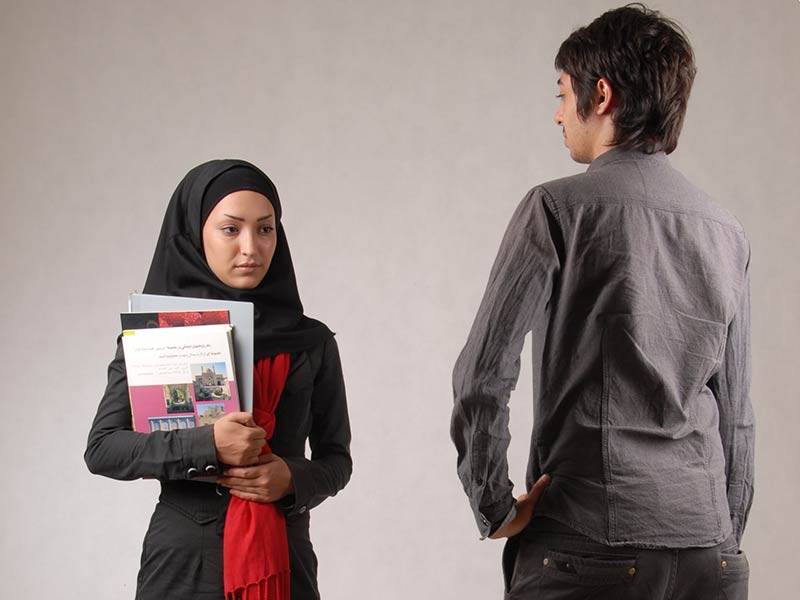
Please, keep in mind that observing bonds of marriage and family are completely different. The hadith is not trying to include these kinds of relationships because, we are strongly recommended to be in touch with our close relationships.

[1] . Surah A’le Imran, verse 103. Tafsir al-Mizan, Vol. 3, Pg. 572.

[2] . Surah al-Maedah, verse 2. Tafsir al-Mizan, Vol. 5, Pg. 266.

[3] . Musnad of Imam Hasan al-Askari, Pg. 287; The Scale of Wisdom, A Compendium of Shia Hadith, Bilingual Edition, M Muhammadi Rayshahri, The Book of Solitude, hadith 4239, Page 738; Ghurar al-Hikam, no.10187.

[4] . Al-Amali (of Shaykh Saduq), al-Nass, Pg. 446.

[5] . Nahj al-sa’adah fi mustadrak Nahj al-balagha, Vol. 7, Pg. 106-109.

post

Ways to Greet in Islam with Muslims and Non-Mahram

Question 369: Is it okay to greet those Muslims with “As Salam O Alaikum” who reply it with “Hi”? Ways to greet in Islam?

 Answer 369: Salman Farsi (ra) narrated: A man went to the holy Prophet and said: Peace (salaam) be upon you ‘O the messenger of Allah. The prophet replied: Peace and blessing of Allah be upon you. Another man came and said: Peace and blessing of Allah be upon you, ‘O the messenger of Allah. The Prophet replied: Peace and blessing of Allah be upon you. Another one came and said: Peace, mercy and blessing of Allah be upon you, ‘O the messenger of Allah. The Prophet only replied: same to you! The man said: May my parents be ransom upon you, ‘O the messenger of Allah, when others came and saluted you, You added more in reply to them, but me!  The Prophet said: Because, you have said everything you should say.

He has also said: In the holy Quran Allah, the Almighty says: “When you are greeted with a salute, greet with a better one than it, or return it; indeed Allah takes account of all things”.[1]

The Arabic version of this Hadith:

الدرُّ المنثورُ عَن سَلمانِ الفارسيِّ : جاءَ رَجُلٌ إلى النبيِّ صلى الله عليه و آله فقالَ : السلامُ علَيكَ يا رسولَ اللّه ِ ، فقالَ : و علَيكَ و رَحمَةُ اللّه ِ ، ثُمّ أتى آخَرُ فقالَ : السلامُ علَيكَ يا رسولَ اللّه ِ و رَحمَةُ اللّه ِ ، فقالَ : و علَيكَ و رَحمَةُ اللّه ِ و بَرَكاتُهُ ، ثُمّ جاءَ آخَرُ فقالَ : السلامُ علَيكَ و رَحمَةُ اللّه ِ و بَركاتُهُ ، فقالَ لَهُ : و علَيكَ ، فقالَ لَهُ الرَّجُلُ : يا نَبِيَّ اللّه ِ ـ بِأبي أنتَ و اُمّي ـ أتاكَ فُلانٌ و فُلانٌ فَسَلَّما علَيكَ فَرَدَدتَ علَيهِما أكثَرَ مِمّا رَدَدتَ عَلَيَّ ! فقالَ : إنَّكَ لَم تَدَعْ لَنا شيئا ، قالَ اللّه ُ : و إذا حُيِّيتمُ بِتَحِيَّةٍ فَحَيُّوا بِأحسَنَ مِنها أو رُدُّوها فَرَدَدناها علَيكَ.

Imam Sadiq (as) says: If one says: Peace be upon you, he will be given ten rewards. If one says: Peace and blessing of Allah be upon you, he will be given twenty rewards and if one says Peace and blessing and mercy of Allah be upon you, he will be given thirty rewards.[2]

The Arabic version of this Hadith:

عِدَّةٌ مِنْ أَصْحَابِنَا عَنْ أَحْمَدَ بْنِ مُحَمَّدِ بْنِ خَالِدٍ عَنْ عَلِيِّ بْنِ الْحَكَمِ عَنْ أَبَانٍ عَنِ الْحَسَنِ بْنِ الْمُنْذِرِ قَالَ سَمِعْتُ أَبَا عَبْدِ اللَّهِ ع يَقُولُ‏ مَنْ قَالَ السَّلَامُ عَلَيْكُمْ فَهِيَ عَشْرُ حَسَنَاتٍ وَ مَنْ قَالَ السَّلَامُ عَلَيْكُمْ وَ رَحْمَةُ اللَّهِ‏ فَهِيَ‏ عِشْرُونَ‏ حَسَنَةً وَ مَنْ قَالَ السَّلَامُ عَلَيْكُمْ وَ رَحْمَةُ اللَّهِ وَ بَرَكَاتُهُ فَهِيَ ثَلَاثُونَ حَسَنَةً.

Therefore, if we are greeted with a salute (like Hi), we are supposed to greet with a better one than it, according to the holy Quran and sayings of the Infallibles (pbuth).

According to some scholars, it is makruh for a man or woman to greet a non-Mahram, though, according to others, there would be no problem in it if there is no fear of sin.[3]

Note: There are exceptions to this teaching though, greeting non-Muslims being one of them. In jurisprudential books, greeting non-Muslims has been deemed as makruh: “When responding to the greetings of a non-Muslim, keep it short [by saying ‘alayk’ or ‘alaykum’].”[4]

According to some scholars, greeting with Kafir is impermissible when it is not necessary.[5] But, if it helps you invite him to Islam there would be no problem in it.[6]

For further information, please read the following answers:

Index:  Greeting with Salam is mustahab responding to it is wajib, answer 062.

Index: Giving Salam or response to ones salam during Khutbah, answer 135.

[1] . Surah al-Nisa, verse 86; Tafsir al-Tabari, Tafsir Surah al-Nisa, Pgs. 586-590, Q 10044; Al-Durrul Manthur, Vol. 2, Pg. 605.

[2] . Tafsir Noor al-Thaqalayn, Vol. 1, Pg. 526; al-Kafi, Vol. 2, Pg. 645; Wasael al-Shia, Vol. 12, Pg. 66.

[3] . Al-Hadaeq al-Nadhera, Vol. 9, Pg. 83; Mustand al-Shia, Vol. 7, Pg. 73; al-Urwatul Wuthqa, Vol. 3, Pg. 25; Majma al-Faeda, Vol. 3, Pg. 120; Ghanaem al-Ayyam, Vol. 3, Pg. 237.

[4] See: Fazel Lankarani, Muhammad, Ahkame Javanan, p. 182, Amir Qalam Press, Qum, 1427 AH; Tabatabai Yazdi, Sayyid Muhammad Kadhim, Al-Urwat al-Wuthqa ma’a Ta’liqat al-Fazel, vol. 1, p. 536, Aimmah Athaar Jurisprudential Center, Qum, without date of publication.

[5] . Al-Hadaeq al-Nadhera, Vol. 9, Pgs. 84-85; Mustand al-Shia, Vol. 7, Pg. 74.

[6] . The official website of the office of Ayatollah Makarem Shirazi.

post

Importance of Marifat Imam / Definition of Marifat

Question 283: What is marifat? I would like to know about the importance of Marifat Imam? If someone have deep marifat about Ayema do have he authorized to perform extra things in worship. Like some people accurse on enemies of ayema in namaz?

Answer 283: Philosophers define Marifat as the True Justified Belief. But, John Locke explains it as Understanding. As for the latter, marifat includes Tasavor (Perception) and Tasdiq (assertion), though it doesn’t include tasavor according to the philosophers definition. Some say it describes the mystical intuitive knowledge of spiritual truth reached through ecstatic experiences, rather than revealed or rationally acquired. Read More

post

Hudhur al-Qalb in worshiping Allah

Question 014: If a woman feels distracted at the masjid and feels less intimacy when speaking to Allah (swt) (for example: unable to cry in public, has more trouble being mindful during prayer because of the crowd, etc) especially on a valuable night such as Laylatul Qadr, would it be best that she stays home and follows guidelines she finds online to make best use of the night or is it better to pray and worship in congregation?

What if she is relatively new to Shia Islam and doesn’t know how to perform the all night prayer on her own but she can perform the special 2 rakah prayer and all the other Duas and Dhikr on her own?

Answer 014: According to some Ahadith narrated from our Infallibles (pbuth), a woman who prays at home will get equal reward as praying at a mosque. They also say: if a woman prays at her house she will get more rewards than praying at other places. [1]

Given the supposition made in the question, if a woman feels distracted at the Mosque and has the problems that don’t let her has the complete presence of mind and heart throughout her prayers she would be able to stay at home offer her prayers, recite dua and finally do the righteous deeds.

It is noteworthy to say that our scholars, based on the following reasons, recommend us to have the complete presence of mind and heart in worshipping Allah, the Almighty.

Hudhur al-qalb in worshiping Allah, the Almighty means to not allow thoughts that have to do with material matters, whether they are personal or pertaining to others, and in general, thoughts that are in contradiction with the hereafter to enter one’s mind. But thoughts that conform to the nature of Ibadat (worship) do not disturb hudhur al-qalb in anyway. So, it is safe to say that this is a personal thing where everybody should be their own judge when it comes to saying whether a thought distracts their heart or not. The presence of the heart (hudhur al-qalb) in prayer has its levels and those who have reached the highest levels have completely forgotten and turned their backs on everything except Allah.

The great figures of our religion have introduced many methods for attaining khushu (humbleness) and hudhur al-qalb in prayer that can be helpful:

Specifying a place for worshiping Allah (SWT) like prayer can also help, which is exactly why praying in front of objects that cause distraction is makruh, it is also makruh to pray in front of an open door and passages, before a mirror and pictures and so on. This explains why the more simple a mosque is built the easier it will be to have hudhur al-qalb. Abstaining from sin is a pivotal element because sins separate us from God.[2]

A person offering prayer must have complete presence of mind and heart through-out his prayers, regardless of its words and actions. So nothing is counted as prayer from a devotee but what has been done in such condition. It means full attention towards the prayers and to what he utters and complete attention towards the Worshipped Being, whose Majesty is Glorified. He should be cognizant of His Greatness and the glory of His Dignity. He must sever himself from everything other than Him. He should find himself as if in the presence of the greatest of all the great kings of kings addressing Him and invoking His Favour. Once he is cognizant of all this, an immense awe shall enter his heart. Then he shall see himself responsible for negligence in the fulfillment of his duties and obligations, and shall be frightened. Then he shall realize the abundance of His Favour, and shall hope to receive His Reward. He shall find himself in a state of hope and fear, and this is the quality of the accomplished ones.

This quality has several degrees and innumerable ranks according to the statures of the worshippers. He must have humility and submission and peace of mind and heart and sobriety. He must have cheerful appearance and should apply perfume, brush his teeth and comb his hair before starting his prayers. He must offer his prayers like one bidding farewell, and should renew his penitence, invocation and asking forgiveness. He must stand like a humble slave in front of his Master. He should be sincere while uttering the words “We worship but Thee and ask help but from Thee”. He must not utter these words while he is still the adorer of his own desires and asking the help from others than his own Master.

He must also make all endeavors for removing the hindrances lying in the way of the acceptance (of his worship) like self-conceit, jealousy, pride, back-biting and avoidance of the payment of Zakãt and non-fulfillment of all due rights which are the real impediments in the way of acceptance (of the prayers).[3]

For further information in this regards, please refer to the following answer:

Index:  The best place for a woman to pray is at home or mosque, answer 015.

Index: The Secret of Prayer / Sirr us-Salat, answer 589.

Index: Estrangement from people or being with them, answer 060.

[1] . Wasaiel al-Shia, Vol. 5, Pg. 237, Allamah Majlesi, Bihar al-Anwar, Vol. 80, Pg. 371; Sheikh Saduq, Man la yahduruhu al-Faqih, Vol. 1, Pg. 374, H 1088; Abul Qasim Payandeh, Nahjul Fasahah, Pg. 474, H 1532.

[2] . Surah Ahzab, verse 33;  Sayyid Quṭb, In Tafsir Fi Zilal Al-Quran, Vol. 5. Pg. 2859;  Banu Amin, Tafsir Makhzanul-Irfan, vol. 1, pg. 103; Tafsir Makhzanul-Irfan, vol. 9, pg. 9; Tafsir Nemouneh, vol. 14, pp. 205-206;  Al-Kafi, vol. 2, pg. 268 “كان أبي (ع) يقول: ما من شيء أفسد للقلب من خطيئة، إنّ القلب ليواقع الخطيئة فما تزال به حتّى تغلب علیه فيصيّر أعلاه أسفله”

[3] . Tahrir al-Wasilah of Imam Khomeini (ra), Vol. 1, Preliminaries of Prayer.