post

Mukhtar al-Thaqafi according to Shia

Question 094: What is the shia opinion of Mukhtar al-Thaqafi?

Answer 094: There are two different opinions about Mukhtar al-Thaqafi. Some commended him and others blamed him.

The following are some reliable traditions in which Mukhtar has been commended and accepted by scholars of hadith and Rijal sciences:

Based on reports in history books, Mukhtar killed Umar bin Saad and sent his head along with some money to Muhammad bin Hanafiyah. Seeing Umarbin Saad’s head, Muhammad bin Hanafiyah prayed for Mukhtar as such, “O Allah, grant Mukhtar the best of rewards on behalf of Muhammad (saws) and his Ahlul-Bayt[1].”

Indeed, according to another tradition which has been related by Kashi in his book, it says, “When Ubaidullah bin-Ziad and Umar bin Saad heads were brought to Imam Zainul Abedeen (a.s), the Imam prostrated praising and thanking Allah (SWT) and praying for Mukhtar and wishing him well[2].”

Based on a another report by Ya’qubi, Ubaidullah bin Ziad’s head was sent to the fourth Imam, Imam Sajjad (a.s) and Umar bin Saad’s head were sent to Muhammad bin Hanafiyah. It was said, “Do not blame Mukhtar, because he killed our enemies[3].”

However, there were some traditions in which Mukhtar has been blamed,[4] but most of Shia scholars haven’t approved such traditions[5].

For further information, please read the following answer:

Index: The number of soldiers who came to Karbala to fight against Imam Hussain (as), answer 568.

Index: Enemies killed by Imam Hussain (as) in Karbala on the Day of Ashura, answer 598.

[1] . Ibn A’tham Kufi, Ahmad bin A’tham,al-Fotuh, researched by, Shiri, Ali, vol.6, p. 247, Dar al-Azwaa, Beirut, 1411 A.H; al-Bedayah wa al-Nehayah, vol.8, p. 274; Balazari, Ahmad bin Yahya, Ansaab al-Ashraf, researched by Zakaar, Suhayl,Zarkali, Reyadh, vol.6, p. 406, Dar al-Fikr, Beirut, 1417 A.H.

[2] . The Arabic version of the report is as under: «أَنَّعَلِيَّ بْنَ الْحُسَيْنِ(ع)لَمَّاأُتِيَ بِرَأْسِ عُبَيْدِ اللَّهِ بْنِزِيَادٍ وَ رَأْسِ عُمَرَ بْنِ سَعْدٍخَرَّ سَاجِداً وَ قَالَ الْحَمْدُلِلَّهِ الَّذِي أَدْرَكَ لِي ثَأْرِيمِنْ أَعْدَائِي وَ جَزَى الْمُخْتَارَخَيْراً» Kashi, Muhammad bin Umar, Ikhtiyar Ma’refat al-Rejal, researched and edited: Shaykh Tusi, Muhammad bin Hasan, Mustafawi, Hasa, p. 127, Mashad University Press, first edition, 1409 A.H.

[3] . Biharal-Anwar, Vol. 45, Pg. 343.

[4] . Bihar al-Anwar, Vol. 45, Pg. 343; Ibid, Pg. 126.

[5] . Mojam al-Rijal, Vol. 18, Pg. 100.

post

Zayd ibn Ali the brother of Imam Baqir according to Shia

Question 056: What is the Ithna Ashari view on Zayd Ibn Ali, brother of Imam Baqir?

Answer 056: According to Sheikh Mofid (r.a), Zayd ibn Ali ibn al-Hussain was the son of Imam Sajjad (a.s), the grandson of Imam Hussain ibn Ali (as), and great-grandson of Imam Ali (as). Zayd was born in Medina in 695 and martyred in Kufa.[1] He was one of the greatest figures and prominent personalities among his brothers after Imam Baqir (a.s), in the School of Ahlulbayt (a.s) and the entirety of the Islamic world.

He was very pious, jurisprudential, generous and brave. He rose with the intention of directing others to enjoin what is lawful and forbid what is unlawful.

He also intended to take revenge on those who killed his grandfather Imam Hussain ibn Ali (a.s). The reason he was called Halif al-Qur’an, was because he was so well acquainted with and continuously recited the Holy Qur’an.[2] Zayd al-Shahid, Zayd the martyr was his another title, because he was martyred in an uprising against tyranny.[3]

Imam Sadiq (a.s) said such things as: “May Allah (swt) bless my uncle”. Imam Ridha (a.s) said such things as: “Zayd ibn Ali was one of the great scholars of the Ahlulbayt (a.s)”.

He was angered for pleasure of Allah (swt), fought in holy war against enemies of Allah (swt) and was martyred in the way of Allah (swt).[4]

[1] . ‘Umraji, al-Hayat al-Siyasat wa al-Fikriyyat Lil Zaydiyyat fee al-Mashriq al-Islami, Pg. 30; Saberi, Tarikh Firaq Islami, Vol. 2, Pg. 64.

[2] .Ibid, Pg. 43; Esfahani, Maqatil al-Talebin, Pg. 127.

[3] . Maqatil al-Talebin, Pg. 127.

[4] . Ahmad bin Ali ibn al-Hussain, (birth 288 A.H), Omdatul Mataleb, Pg. 255. Uyūn akhbār al-Riḍā (Arabic: عیون اخبار الرضا), Vol. 1, chapter 25, Pg. 248. Allamah Tabatabaee, Shia in Islam, Pg. 66.

post

Death of Asiya Bint Muzahim / Pharaoh ordered her be nailed to the floor

Question 528: Has Pharaoh stitched nails on fingers of his wife Hazrat Asiya Bint Muzahim and has he ordered to remove her skin before her death.

Answer 528:  When Asiya, Pharaoh’s wife, witnessed Moses’ miracle in front of the sorcerers, her heart was lit with the light of Iman (belief in the One God). She started to believe in Moses. She was trying to hide her faith from Pharaoh but faith and love of God is not something to be concealed. When Pharaoh learned about her faith, he forbade her times and again from believing in Moses; he pressured on her to give up his religion and abandon his God but she never surrendered herself to Pharaoh’s demand.

Finally, Pharaoh ordered his men to tie her up under the scorching sun and put a heavy stone on her chest and let her die there. Pharaoh ordered Asiya Bint Muzahim to be nailed to the floor. He put nails through her body to affix her to the floor under the scorching sun.

Again, the Pharaoh has ordered his courtiers to remove the skin of the queen. Due to the kind help of Allah, she still hasn’t died upon removing of the skin from her body, but they’re full of blood on her body. Still the Pharaoh was not satisfied by his severe punishment in this matter, so he ordered his courtier to put a heavy stone on her chest and let her die there.

When she was breathing the last moments of her life, she prayed to God as such: “O my Lord! Build for me, in nearness to Thee, a mansion in the Garden, and save me from Pharaoh and his doings, and save me from those that do wrong.”[1] God, the Exalted, accepted the prayer of this faithful, chaste and devoted woman and put her beside some of the best women of the world like Maryam.[2]

Lady Asiya’s grave is in Egypt.[3] As for the age at which she died, there is no precise information available. We referred to historical sources to find information in this regard but to no avail[4].

For further information in this regards, please refer to the following answer:

Index: Four Women Chosen as the Best above the Women of the World, answer 542.

Index: Good women are for good men / Types of Family in Quran, answer 512.

[1] – Tahrim: verse 11.

[2] – Behar al-Anwar, Vol.13, pg.164 and 165; Al-Kamil fi al-Tarikh, vol.1, Pg. 183 – 185.

[3] – Yaqut Hamvi, Shahabuddin Abu Abdullah Yaqut bin Abdullah, Mu’jam al-Buldan, Vol.5, Pg.142.

[4] – Adopted from answer 14785 (Index: Deaths of Asiya and Maryam and Their Burial Places).

post

Four Women Chosen as the Best above the Women of the World

Question 542: Assalam o alaikum, Who is Khair Un Nissa in Quran? Which 6 respected ladies have been mentioned in Quran? Explain about them according to their status in eyes of Allah with reference of Quran


Answer 542: Lady Mary (sa) is the only woman has clearly mentioned in the Holy Quran by name. “And when the angels said: O Mary! Surely Allah has chosen you and purified you and chosen you above the women of the world”. But, in other verses of the holy Quran Allah (SWT) narrated some behaviors and conditions of a few women that show scope of the human beings actions. As a result, Quran has more emphasized on the actions rather the name of individuals.

The Story of some Unique Women mentioned in the Holy Quran:

A: Lady Fatima Zahra (sa): There are verses of the holy Quran have been sent down about Lady Fatima Zahra (sa), some have only been sent down about her and others about Ahlul Bayt (pbuth) that Lady Fatima (sa) is one of them. These verses are as follows:

  1. All verses of Surah al-Kauthar have been sent down about Lady Fatima (sa), according to interpreters of the Holy Quran. They said: the word Kauthar means Lady Fatima Zahra (sa).[1]
  2. The Verse of Tathir (The verse of purification): “Allah only desires to keep away the uncleanness from you, O people of the House!”[2]
  3. The Verse of Mawadda: “That is of which Allah gives the good news to His servants, (to) those who believe and do good deeds Say: I do not ask of you any reward for it but love for my near relatives”[3]
  4. The verse of Mubahilah: “But whoever disputes with you in this matter after what has come to you of knowledge, then say: Come let us call our sons and your sons and our women and your women and our near people and your near people, then let us be earnest in prayer, and pray for the curse of Allah on the liars”[4]
  5. Verses related to sending down the holy Quran on the Night of Power: Verse 3 of Surah Dukhan and Surah al-Qadr have been sent down about Ahlul Bayt (pbuth). [5]
  6. There are other verses of the holy Quran have been sent down about Ahlul Bayt (pbuth) especially Lady Fatima (sa) that you can refer to these Books: Sharh e Ehqaq al-Haq, al-Ghadir, Aqabat al-Anwar, Ghayat al-Maram.

B: The Mother and Sister of Prophet Musa (as) and The Wife of Pharaoh: In surah al-Qasas and Taha Allah, the Most High points the story of Mother and Sister of the Prophet Musa (His mother’s name: Historians have different opinions about her name. Some of her names are: Youkhabed, Youkabed, Nakhib, Afahiyeh, Youkhbid, Youkhabil[6]), His sister and Asiya, the Wife of Pharaoh.

Surah Qasas: “And We inspired the mother of Moses, saying: Suckle him and, when thou fear for him, then cast him into the river and fear not nor grieve. Lo! We shall bring him back unto thee and shall make him (one) of Our messengers. And the family of Pharaoh took him up, that he might become for them an enemy and a sorrow, Lo! Pharaoh and Haman and their hosts were ever sinning. And the wife of Pharaoh said: (He will be) a consolation for me and for thee. Kill him not. Peradventure he may be of use to us, or we may choose him for a son. And they perceived not. And the heart of the mother of Moses became void, and she would have betrayed him if We had not fortified her heart, that she might be of the believers. And she said unto his sister: Trace him. So she observed him from afar, and they perceived not. And We had before forbidden foster-mothers for him, so she said: Shall I show you a household who will rear him for you and take care of him? So, We restored him to his mother that she might be comforted and not grieve, and that she might know that the promise of Allah is true. But most of them know not. [7]

Surah Taha: “When We revealed to your mother what was revealed. ” Saying: Put him into a chest, then cast it down into the river, then the river shall throw him on the shore; there shall take him up one who is an enemy to Me and enemy to him” And I cast down upon you love from Me, and that you might be brought up before My eyes. When your sister went and said: Shall I direct you to one who will take charge of him? So We brought you back to your mother, that her eye might be cooled and she should not grieve And you killed a man

And I have chosen you for Myself”[8]

In Surah Tahrim there is a verse in which Allah (SWT), for the believers, talks about Asiya, the Wife of the Pharaoh. “And Allah sets forth an example to those who believe: the wife of Firon when she said: My Lord! build for me a house with Thee in the garden and deliver me from Pharaoh and his doing, and deliver me from the unjust people”.[9]

C: Two Daughters of Jethro’s (The Father in Law of the Prophet Moses): In the holy Quran Allah, the Almighty also talk about two daughters of Shoaib (Jethro) as follows.

“And he went into the city at a time of unvigilance on the part of its people, so he found therein two men fighting, one being of his party and the other of his foes And he who was of his party cried out to him for help against him who was of his enemies, so Musa struck him with his fist and killed him He said: This is on account of the Shaitan’s doing Surely he is an enemy, openly leading astray. He said: My Lord! Surely I have done harm to myself, so do Thou protect me. So He protected him. He said: My Lord! Because, Thou hast bestowed a favor on me, I shall never be a backer of the guilty. And he was in the city, fearing, awaiting, when lo! he who had asked his assistance the day before was crying out to him for aid Musa said to him: You are most surely one erring manifestly. So, when he desired to seize him who was an enemy to them both, he said: O Musa! do you intend to kill me as you killed a person yesterday? You desire nothing but that you should be a tyrant in the land, and you do not desire to be of those who act aright. “And a man came running from the remotest part of the city. He said: O Musa! surely the chiefs are consulting together to slay you, therefore depart (at once); surely I am of those who wish well to you”. So he went forth therefrom, fearing, awaiting (And) he said: My Lord! deliver me from the unjust people. And when he turned his face towards Madyan, he said: Maybe my Lord will guide me in the right path. And when he came to the water of Madyan, he found on it a group of men watering) their flocks (, and he found besides them two women keeping back (their flocks). So, he watered (their sheep) for them, then went back to the shade and said: My Lord! surely I stand in need of whatever good Thou mayest send down to me. Then one of the two women came to him walking bashfully. She said: My father invites you that he may give you the reward of your having watered for us So when he came to him and gave to him the account, he said: Fear not You are secure from the unjust people. Said one of them: O my father! employ him Surely the best of those that you can employ is the strong man, the faithful one. He said: I desire to marry one of these two daughters of mine to you on condition that you should serve me for eight years But if you complete ten, it will be of your own free will And I do not wish to be hard to you If Allah please, you will find me one of the good. He said: This shall be (an agreement) between me and you Whichever of the two terms I fulfill, there shall be no wrong doing to me And Allah is a witness of what we say. So, when Musa had fulfilled the term, and he journeyed with his family, he perceived on this side of the mountain a fire. He said to his family: Wait, I have seen a fire, maybe I will bring to you from it some news or a brand of fire, so that you may warm yourselves”.[10]

Note: In the Holy Quran Allah, the Almighty sets forth an example to those who disbelieve: the wife of Noah and the wife of Lot, as follows: “They were both under two of Our righteous servants, but they acted treacherously towards them so they availed them naught against Allah, and it was said: Enter both the Fire with those who enter”[11]

Other names of women in the holy Quran: There are other names of women in the holy Quran that some of them are portrayed in a positive light, while others are condemned for their actions. Briefly, these women are as follows:

Eve (Hawwa)[12], Wives of Prophets Noah and Lot (as)[13], Daughters of Lot[14], Sarah, the Wife of Prophet Abraham (as)[15], Aziz’s wife (Zulaykha) and the ladies at that time of the Prophet Yousef (as)[16], Mother and Sister of Prophet Moses (as)[17], Wife of Prophet Moses (as), the Daughter of Shoiab (Jethro), (i.e. Safura)[18], Asiyah, the Wife of the Pharaoh[19], the Queen of Sheba (Bilqis)[20], Wife of Imran[21], Lady Mary (sa)[22], Wives of the Holy Prophet (pbuh)[23], Daughters of the Prophet[24], Khawla bint Tha’labah[25] and Wife of Abu Lahab[26].


Who are the best Woman according to the holy Quran and Traditions?

Lady Mary (sa): The Holy Quran has stated two choiceness for Lady Mary (sa). Absolut choiceness and being chosen above the women of the world.[27] In this verse of the holy Quran, her purification has also been emphasized. Also, Lady Mary is a sign of Allah. “And We made the son of Marium and his mother a sign, and We gave them a shelter on a lofty ground having meadows and springs (Baitul Moqaddas)”[28]

The reason why she has been considered as the sign of Allah is that she become pregnant without husband and having any relation with a man.[29]

Another reason is that she was of the obedient ones.[30] She was also Mother of Prophet Jesus (as). “and his mother was a truthful woman”[31]

Along with Asiyah, she was example to those who believe. “And Marium, the daughter of Imran, who guarded her chastity, so We breathed into her of Our inspiration and she accepted the truth of the Words of her Lord and His books, and she was of the obedient ones”[32]

What is the meaning of the word ‘Nisaa al-Alameen’ (Women of the World)? Does it mean that she has chosen above the women of the world such as women of her time or all women from the time of Adam to the present? The holy Prophet (pbuh) said to Imam Ali (as): O Ali there are four women chosen as the best above the women of the world: 1. Asiyah (the Wife of Pharaoh) bint Muzahim. 2. Mary, the daughter of Emran. 3. Khadijah bint Khuwailad. 4. Fatimah, My Daughter. But, Lady Fatimah is superior to the others. [33]

Conclusion: although, the Holy Quran does not directly name any woman except for Lady Mary (sa) who is the only woman mentioned in the Qur’an by name and chosen above the women of the world, but others’ names come from traditions and tafasir of the holy Quran. Some of the women are portrayed in a positive light, while others are condemned for their actions. There are four women, among those who are portrayed in a positive light, that have chosen above all women of the world. Three of them were above the women of their own time, while Lady Fatimah (sa) has chosen above all the women of the world for all times, according to the Holy Prophet (pbuh).

[1] . Surah al-Kauthar; Tafsir Al-Mizan, Vol. 20, Pgs. 638-643.

[2] . Surah al-Ahzab, verse 33.

[3] . Surah Shura, verse 23.

[4] . Surah Ale Emran, verse 61.

[5] . Sheikh Kuleini, Usul al-Kafi, Vol. 2, Kitab al-Hujjah, Chapter The Features of Surah al-Qadr.

[6] . Bihar al-Anwar, Vol. 13, Pg. 5, Tafsir Tabari, Vol. 1, Pg. 271; Albidayah wa al-Nihayah, Vol. 1, Pg. 276.

[7] . Surah al-Qisas, verses 7-13.

[8] . Surah Taha, verses 38-40.

[9] . Surah Tahrim, verse 11.

[10] . Surah Qisas, verse 15-29.

[11] . Surah Tahrim, verse 10.

[12] . Surah Taha, verse 117.

[13] . Surah Tahrim, verse 10.

[14] . Surah Hud, verse 79; Surah Hijr, verse 71.

[15] . Surah hud, verse 71-72.

[16] . Surah Yousef, verses 23, 51.

[17] . Surah Qasas, verse 7, 10, 12,13.

[18] . Surah Qasas, verse 26-27.

[19] . Surah Qasas, verse 9; Surah Tahrim, verse 11.

[20] . Surah Naml, verses 22-44.

[21] . Surah Ale Emran, verses 35-36.

[22] . Surah Maryam; Tahrim, verse 12; Surah Ale Emran, verses 39-42-45-47; Surah Anbiya, verse 91;

[23] . Surah Ahzab, verse 6.

[24] . Surah al-Ahzab, verse 59.

[25] . Surah Mujadilah, verse 1.

[26] . Surah al-Masadd, verses 4-5.

[27] . Surah Ale Emran, verse 42.

[28] . Surah Momenoon, verse 50.

[29] . Tafsir al-Mizan, Vol. 15, Pg. 46.

[30] . Surah Tahrim, verse 12.

[31] . Surah al-Maedah, verse 75.

[32] . Surah Tahrim, verse 12.

[33] . Bihar al-Anwar, Vol. 43, Pgs. 36-37, Wafa Publication, Beirut; Amali, Sheikh Sadouq, Pgs. 175, 554, 575, first edition, Be’that Institution, 1417 A.H.

post

Henry Corbin a philosopher, theologian, Iranologist and professor of Islamic Studies / He Regarded Himself a Shia

Question 549: Salam. My teacher. last time I listened a clip very informative in which, the scholar told us a French christian researcher doing PhD, his topic on “shiat”

So he done his research on shiat, then he wrote a book on shiat. He said in universe shiat a greatest and brilliant religion.

I want to know the name of this researcher and plus name of book.

And send me another non-Muslim researchers good views on shiat with evidence.

Please send me these materials soon

Please.?


Answer 549: His name is Henry Corbin (14 April 1903 – 7 October 1978). He was a philosopher, theologian, Iranologist and professor of Islamic Studies at the École pratique des hautes études in Paris, France. He resided in Iran for about 20 years. Corbin was also the professor at Tehran University. He discussed with Allamah Sayyid Muhammad Hussain Tabatabaee and other Iranian Muslim scholars. Henry Corbin was interested in Imam and Wilayat positions and specially about Imam of the Time (ajtf) in Shia teachings. According to Allamah Tabatabaee and Sayyid Hussain Nasr, he was spiritually a Shia Muslim. Corbin published some books (A Collection of Iranian Books) related to Hikmat (wisdom) and Islamic philosophy.


He believed that Madism (belief in the reappearance of Imam Mahdi (may God hasten his glad advent) and his establishment of a just government throughout the world is the basis of the dynamism in Shia societies. [1]


Corbin is among the most prominent orientalists and intellectuals of the 2th century who opened a new horizon for the West by introducing the profound thoughts of great Shia Sufis to the western world. Corbin studies Sufism and Shia and Islamic Philosophy with Louis Massignon, director of Islamic studies at Sorbonne University. It was Massignon who introduced Corbin to the writings of Sohrevardi, the 12th century Persian mystic and philosopher, including his Hikmat-ul-Ishraq. Sohrevardi’s work profoundly affected the course of Corbin’s scientific life and he decided to travel to the East.


He settled in Istanbul and for six years studied other works by Sohrevardi as well as works of other Muslim philosophers and mystics. In 1945 he published a collection of Sohrevardi’s works.
In 1946 he replaced Louis Massignon as the Islamic Studies Chair at the Sorbonne.
He also spent a number of years in Middle Eastern countries and served as head of the Franco-Iranian Institute’s Iranian studies department and published a number of works under the title of “A Collection of Iranian Books”.
He was fluent in German, Arabic and Sanskrit and was the first French translator of both Martin Heidegger and Karl Barth.
For 25 years, Corbin would travel back and forth to Iran and meet with prominent Iranian figures like Allameh Tabatabaee, Morteza Motahari, Seyyed Kazem Assar, and Mehdi Elahi Qomshe’i.


Henry Corbin died on October 7, 1978, in Paris.
His scholarly works include: Creative Imagination in the Sufism of Ibn ‘Arabi, Avicenna and the Visionary Recital. Princeton University Press, 1960, The Man of Light in Iranian Sufism, En Islam Iranien: Aspects spirituels et philosophiques.[2]

[1] . Asghar Vaezi, Nim Qarn Pedhoohesh, Scientific life of Henry Corbin;  Maaref Magazine, Month of Aban and Azar , N. 88, Goftegoye Sharq and Gharb; Discussing with Sayyid Hussain Nasr, Itilaat hikmat wa Marefat, N. 2.

[2] . Adopted from Iqna (with a few changes has been made on).

post

Zoroaster The prophet of the Zoroastrian faith, Magus the followers of Zoroastrianism

Question 489: Salaamun Alaikum.  I read from Allamah tabatabai that Mazdeists are classified as Ahl Al Kitab, is it lawful to say that their messenger (Zarathustra), in the case he existed, he’s a legitimate prophet?

Thanks in advance.

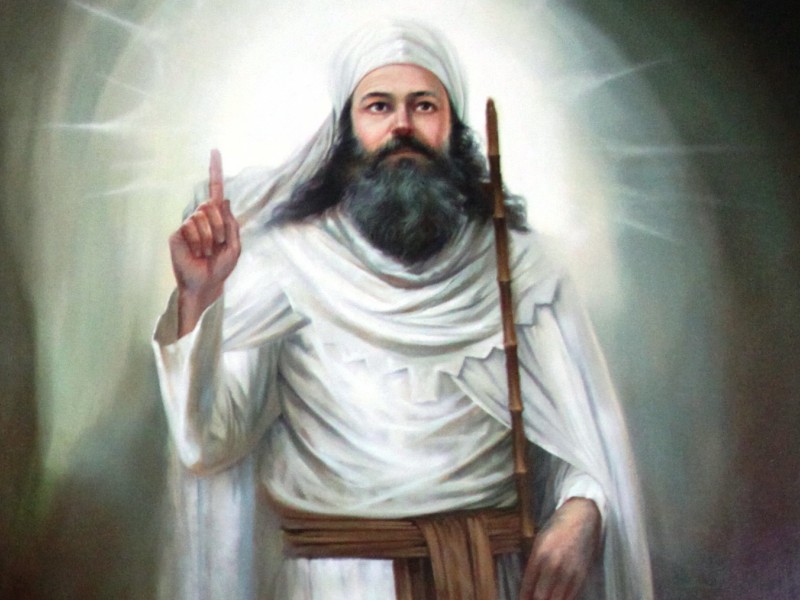
Answer 489: Allama Tabatabaee (ra) said: the term ‘Magoosh’ are called “Magus”, which refers to the followers of Zoroastrianism.[1] It has only been mentioned once in the holy Quran[2], and considering the fact that it has been used in a way that shows it is in contrast with shirk and the mushriks and is next to other divine religions like the Jews and the Nazarenes, it can be concluded that it has been a substantial religion with a prophet and holy book. Read More

post

Khosrow Parviz tore up the letter of the Holy Prophet (pbuh)

Question 070: Did Khosrow Parviz II tear up the paper Rasool’Allah (saws) sent? Is it true that the reason his empire collapsed was because he tore this paper? How true are the narrations that say because he was a just king, his punishment would be lessened? Above all, how do the Shia view him – one of the grandfathers of Imam al-Baqir عليه السلام?
Answer 070: The peace afforded by the Treaty of Hudaybiyyah gave an opportunity to Holy Prophet (PBUH) to dispatch several representatives to rulers and kings of Arabia and different parts of the world, each with a letter in which he invited them to become Muslims and submit to Allah’s (SWT) faith. All these letters had the same purport, that is, the invitation to monotheism and Islamic fraternity. Many of the letters were met with a favorable response whilst others were rejected. Read More

post

Shibli Shumayyil Praised the Holy Prophet and Imam Ali (pbuth)

Question 538: Assalam o alikum. Sea of knowledge, I have important question from you, I listen the name of “Shibli Shumayyil”, I only just name that name of philosopher ,who was materialist but he attracted from ali a.s. Did Shibli Shumayyil Praised the Holy Prophet and Imam Ali (pbuth)?

Please tell about the biography or pic any some data about him please?

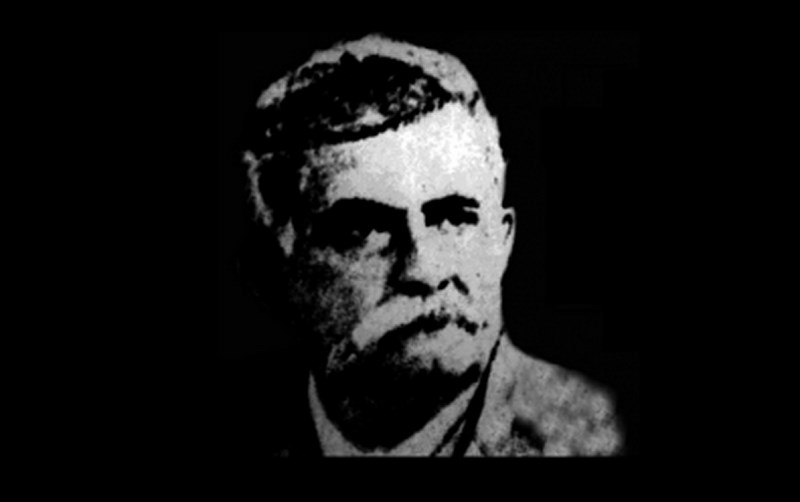
Answer 538: Shibli Shumayyil was a controversial Greek Catholic doctor, scientist, journalist, philosopher, poet, social reformer and polymath educated at the Syrian Protestant College in Beirut. He was born in Kafr Shima (Syria).

Shymayyil studied and taught medicine at the College, then traveled to Paris and Istanbul to complete his studies. He practiced medicine in Egypt for about ten years, and founded Al-Shifa Magazine in Cairo in the year 1886 in order to publicize medical advances.

In addition, he lived in the Europe for a short period of time then traveled to Egypt and settled in Alexandria, Tantar and finally in Cairo.

Shumayyil also wrote the program of the socialist party in Egypt. He was the foremost popularizer of Darwinism in the Arab World, considering science the hey to the secret of the universe. Apart from his works on Darwin’s theory of the Evolution, he published many articles on science, history, literature, criticism and politics; a work of Hippocrates; a treatise on the plague; a book on the urgent need for science and liberty in the Ottooman Empire (1895); a novel al-Hubb ‘ala al-fatra; ‘Human Society or Civilization’ that was published in 1885 in Al-Muqtataf, ‘The history of natural society’ (Tarikh al-ijtima al-tabi’i), ‘Physiology of groups’ (fisiologiyat al-ijtima’at). Shumyyil also translated Racin’e Iphigence, and wrote a play on Work War 1. [1]  It is said that Shumayyil had consciously adapted Ibn Khaldun to the intellectual framework of his time and had bent his concepts of society and political authority in significant ways.[2]

It is most noteworthy that although Shumayyil was a Christian and the Arab atheist, but he composed some poetry in praise of the Holy Prophet (PBUH) and Imam Ali (as).

Shumayyil said about Imam Ali (as): “The leader, Ali bin Abi Taleb, the greatest of the great, is the only exemplar that neither the East nor the West, has never seen the likes of, neither in the past nor the present.[3]

One of the good poetry he composed in praise of the Holy Prophet (PBUH) and Quran which is available in Arabic language is as follows:[4]

أنی و إن أک قد کفرت بدینه *** هل أکفرن بمحکم الآیات

أو ما حوت فی ناصع الألفاظ من *** حکم روادع للهوی وعظات

و شرائع لو أنهم عقلو بها *** ماقید العمران بالعادات

نعم المدبر و الحکیم و إنه *** رب الفصاحه مصطفی الکلمات

رجل الحجی رجل السیاسه والدها *** بطل حلیف النصر و الغارات

ببلاغه القرآن قد غلب النهی *** و بسیفه انهی علی الهامات

من دونه الأبطال من کل الوری *** من غائب أو حاضر أو آت

[1] . Haroun, G, Sibli Sumayyil, Une Pensee Evolutionniste arabe a l’epopue a’an-Nahda, Beirut (1985) which is available in French language;  Hourani, A., Arabic Thought in the liberal age, 1798-1939, London (1962), 248-53;  Encyclopedia of Arabic Literature, Volume 2, Pg. 716.

[2] . Muhammad Ridha Hakimi, Adabiyyat wa Ta’ahhud dar Islam, Pgs. 250-252.

[3] . George Gordaq, Sawtul-Adalah al-Insaniyyah, pg. 19 (quoted by the translation and commentary of the Nahjul-Balaghah, Jafari, Muhammad Taqi, vol. 1, pg. 171).

[4] . Muhammad Ridha Hakimi, Adabiyyat wa Ta’ahhud dar Islam, Pgs. 250-252.

post

Who was the First Idol Worshiper: Yard or Namrud

Question 006: Who was the first idol worshiper?
Answer 006: It is not possible to mention an exact time regarding the start point of polytheism, but there were two kinds of idol worship: open polytheism and hidden polytheism. Read More