post

Ascribing lies to Allah and his Prophet while fasting

Question 113: I was wondering, I know that ascribing lies to Allah acc the infallible (a) breaks ones fast, but is this only if someone says it to someone else? For instance what if someone kept a journal only for himself during Ramadan and then it turned out something he wrote was incorrect, would this break his fast? What if he ascribed a lie intentionally by writing?

Jazak Allah

Answer 113: Ascribing lies to Allah (SWT) and His Prophet (pbuh) is one of the things which invalidate our fast.

If a person who is observing fast, intentionally ascribes something false to Allah, the Almighty and the Holy Prophet (pbuh) and his vicegerents (a.s.), verbally or in writing or by making a sign, his fast becomes void, even if he may at once retract and say that he has uttered a lie or may repent for it. And, as a recommended precaution, he should refrain from imputing lies to Bibi Fatema Zahra (a.s.) and all the Prophets and their successors.

If a person intentionally ascribes to Allah or the Holy Prophet or the successors of the Holy Prophet a falsehood fabricated by some other person, his fast becomes void. However, if he quotes the person who has fabricated that falsehood, his fast will not be affected.

As a result, if he wrote something false to Allah and the Holy Prophet (pbuh) while he is fasting, his fast becomes void. Otherwise, if he wrote it in other months (excluding the holy month of Ramadan or a day he is fasting), his fast doesn’t become void. He must only repent to Allah (SWT), with sincere repentance! Maybe his Lord will absolve him of his misdeeds.[1]

For further information in this regards, please refer to the following answer:

Index: Things from which a person keeping fast must abstain & Kaffarah (Expiation), answer 372.

[1] . The official website of the office of Sayyid Sistani (ha), Fasting » Ascribing lies to Allah and His Prophet.

post

Wisdom of placing the Holy Quran on our head

Question 112: What is the wisdom and narrations of placing the Holy Qur’an on top of your head? When are the appropriate times during the year to do this?

Answer 112: As we Shia follow the traditions of the Infallibles (as), we all follow whatever they have been told us in this regards.
Ali bin Yaqteen narrated from Imam Kadhim (as) that the Imam (as) said: “Take the holy Quran in your hand and place it on top of your head and then say:

اللَّهُمَّ بِحَقِّ مَنْ أَرْسَلْتَهُ إِلَى خَلْقِكَ وَ بِكُلِّ آيَةٍ هِيَ فِيهِ وَ بِحَقِّ كُلِّ مُؤْمِنٍ مَدَحْتَهُ فِيهِ وَ بِحَقِّهِ عَلَيْكَ وَ لَا أَحَدَ أَعْرَفُ بِحَقِّهِ مِنْكَ يَا سَيِّدِي يَا سَيِّدِي يَا سَيِّدِي

Then say “یا الله” (O Allah) for ten times, “بحق محمد” (by the right of Muhammad (pbuh)) ten times, and then continue saying each name of the Infallible Imams (pbuth) ten times. After all has been mentioned ten times, beg Allah whatever you want. So, Allah, the Almighty will grant all your wishes.

It is said (in traditional resources) that whenever you face any problems try to offer two Rakats, place the holy Quran on top of your head and mention the name of Allah (SWT), Holy Prophet (pbuh) and ahlul bayt (pbuth) ten times, so Allah. The Almighty will grant your wishes. [1]

While placing the qur’an on the head. Remind yourself that true salvation can only be achieved by always keeping the rules of qur’an ahead of us to follow. The fact that we put the Qur’an on our head is a sign of respect and reverence. We beseech Allah by the thaqalayn – the speaking and the silent Qur’an.[2] Pray for Aql/Intelligence to be Kamil (complete), it is Kashe (submits) to quran & acquires Noor (light) from it.

O Allah! I appeal to Thee in the name of this Qur’an and the Rooh that was sent along with it, and in the name of the Momin (believer) whose praise is contained in this Book and The obligation that is on them. No one else recognizes the right and truth more than Thee

Transliteration:

“Allaahumma be haqqe haazal Qur’an we be haqqe man arsaltahoo beh, Wa be haqqe kulle momenin madahtahoo feeh, we be haqqeka alaihim fa-laa ahada a’arafo be haqqeka mink”[3]

Note: There are no restrictions limiting the times of placing the holy Quran on top of our head. However, it is more recommended to do so during these holy Nights of Power (19th, 21st or 23rd or 27th night of Ramadan / or 15th night of Shaban).

For further information in this regards, please refer to the following answer:

Index: The sign of Laylatul Qadr, the Night of Power, answer 065.

Index: Definition of Dua, Means and Intercession, answer 148.

Index: Reciting Dua or Dikr in any language during the Prayer, answer 579.

[1] . Sheikh Hurr Ameli, Wasail al-Shia, Vol. 8, Pgs. 125-126; Sayid bin Tawoos, Radhi al-Din Ali, al- Al-Iqbāl bi l-aʿmāl al-hasanah, Vol. 1, Pg. 186-187.

[2] . Holy Qur’an (39:56).

[3] .Refer to: http://duas.org/.

post

Fasting on Arafat Day / Mustahab Fast

Question 455: Salam alaikom. Is it compulsory to fast on the day of Arafah? Can you please tell us those days on which we have been strongly recommended to fast?

Answer 455: There are no restrictions limiting the times of fasting to a particular day, unless it is considered as haram on the day of Eid ul-Fitr and Qurban. It is recommended to fast on the Day of Arafa. But, if it is not possible for one to recite the Duas of ‘Arafa due to weakness caused by fasting, it is considered as Makruh to fast on that day. [1] Read More

post

The sign of Laylatul Qadr, the Night of Power

Question 065: Are there narrations that state that the sky should be completely white during sunrise, in order to confirm Laylatul Qadr? If there is, can you provide the narration(s) and its source(s)? And or are there other indications of confirmation?

Answer 065: When Imam Baqir (a.s) was asked, “What is the Sign of Laylat Al Qadr (The Night of Power)”, he replied:

“علامتها ان یطیب ریحها، و ان کانت فی برد دفئت، و ان کانت فی حر بردت فطابت”

Translation: “The sign for the night of power (Laylatul Qadr) is that a sweet smell of this night is spread everywhere. If it is in the winter its weather will be changed to hot and gentle. If it is during the hot summer it will be changed into the cool and temperate weather”. [1]

According to Allamah Tabatabaee, when the sun rose on the following morning, it had no (visible) rays[2].

Imam Sadiq (as) said: Every year we have the Night of Power. Its days are as the same as its nights.[3]

[1] . Wasaiel al-Shia, Vol. 7, Pg. 256.

[2] . al-Mizan, Vol. 4, Pg. 332.

[3] . al-Fusul al-Muhimmah fee Usul al-Aemmah (Takmilatul Wasael), Vol. 2, Pg. 165; al-Tahzib, Vol. 1, Pg. 445; Biharul Anwar, Vol. 95, Pg. 121.

post

Fasting and prayers of a traveler who travel after Zuhr

Question 384: Salam Alaikum! There is someone who lives in Stockholm and they work there too. But they decided during The Month Of Ramadhan to live outside the city, which that city is 50 km aways from Stockholm .But I know they can fast if they travel after Salat Aldhur ; here is the question, will the traveler’s Salat be Qasar or tamam?

My Marja: Ayatollah Al-Udhma Sayed Ali Al-Sistani

Answer 384: If they travel after Dhuhr (noon) their fast is treated as valid. If they have decided to stay in that city for 10 days they would have to offer their prayers tamam and fast till they are there for 10 days. Otherwise, they should offer their prayers Qasr and not to fast other days in this state.

According to Sayyid Sistani (ha), if a fasting person travels after Zuhr, he should, as a precaution, complete his fast. If he travels before Zuhr and had an intention from the previous night to do so, he cannot fast on that day. As a precaution, he cannot fast on that day even if he had no intention to travel from the previous night. In both the cases, he cannot break the fast till he has reached the limit of Tarakkhus. If he does, he will be liable to give Kaffarah.

If a traveller in the month of Ramadhan, regardless of whether he was travelling before Fajr, or was fasting and then undertook the journey, reaches his hometown before Zuhr or a place where he intends to stay for ten days, and if has not committed an act which invalidates a fast, he should fast on that day. But if he has committed such an act, it is not obligatory on him to fast on that day.

If after covering a distance which would add up to make 8 farsakh on return, the traveller abandons the journey, and if he decides to remain at that place, or to return after 10 days, or is undecided about returning or staying there, he should offer full prayers.

If a person abandons the journey after reaching a distance which would add up to make 8 farsakh on return, and decides to return, he should offer shortened prayers even if he wants to stay there for less than 10 days.

For the shar’i distance needed to travel in order for one’s prayer to become shortened, the fuqaha (Jurisprudents) have various rulings. Some say the distance necessary is approximately 22.5 kilometers.[1] Others say that the distance is approximately 21.5 kilometers.[2] Another group says that it is approximately 22 kilometers.[3]

A Farsakh is equal to three miles, while a mile is equal to four thousand cubits, whose length is equal to the breadth of twenty four fingers, and each finger is equal to the width of seven grains of barley, and each barley is equal to the breadth of seven average hair of a Turkish horse (or a pony). If the distance is less than that, even if to a minimal extent, the person on journey shall offer unreduced prayer.[4]

Note: A traveler for whom it is obligatory to shorten a four Rak’ats prayers to two Rak’ats, should not fast. However, a traveler who offers full prayers, like, a person who is a traveler by profession or who goes on a journey for a haram purpose, should fast while travelling.[5]

[1] Imam Khomeini, Ayatullahs Bahjat, Khamenei, Fadhil Lankarani, Safi and Nouri. Tawdhihul-Masa’el (of Marja’s), vol. 1, issue 1272.

[2] Makarem Shirazi, Tawzihul-Masa’el (of Maraji’), vol. 1, pg. 684.

[3] Tabrizi, Sistani and Vahid Khorasani, Minhajul-Salehin, issue 884.

[4] . The Official Website of Sayyid Sistani (ha), Prayers of a traveller » Prayers of a traveller (Musafir) & Fasting by a traveler; Tahrir al-Wasila of Imam Khomeini (ra), Vol. 1, Chapter on a Traveler’s Prayers and its Relevant Rules.

[5] . The official website of the office of Sayyid Sistani (ha), Fasting » Fasting by a traveller.

post

Using Asthma Inhaler does not break the Fast

Question 575: Does using an asthma inhaler break your fast? It’s a puff of medicine that you breathe into your lungs.

Answer 575: Since, the puffer uses a compressed gas that is used by the patient, which reaches the lungs via the trachea to expand the lungs, is not food or drink or anything resembling them there would be no problem for a person observing fast to use asthma inhaler during the day. His fast is not broken by using this kind of medicine, according to all maraja’.[1]

Note: There are many kinds of medication for asthma, some of which invalidate the fast and some do not. The most well-known of these medicines and treatments are puffers, oxygen, vaporizers and capsules that do not break the fast.

For further information in this regards, please read the following answers:

Index: Things from which a person keeping fast must abstain & Kaffarah (Expiation), answer 372.

Index: Number of things which are disapproved (Makruh) for a person observing fast, answer 566.

[1] . Tawzih al-Masael (annotated by Imam Khomeini), Vol. 1, Pg. 892, Issue: 1576; Ibid, Pg. 893, Sistani; The official website of the office of Sayyid Sistani (ha), Dialogue on miscellaneous issues.

post

Rules concerning Janabat during the holy month of Ramadan

Question 394: What is the ruling on Ehtelam in Ramadan? If a person doesn’t perform ghusal before Imsak then what about the Fasting? And if a person is taking a nap afternoon, and something like this (2-3 drops not sperms) happens, what is he supposes to do, is ghusal wajib on him? and what about that fasting, is it makrooh, haram, batil? A friend needs help 🙂 Jurisprudent: Ayatollah Sayed Khamenai or Sistani I guess.

Answer 394: If a person enters the state of Janabat during a night in the month of Ramadhan, and does not take Ghusl intentionally till the time left before Adhan is short, he/she should perform tayammum and observe the fast. However, it is a recommended precaution that its qadha is also given.

If a person in Janabat in the month of Ramadhan forgets to take Ghusl and remembers it after one day, he should observe the qadha of the fast of that day. And if he remembers it after a number of days he should observe the qadha of the fasts of all those days, during which he is certain to have been in Janabat. For example, if he is not sure whether he was in Janabat for three days or four, he should observe the qadha of three days.

If a person who does not have time for Ghusl or performing tayammum in a night of Ramadhan gets into state of Janabat, his fast will be void and it will be obligatory upon him to give qadha of that fast, as well as Kaffarah.

If a person investigates whether or not he has enough time at his disposal, and believing that he has time for Ghusl, goes into state of Janabat and when he learns later that actually the time was short, he performs tayammum, his fast will be in order. And if he presumes without any investigation that he has enough time at his disposal and gets into Janabat and when he learns later that the time was short, keeps the fast with tayammum, he should, as a recommended precaution, observe the qadha of that fast.

If a person investigates whether or not he has enough time at his disposal, and believing that he has time for Ghusl, goes into state of Janabat and when he learns later that actually the time was short, he performs tayammum, his fast will be in order. And if he presumes without any investigation that he has enough time at his disposal and gets into Janabat and when he learns later that the time was short, keeps the fast with tayammum, he should, as a recommended precaution, observe the qadha of that fast.

When a person in Janabat goes to sleep in a night of Ramadhan and then wakes up, the obligatory precaution is that if he is not sure about waking up again, he should not go to sleep before Ghusl, even if he has a faint hope that he might wake up before Fajr if he sleeps again.

If a person in Janabat in the night of Ramadhan feels certain that if he goes to sleep he will wake up before the time of Fajr prayers, and is determined to do Ghusl upon waking up, and oversleeps with that determination till the time of Fajr prayers, his fast will be in order. And the same rule applies to a person who, though not absolutely certain, is hopeful about waking up before the time of Fajr prayers.

Ihtilam During Day Time: If a person observing fast becomes Mohtalim during day time, it is not obligatory on him to do Ghusl at once.

When a person wakes up in the month of Ramadhan after the Fajr prayers and finds that he has become Mohtalim his fast is in order, even if he knows that he became Mohtalim before the Fajr prayers.

Note: There are three characteristics of semen as follows: 1) A sticky liquid that smells like dough. 2) Its color is milky with a hint of either green or yellow. 3) It is ejaculated when orgasm is reached, after which the body feels relaxed.

There must exist three characteristics for it to be called semen. They are: Sexual desire, ejaculation, and resultant relaxation of the body. In sick people, however, sexual desire is sufficient. So, if you saw the drops (as you are sure it is not sperm) that has not the above mentioned sings of the three characteristics it would not regarded as sperm and then no need to perform Jinabat ghusl. As a result, your fast is in order.

When one cannot ascertain whether the fluid emitted from one’s body is semen, urine or something else, it will be treated as semen if it is thrown out with lust and if the body is slackened. If all or some of these signs are not present the fluid will not be treated as semen. In the case of illness, the fluid may not come out with sudden swiftness and the body may not slacken; but if the emission takes place with lust, it will be treated as semen.

So, if he becomes sure the drop is semen or any other najas thing the clothes is treated as impure. Otherwise, it is considered as clean. As a result, if it is not semen performing ghusl is not obligatory upon him.[1]

For further information regarding Kaffarah, please refer to the following answer:

Index: Things from which a person keeping fast must abstain & Kaffarah (Expiation), answer 372.

[1] . Official Website of Sayyid Sistani (ha), Rules concerning Fasting, Remaining in Janabat or Haidh or Nifas till Fajr time;  Ayatollah Khamenei (ha), Ajwabat al-Istiftaat, Q 180; Ibid, Istiftaat, rules concerning Jinaba ghusl, Q 177, Pg. 229.

post

Qada Fast for a person reverted to Islam

Question 196: If a person reverts to Islam and they were unaware of fasting during their first Ramadan and missed the obligatory fasting, what should be done? Should they make up the fasts (qada) and pay kaffarah or can they just pay the kaffarah?

Answer 196: If it was not done deliberately and willingly there would be no obligatory on him to give Kaffarah. He must observe the Qada only. Because, commission of the things which invalidate fast are a cause of expiation in the same way as they make it obligatory to compensate for it, when it is done deliberately and willingly without any coercion.

According to Ayatollah Sistani (ha), it is obligatory on him to observe the Qada only.[1]

If an unbeliever becomes Muslim, it is not obligatory on him to offer qada for the fasts of the period during which he was an unbeliever. However, if a Muslim apostatises and becomes Muslim again, he must observe qadha for the fasts of the period during which he remained an apostate.[2]

For further information in this regards, please refer to the following answer:

Index: Things from which a person keeping fast must abstain & Kaffarah (Expiation), answer 372.

[1] . Tawzihul Masael of maraja, Vol. 1, Pg. 891, question 1572; Tahrirul Wasilah of Imam Khomeni (English version), Pg. 324; This question has been asked the Office of Sayyid Sistani (ha) by AskIslam.ir.

[2] . The official website of the office of Sayyid Sistani, Rules regarding the Qadha fasts.

post

How to Repent from Sins committed in the month of Ramadan

Question 139: I have done a very bad sin in the month of Ramadan. I went to the masjid for fajr on drugs. Everyone knew I was high. How do I repent from this sin and how do I stay on the straight path?

Answer 139: There are several aspects to your question that need to be addressed including the following:

  • Method of Repentance
  • Medical Issues of Addiction
  • Issues Related to Fasting
  • Public vs. Private Sins
  • The Issue of Hopelessness

Method of Repentance: There are some elements necessary to achieve repentance. One of the methods is knowledge. “…those of His servants only who are possessed of knowledge fear Allah Surely Allah is Mighty, Forgiving.”[1]

Realization of the serious sinful nature of intoxication and its consequences is an important element. Substance abuse is particularly dangerous to one’s soul because it can lead to a host of other sins, lead to bad deeds becoming more fair-seeming, afflict one’s ability to feel the weight of ones sins, and contribute to hopelessness in Allahs (swt) mercy. Imam Al-Ridha (as) said, “Allah (swt) forbade the drinking of wine, since it causes corruption, disturbance and intoxication of the mind and becomes the cause of all the sins including: murdering, falsely accusing chaste woman of adultery, committing adultery, lessening abstinence, and refraining from forbidden deeds.[2]

Consuming intoxicants is mentioned as one of the greater sins, “They ask you about intoxicants and the games of chance. Say, in both of them there is a great sin and means of profit for men, and their sin is greater than their profit.”[3]

Another method is regret or remorse, as it states in the Holy Qur’an Allah (swt) says, “And He it is who accepts repentance from His servants and pardons the evil deeds and He knows what you do”.[4] Another method is a strong will and intention. Imam Ja’far as-Sadiq (as) said, “A man never gets weak if he is strengthened with a firm intention (will).”[5]

Another method is doing extraordinary good deeds which cause forgiveness of bad deeds. Just as it states in the holy Quran, “And keep up prayer in the two parts of the day and in the first hours of the night. Surely good deeds take away evil deeds. This is a Reminder to the mindful.”[6]

To set these elements in place, one must continually work for and pray for his/her increase in correct knowledge of the straight path. Upon realizing one’s sin one should feel sincere regret and remorse over the action, not just in getting caught at it, and one should make a clear intention, resolve and plan to reform.

Once someone said in front of Imam Ali (as), “Astaghfirullah” (I ask Allah’s forgiveness), then Imam Ali (as) said, “Your mother may lose you! Do you know what ‘istighfar’ (asking Allah’s forgiveness) is?”[7]

‘Astighfar’ is meant for people of a high position. It is a word that stands on six meanings:

To repent over the past.

To make a firm determination never to revert to it.

  • To discharge all the rights of the people so that you may meet Allah quite clean with nothing to account for.
  • To fulfill every obligatory act which you ignored (in the past) so that you may now do justice with it.
  • To aim at the flesh grown as a result of unlawful earning, so that you may melt it by grief (of repentance) till the skin touches the bone and a new flesh grows between them.
  • To make the body taste the pain of obedience as you (previously) made it taste the sweetness of disobedience. On such occasion you may say: ‘astaghfirullah’.[8]

Medical Issues of Addiction: In the case of drug abuse, in addition to sincere repentance, one may have another issue to address. Several substances commonly abused by drug users may cause addiction. Addiction can be very powerful and may in some cases not be addressed through strength of will alone. One who is sincerely resolved to quit drug abuse may need to pursue medical and/or psychological assistance to achieve success. Without knowing individual details of this case, it is not possible to recommend particular resources but only to suggest that they might be needed. If such steps are needed, fulfilling them would be a necessary part of true and successful repentance.

Issues Related to Fasting: There may be concern about the validity of one’s fasts when under the influence of a drug. If a person eats or drinks something during the time period of fasting, this breaks one’s fast and requires both Qada (making up the fast) and kaffarah:

If a person eats or drinks something intentionally, while being conscious of fasting, his fast becomes void.[9]

In the following situations, both Qada and Kaffarah become obligatory, provided these acts are committed intentionally, voluntarily and without any force or pressure, during the fasts of Ramadan: (i) Eating and (ii) Drinking. If one committed such acts but didn’t know the rules concerning those acts which void his\her fast there would be no need to pay Kaffarah.

Making his\her fast up is sufficient in this matter. (Note: if one was able to know and learn the rule but didn’t, one must compensate and pay Kaffarah as well, according to Ayatollah Sistani (ha).

The kaffarah of leaving out a fast of Ramadan is to: (a) free a slave, or (b) fast for two months or (c) feed sixty poor to their fill (or give one mudd 3/4 kg.) of food-stuff, like wheat or barley or bread etc. to each of them. If it is not possible for him to fulfill any of these, he should give sadaqa according to his means and seek divine forgiveness. And the obligatory precaution is that he should give Kaffarah when he is capable to do so.[10]

If a person breaks his fast with something haram, whether it is haraam in itself, like wine or adultery or has become haram due to some reason, such as any food which is normally permissible but it is injurious to his health, or if he has sexual intercourse with his wife during haidth, he will have to observe all three Kaffarah, as a recommended precaution. It means that he should set free a slave, fast for two months and also feed sixty poor to their fill, or give one mudd of wheat, barley, bread etc. to each of them. If it is not possible for him to give all the three Kaffarah, he should perform any one of Kaffarah which he can possibly give.

Islamic Laws / Smoking during the time of fasting: It is an obligatory precaution not to allow the smoke of cigarettes and tobacco and the like to reach the throat while fasting.

Ayatullah Khamenei: As an obligatory precaution, smoking isn’t permissible while fasting.

Ayatullah Makarem Shirazi: It is an obligatory precaution that one who is fasting abstains from smoking cigarettes and all tobacco products, in addition to not allowing thick smoke reach his throat. Going to the shower where there is steam is okay.

Ayatullah Bahjat: The fast not being broken by dust or smoke that isn’t thick, isn’t a substitute for food and isn’t tonic, isn’t devoid of reason, although abstaining is ahwat (in accordance with precaution).

Ayatullah Nouri: The fasting individual must abstain from thick steam that changes back to liquid in the mouth and also, as per obligatory precaution, must not allow the smoke of cigarettes and tobacco products and the like to reach his throat.

Ayatullah Zanjani: In the holy month of Ramadan, smoking and using tobacco products openly in a way that is disrespectful to the fast is impermissible, and if it isn’t disrespectful, it is still impermissible as per precaution. In the case of an individual smoking, he should still abstain from all other invalidators of the fast until Iftar, and also must perform the Qada (make up for) that day.[11]

Ayatollah Sistani: Smoking during the time of fasting invalidates the fast. Injections do not necessarily break one’s fast unless the substance being injected is in place of food, for hydration, or is in itself the intoxicant.

Keeping all this in mind, if the drug was consumed during the period of fasting, it is possible that the fast was voided and Qada and Kaffarah may be called for. If the drug was consumed during the night, it is possible the fast is still in order unless ones intoxication resulted in something else that voids one’s fast. If one has questions about a specific case, a follow-up question may help clarify.

Public vs. Private Sins: Committing a sin in public can be of particular concern if it contributes to corruption of others. If one is inviting others to join in the sin, this is a further sin upon the first sin. Although the drug was not consumed publicly, being under its influence publicly provides evidence of the sin to others. Absent the condition of other persons knowing of the sin, then the public sin is the same as a private sin.

It is important to remember that Allah (swt) is Omnipresent and we cannot in truth, hide our sins. We should be more concerned about Allah (swt) witnessing our sins. We must strive to increase dhikr (remembrance) of God at all times, and remember that it is His opinion that matters, not the opinion of people. Good deeds performed so that others will notice are of little benefit and sometimes even harmful to one’s soul. In some cases where people are more concerned about the opinion of other people, instead of God’s, this can be a form of shirk (polytheism).

The Issue of Hopelessness: Hopelessness or despair can often be associated with addiction or drug abuse because of the great effects it has on one’s soul and the difficulties many experience in conquering it. It is known as the second greatest sin after polytheism. Amirul-Mu’minin (as) said to the man who was prevailed by despair of God’s mercy out of his many sins, “You, to despair of the mercy of Allah is the greatest sin that you have ever committed.”[12] “…and despair not of Allah’s Mercy; surely none despairs of Allah’s Mercy except the unbelieving people.”[13]

In conclusion, we have tried to address in detail the question, how to repent and avoid such a situation in the future and include resources for further assistance.

In some situations, some outside help may be necessary to overcome drug, alcohol, and tobacco addiction, in addition to the spiritual and repentance measures that must be taken, for the sake of your soul and Allahs (swt) pleasure. There might also be some underlying psychological issues stemming from either clinical or situational depression or other issues with mental health, in which case a licensed professional could be utilized to deal with those underlying issues. You will be able to find such help in your local areas by the suggestion or referral of your primary care physician.

Warding off Bad Thoughts: The relationship is always mutual. Our relationship with God is sometimes severed and cut off or tend to become weak; but He is always everywhere with us. God, the Exalted says, “And He is with you wheresoever ye may be. And Allah sees well all that ye do.”[14] Hence, if our connection with God becomes weak, we must look for the cause or setback. It has been said that the best way to get friendly with someone is to be in touch with them more often. Psychologically, this point has been considered to be undeniable and without a shred of doubt.

We must try to find what has created a distance between us and God. Sometimes arrogance, haughtiness, jealousy, feeling of needlessness and other sins which originate in the mind, create a distance between us and God. That is to say, the thinking power has been paralyzed in the sense that it cherishes only bad thoughts. Sometimes, some sins are committed by organs and limbs causing an obstruction (barrier) between us and God.

As you have stated in your message, it is likely that your separation from God may originate in those thoughts. Since, there is a thought behind every action, and an action beyond knowledge, we should control the mind and not let everything enter it. Although such an action seems to be difficult, the results are very positive.

Sometimes, the thoughts that enter the mind come from the Shaitan which should be warded off and repelled immediately because they force man into action. God, the Exalted says, “And most surely the Shaitans suggest to their friends that they should contend with you.”[15] Therefore, one should prevent satanic thoughts from entering his mind.

One of the biggest and most important factors that leads man away from God and causes him to become negligent are unwanted memories.”[16]

Some of these ungodly memories have so much influence on the individual that he loses his concentration amid performing the best act of worship i.e. prayer. It is therefore necessary to prevent the growth and development of such memories. The memories develop gradually as a result of talking and speaking with someone, listening, being in some gatherings, reading some magazines etc. When they get profuse and accumulated, they create some sort of enthusiasm. Finally, they become part of a man’s secondary habit coming easily to his mind and causing him to be oblivious of God. For this reason, those who have a materialistic mindset are constantly seeking worldly pleasures.[17]

As was said earlier, it is necessary to prevent such thoughts from entering the mind and one should endeavor to ward off those thoughts that are coming to his mind. The Qur’an gives a solution; (one should guard himself against evil things and remember God. He should be careful as to where he goes, what he reads, listens, eats and wears. When he takes care of all these, gradually, zikr (remembrance) of God will be instilled in his heart and thereupon, good memories will be formed in his mind. For this reason, the Qur’an suggests “remembering God” as a way for coming out of negligence and for seeking proximity to the Truth).[18]

God, the Exalted says, “O you who believe! Remember Allah with much remembrance.[19] When remembrance increases in one’s heart, he starts to get interested in Him and this interest becomes his secondary habit so much that he remembers God in all situations.

Having said that, one should, therefore, pave the way for purifying and cleansing his heart and mind from bad memories and from impurities by remembering God and preventing the evil influences of negative and tormenting thoughts.

Note: Some of the answers have adapted (with a lot of changes have been made on) from:

http://www.al-islam.org/;

http://www.islamic-laws.com/;

http://muharram-blog.blogspot.com/2015/10/islam-and-importance-of-intention.html;

http://www.narconon.org/;

http://www.aa.org/;

https://nicotine-anonymous.org/.

[1] . Holy Qur’an, 35:28.

[2] . Wasail-Shia – Volume 17, Page 22.

[3] . Surah al-Baqarah 2:219; Refer to the book of Ayatollah Dastghaib wrote about this in detail, Vol. 1&2.

[4] . Surah Shoura, verse 25.

[5] . Biharul Anwar, Vol. 67, Pg. 211; Biharul Anwar, Vol. 67, Pg. 205, hadith 14.

[6] . Surah Hud, verse 114.

[7] . Biharul Anwar, Vol. 93, Pg. 285.

[8] . “الجنة محفوفة بالمکاره و جهنم محفوفة باللذات و الشهوات” Wasa’ilul-Shia, vol. 15, pg. 309, section 42 (the section that speaks of refraining from haram desires and pleasures).

[9] . Tawzihul Masael of maraja, Vol. 1, Pg. 891, Q 1572.

[10] . Tawzihul Masael of maraja, Vol. 1, Pg. 931.

[11] . (Araki, Golpaygani, Khu’i, Fazel, Tabrizi, Sistani, Safi) the rest of the issue hasn’t been mentioned; Ajwibatul-Istifta’at (in Farsi), inquiries 744 and 760; Tawdihul-Masa’el (annotated by Imam Khomeini), vol. 1, pg. 903, issue 1605.

[12] . Al-Mahjatul baida’i, Vol. 7, Pg. 253.

[13] . Surah Yūsuf 12:87.

[14] . Surah Al-Hadid, verse 4.

[15] . Surah An’am, verse 121.

[16] . Javadi Amuli, Abdullah, Stages of Morality in Quran, pg.30.

[17] . Ibid, pg.32, with minor modifications.

[18] . Stages of Morality in Quran, pg.34 and 35.

[19] . Surah Al-Ahzab, verse 41.

post

Zakat of Fitrah, Zakãt al-Abdan (or Zakãt of Bodies)

Question 045: What is Zakat al-Fitrah and on whom its payment is obligatory? Can you also please let me know the commodity for, and the quantity of and the time when Zakãt of Fitrah becomes obligatory Zakät?

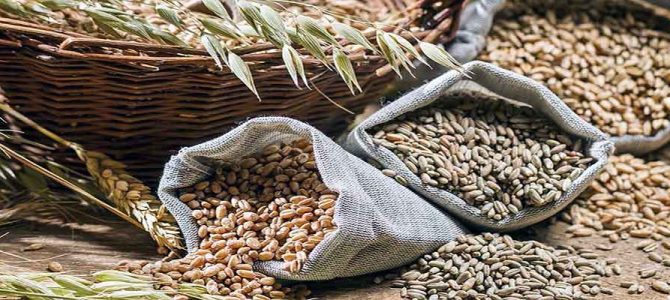
Brief Answer 045: At the time of sunset on Eid ul fitr night (i.e. the night preceding Eid day), whoever is adult and sane and is neither unconscious, nor poor, nor the slave of another, he should give, on his own behalf as well as on behalf of all those who are his dependents, about three kilos per head of wheat or barley or dates or raisins or rice or millet etc. It is also sufficient if he pays the price of one of these items in cash. As per obligatory precaution, he should not give from that food which is not staple in his place, even if it be wheat, barley, dates or raisins.[1] Read More