post

Obligatory of Khums on savings exceeds ones expenditure

Question 559: Assalamulaikum. I have a question regarding Khums on savings exceeds ones expenditure, please. A person has taken a bank loan, and spent the money. The loan is being paid back by monthly installments. The person is able to pay the monthly installments and has enough extra from the monthly salary to put into a savings account. Is khums payable on the savings, given that the loan repayments is still ongoing. Thank you

Answer 559: One of the thing which the khums is obligatory on is profit or gain from earning. This means, if you earn by means of trade, industry, agricultural work, teaching, research or any other ways of earning, and if it exceeds the annual expenses for maintaining yourself and your family, you should pay Khums (i.e. 1/5) from the surplus, in accordance with the rules mentioned in Tawzih al-Masael of maraja’.

Therefore, you are supposed to pay Khums after a year has passed since you gained, on the savings which exceeds your expenditure as well as paying the monthly installments of the loan for that year.[1]

Note: In case the saving is used to purchase the essential things and meet the expenses, Khums would not be payable on it, if it is spent (two or three months) shortly after the khums year to meet those needs.[2]

[1] . The official website of the office of Syyid Sistani, rules concerning Khums.

[2] . Tawzih al-Masael of maraja’ (annotated by Imam Khomeini), Vol. 2, Pg. 79, Q 909.

post

Rules of prayers and fasting performed without ghusl

Question 034: I used to masturbate, for the past few years, without knowing it was haram and that it voids the prayers and the fasts. I didn’t take the ghusl (ritual bath) and was fasting and praying in this impure state. Today I understand my mistake, but I don’t remember how many times I did it, nor how many fast/prayers it concerns. I’m 14 years old, and I don’t know which rules apply to me in order to pay the Qadha, as I didn’t know it was haram. I think I’ve missed at least three months of fasts. What’s the rule for someone who ignored that masturbation was illicit? I follow Ayatullah Khamenei.

Answer 034: Undoubtedly, one must make qada, as all the fasting and prayers have been done in the state of Janabat, according to Ayatollah Khomeini, Bahjat, Tabrizi, Khamenei, Makarem, Vahid and Sobhani.[1] If he\she knew that, his\her prayer and fasting in this state is regarded as invalid. What should one do if the one didn’t know the rule concerning this issue nor knew that performing ghusl is required for doing such acts?

Remember, to act based on your own marja’ ruling. Here are some of the answers of our contemporary scholars concerning this issue, as follows:

According to Imam Khomeini (May his soul rest in peace), who had replied to the question: What is the ruling on a woman who ignorantly didn’t know the rules concerning womens ihtilam and then she has done her worships without ghusl? He replied as follows: If they weren’t sure that they have become polluted, (jonob) there would be no need to compensate those prayers that have been offered in that state, however in any case, her fasting were considered as valid.

According to Ayatollah Khamenei, one must make qada for those of her prayers that have been offered in the state of janabat, but her fasting is considered as valid and doesn’t need to compensate it if she didn’t know the rules concerning the janabat itself.
According to Ayatollah Bahjat, one who doesn’t know that janabat ghusl is obligatory, his\her prayers that have been offered in that state are void and must compensate them.
Ayatollah Makarem has said, as long as the woman has performed hayd ghusl (as it is sufficient by which she doesn’t need to perform janabat ghusl), those of her prayers and fasting that have been done after the ghusl, are treated as valid. Those prayers that have been offered before performing ghusl and in the state of janabat are void and must be compensated. One who has become polluted by doing haram act is able to perform his\her ghusl by hot water.

According to Ayatollah Sistani, Safi Golpayegani and Fazel (ha): if you didn’t neglect learning Islamic laws your fasts have been done in this state would be in order, but you must perform Ghusl and fulfill the qaza of your prayers.[2]

Ayatollah Noori, Your fast is in order, but you have to qadha all your prayers offered in the state of Janabat.[3]

Note: Self-satisfaction which is referred to as masturbation or Istimna’ is a major sin and haram and has a heavy punishment.

In the Holy Quran Allah (SWT) says: “Say [that Allah declares,] ” O My servants who have committed excesses against their own souls, do not despair of the mercy of Allah. Indeed Allah will forgive all sins. Indeed He is the All-forgiving, the All-merciful.”[4]

[1] . Ayatollah Tabrizi, Serat al-Najat, Vol. 1, Q 107; Minhaj al-Salehin, Vol. 1, after rule 1004;  Ayatollah Wahid, Minhaj al-Salehin, Vol. 2, after rule 1004;  Sitiftaat, Vol. 1, Fasting, Q 31, Ayatollah Khamenei, Q 194.

[2] . Ayatollah Sistani, Minhaj al-Salehin, Vol, after rule 1004;  Ayatollah Fazel, Jame al-Masael, Vol. 1, Q 558.

[3] . Ayatollah Noori, Istiftaat, Vol. 2, Q 96.

[4] . Surah al-Zumar, verse 53.

post

Offering Qada Prayer if you forget to clean the dress carelessly

Question 033: I had wudu before suhoor yesterday and then I ate. After eating, my stomach was hurting so I went to the toilet and I saw light brownish marks from feces on my underwear. There wasn’t any actual feces on it, but just a faint mark. I wanted to clean it but I forgot and ended up doing wudu and praying Fajr. I only remembered when I was going to bed. I wasn’t sure whether I have to make up this prayer or not. In the morning, when I woke up, my menses started. What is the rule of Offering Qada Prayer?

Answer 033: If you were sure that the light brownish mark was from the feces and forgot to clean it, you have to make your Fajr prayer up (Qada). However, there wasn’t any actual feces on your underwear!

Otherwise, if you were not sure whether it was from feces and Najas or not your prayer is treated as valid.[1]

In Minhaj Ul Saliheen, Grand Ayatollah Sistani (ha) said, “According to an obligatory precaution, if it was due to carelessness, his prayer is treated as invalid whether he remembered after prayer or during prayer. Otherwise, if it wasn’t due to carelessness his prayer is valid.[2]

[1] . Tawzih al-Masaiel of Maraja’, Vol. 1, Pg. 85, Question 121;Ibid, Pg. 87, Question 123.

[2] . Minhaj al-Saliheen, Vol. 1, Pg.144, Question 422 & 426.

post

The validity of Ghusl even a barrier finds out after a week

Question 031:  If someone does ghusl and after a week finds out that there was a barrier, such as nail polish on their left foot, do they need to repeat the entire ghusl or is it sufficient just to wash that area.
Answer 031: If the Tartibi (sequential) Ghusl was performed, one must only wash that part where the barrier was and that would be sufficient, even though time has passed and all parts of the body had become dry. Therefore, there would be no need to repeat the entire Ghusl nor to repeat washing the whole left side of body. However, if the barrier was on the right side of body and the Tartibi Ghusl was performed, one must wash that part and then wash the whole left side of body.

According to Khomeini (r.a), if one finds out that there was a barrier on his or her body, one must repeat the entire Ghusl if he or she was performed Irtimasi (submerging the whole body) Ghusl, whether or not the barrier was on the left side of the body or right.

It should be noted that all prayers offered after the Ghusl was performed are invalid. The obligatory prayers must be repeated, however fasts are treated as valid.[1]

[1] . Imam Khomeini, Tahrir al-Wasilah, Vol. 1, Pg. 41, issue number 7; for further information please refer to: Tabrizi, Jawad bin Ali, newest Isteftaat, Vol. 1, Pg. 143, Q. 672, first edition; Bahjat, Muhammad Taqi, Isteftaat, Vol. 1, Pg. 206, Q. 719, the office of Ayatollah Bahjat, Qom, first edition, 1428 A.H.

post

Impermissibility of confirming marriage tie with others during Iddah (waiting period)

Question 554: Salam alaikum wa rahmatullahi wa barakatu. Thank you for this helpful and wonderful service. I have a question if you would be so kind to answer. If a lady is in iddah, is she allowed to talk to a man for the purpose of seeing if he will be a suitable husband after her iddah is over? Can she talk to him during iddah before he has formally proposed? Jazak Allah Khair and thank you

Answer 554: Divorce is of two types: Irrevocable divorce (Ba’in)[1] and revocable divorce (Rej’ie)[2]. And marriage proposal can be made directly or indirectly.

According to the Holy Quran and Islamic Law, a woman who is in her Rej’ie Iddah (waiting period) is not allowed to confirm the marriage tie with others whether directly or indirectly. Because, she is still considered as the wife of her husband, though she is allowed to be proposed indirectly during Ba’in Iddah.[3]

In this regards, Allah, the Most High says: “And there is no blame on you respecting that which you speak indirectly in the asking of (such) women in marriage or keep (the proposal) concealed within your minds Allah knows that you will mention them, but do not give them a promise in secret unless you speak in a lawful manner And do not confirm the marriage tie until the writing is fulfilled And know that Allah knows what is in your minds, therefore beware of Him And know that Allah is Forgiving, Forbearing”.[4]

Note: According to maraja (ha), all kinds of relations with a non-Mahram including joking, expressing mutual love, talking with the intention of deriving pleasure, looking at the body of a girl (except her face and hands up to the wrists) and at her hair or looking at her face with pleasure are haram (forbidden). In fact, if it is feared that they might fall into a sin, it is forbidden for them to have any kinds of relationship with each other. [5]

For further information regarding Ba’in divorce, please read the following:

The irrevocable divorce has five types:

1) The divorce of the woman who has not completed nine years of age.

2) The divorce of the menopausal woman (Yaa’isah) who has passed fifty years of age.

3) The divorce of the woman whom her husband had not had intercourse with her after the marriage.

4) The divorce of the woman who has been divorced three times.

5) The Khala’[6] and Mubarat[7] divorce.

Whatever is aside from these are the revocable divorce (Rej’ie).

[1] . Ba ‘in (Talaq-i): An irrevocable divorce after which a woman is free to conclude a contract of marriage with another husband, indeed, after completing the prescribed period called Iddah, and the husband divorcing her irrevocably cannot recall her except by contracting a fresh marriage with her subject to the restriction of the prescribed number of such remarriages by the same husband.

[2] . Meaning that it is permissible for the man to return to his wife during the seclusion (‘Iddah) without need of renewing the marriage contract.

[3] . Golpayegani, Sayyid Muhammad Reza, Majma al-Masael, Vol. 2, Pg. 256, Dar al-Quran al-Karim, Qom, second, 1409 A.H; Imami, Sayyid Hasan, Huquq Madani, Vol. 4, Pg.  270, Islamiyyah Publication, Tehran, Bita.

[4] . Surah Baqarah, verse 235.

[5] . The official website of the office of Sayyid Sistani, Chat between Male & Female

[6] . The divorce of a wife who develops an aversion from husband and hates him, and surrenders to him her Mahr or some of her property so that he may divorce her, is called Khula’ Divorce. The hatred must have reached a proportion where she would not allow him conjugal rights.

[7] . If the husband and the wife develop mutual aversion and hatred and the woman gives some property to the man so that he may divorce her, this divorce is called ‘Mubarat’.

post

Number of things which invalidate Wudhu (ablution)

Question 556: Can you please let us know those things that invalidate Wudhu (ablution) and their Causes?

Brief answer 556: Things that invalidate wudu are: Passing of urine. Excretion. Passing wind from the rear. A sleep, deep enough to restrict sight and hearing. However, if the eyes do not see anything, but the ears can hear, Wudhu does not become void. Things on account of which a person loses his sensibility, like insanity, intoxication or unconsciousness. Istihaza which will be dealt with later. Janabat, and, as a recommended precaution, every state which requires Ghusl.[1]


Detailed answer 556: There are several Unclean Things which invalidate wudu (ablution) and cause the necessity for its repetition.


1 & 2: Effusion of urine or what falls under its category, such as the suspected wetness coming out before istibrã’ or excretion of feces from the natural or unnatural passage, regardless whether the natural passage is blocked or not, and whether its amount is large or small, and whether it is accompanied, for example, by worms or lumps.

3: Passing out of wind from anus, if it comes out of the stomach or bowels, whether it is accompanied with sound and bad odor or not. But the wind that comes out of the front organ (vulva) of a woman, and not from the stomach or bowels is like the wind that enters from outside and then comes out. (It will not nullify ablution).

4: A sleep which overwhelms the senses of sight and hearing (as a result of which the eyes do not see, and the ears do not hear).

5: Everything which stuns human reason such as insanity, swooning, drunkenness or the like.

6: The minor or medium Istihädah (undue menstruation), rather to be more cautious, the abundant one too, though we have declared ritual bath to be obligatory in such cases.

Note: If the water of enema comes out without being accompanied by something like it would not invalidate ablution.

Likewise, if there is suspicion of the water of enema being accompanied by something, Or when some worm or lump comes out without being sullied by feces, (the ablution shall not be void)[2]

[1] . Tawzih al-Masael of maraja’ (annotated by Imam Khomeini), Vol. 1, Pg. 188.

[2] . Tahrir al-Wasilah of Imam Khomeini, Vol. 1, Things that invalidate Ablution & Their Causes.

post

Qualification of an Imam of congregational prayers

Question 021: In our area we don’t have enough Mosques. The students make a Jamaat and among us, one leads the prayer. Usually one student from Saudi Arabia leads the prayer but recently we found out that he is involved in bad activities which is forbidden in Islam. He is the most knowledgeable among us, in terms of deen and he is also Hafiz in Quran. Should we still pray behind him after everything we know about him? What should we do now?

Answer 021:  Justice is one of the conditions that a person who leads the prayer should have. Justice meaning, the person is in a state of heartfelt God-fearing that keeps us from doing any capital (Kabirah) and venial (Saqirah) sin. The following are some conditions an Imam of Jamaat should have: Read More

post

Philosophy of Hijab during prayer

Question 020: Why must a women be covered when she prays to Allah (swt) in her own home and please provide Hadith. Is it merely to show respect? Is it to induce feelings of modesty and piety psychologically? It must be for our benefit as Allah (swt) is our creator and sees all whether we are we are covered or not. What is the philosophy of Hijab during prayer?
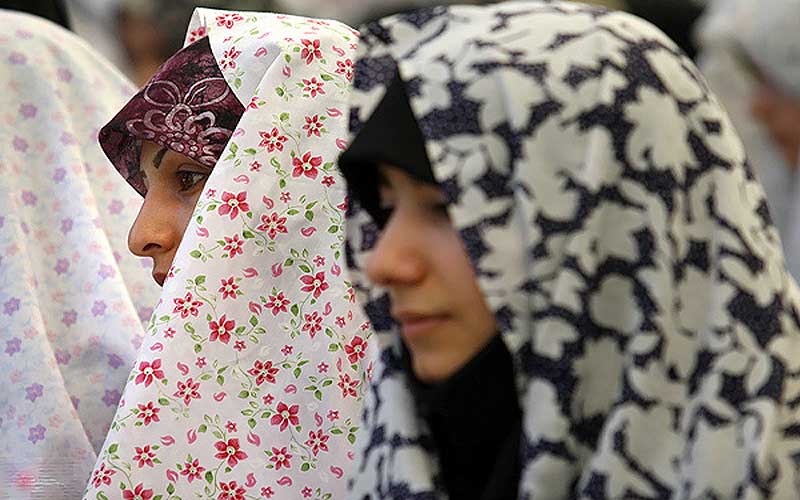
Answer 020: Setr (covering) is one of the Islamic Jurisprudence rules. In Islam, covering is not specialized for the women only and men have such special Islamic rules. Covering during praying is one of the rules in this matter. Perhaps the purpose of covering ourselves when praying is that the dignity and personality of a man requires him\her to show his\her respect for Allah (SWT) even there is no one in the room where praying can see him\her. Probably, we can conclude that the benefit of covering is at first observing this dignity and personality. The following are some reasons regarding why women must cover themselves when praying:

  1. According to all Muslims, in Islam every Islamic sects are unanimously agreed that a woman must have a particular covering.[1]
  2. Narrations: there has been narrated some traditions in which stated that a woman must have special covering during prayer as follows, so we can conclude that this is the one that scholars have been issuing such fatwa in this regards: [2]

  3. Imam Muhammad Baqir (as) has said: “A woman must offer her prayer on Khimar (scarf) and Dir’ in Arabic :

درعcloth like a shirt, called Dir’ (درع) which would cover from about the middle of their chest down to their knees or lower than the knees.) in case the dress is not thin”.[3] In Fiqhi term Khimar means something that a woman can cover her head and hair by. In the Holy Quran Allah (SWT) says: “And tell the faithful women to cast down their looks and to guard their private parts, and not to display their charms, except for what is outward, and let them draw their scarfs over their bosoms, and not display their charms except to their husbands, or their fathers, or their husband’s fathers, or their sons, or their husband’s sons, or their brothers, or their brothers” sons, or their sisters” sons, or their women, or their slave girls, or male dependents lacking] sexual [desire, or children uninitiated to woman’s parts. And let them not thump their feet to make known their hidden ornaments. Rally to Allah in repentance, O faithful, so that you may be felicitous”.[4]

  1. Ibn Abi Yafour has narrated from Imam Sadiq (as) as He said: “A woman must offer her prayer while she wore three kinds of clothes: Izar (the traditional long wide dress that envelope the body from head to toe, Dir’ and Khimar (scarf). There is no problem to cover her head and neck by Khimar. If she hasn’t these three clothes she must offer her prayer with two clothes. i.e. use one of the both as Izar (like skirt) and cover her lower part of body and the other as scarf (by which cover her head and the upper part of her body). I asked the Imam that what should the woman do if she has nothing but Dir’ and Malhafa (chador or bed sheet) and doesn’t have scarf? Imam has replied: No problem. She is supposed to use Chador in order to cover her body from head to toe.”[5]
  2. Zorara bin A’ayon has asked Imam Baqir (as): What is the minimum dress a woman can offer her prayer by? The Imam (as) has replied: “Dir’ and Malhafa (like Chador) in a way that covers all parts of her body.”[6]

Note: According to maraja, a woman is allowed to keep her face and hands uncovered in the presence of a non-Mahram man, provided that she does not fear of getting into a harãm act, that the exposure of her face and hand does not cause men to gaze at her in a forbidden way, and that it does not give rise to immorality in general. Otherwise, it is obligatory on her to conceal [her face and hands], even from those who are mahram to her. It is not permissible for a woman to expose the top part of her feet to a non-mahram onlooker. However, she is allowed to keep her feet —top as well as sole— exposed during salãt, if she is in a place where she is immune from the looks of a non-mahram person.[7]

[1] . Borojerdi, Hussain, Taqrir Bahth al-Sayyid al-Borojerdi, by: Ishtihardi, Sheikh Ali Panah, Vol. 1, Pg. 67, Office of Islamic Publication, Qom, 1416 A.H.

[2] . Refer to: Taqrir Bahth al-Sayyid al-Borojerdi, Vol. 1, Pg. 67.

[3] . Mahmood Abdul Rahman, Mojam al-Mustalihat wa al-Alfadh al-Fiqhiyah, Vol. 2, Pg. 79, Darel Fadilat, Cairo, 1407 A.H.

[4] . Surah al-Noor, verse 31.

[5] . Al-Kafi, Pg. 395 – 396. The Arabic version of this Hadith is follows: «مُحَمَّدُ بْنُ يَحْيَى عَنْ أَحْمَدَ بْنِ مُحَمَّدٍ عَنِ الْحُسَيْنِ بْنِ سَعِيدٍ عَنْ عُثْمَانَ بْنِ عِيسَى عَنِ ابْنِ مُسْكَانَ عَنِ ابْنِ أَبِي يَعْفُورٍ قَالَ قَالَ أَبُو عَبْدِ اللَّهِ ع تُصَلِّي الْمَرْأَةُ فِي ثَلَاثَةِ أَثْوَابٍ إِزَارٍ وَ دِرْعٍ وَ خِمَارٍ وَ لَا يَضُرُّهَا بِأَنْ تُقَنِّعَ بِالْخِمَارِ فَإِنْ لَمْ تَجِدْ فَثَوْبَيْنِ تَتَّزِر بِأَحَدِهِمَا وَ تُقَنِّعُ بِالْآخَرِ قُلْتُ فَإِنْ كَانَ دِرْعٌ وَ مِلْحَفَةٌ لَيْسَ عَلَيْهَا مِقْنَعَةٌ فَقَالَ لَا بَأْسَ إِذَا تَقَنَّعَتْ بِالْمِلْحَفَةِ فَإِنْ لَمْ تَكْفِهَا فَلْتَلْبَسْهَا طُولًا»

[6] . Sheikh Tusi, Tahzib al-Ahkam, researcher: Moosavi Khurasan, Hussain, Vol. 2, Pg. 217, Darel Kutubel Islamiyah, Tehran, fourth edition, 1407.

[7] . The official website of the office of Sayyid Sistani (ha), Women’s issues » General Rules.

post

Ways to obtain the verdict (Fatwa) of a Mujtahid

Question 555: Can you please tell us the ways by which we can obtain the verdict (Fatwa) of a Mujtahid?

Answer 555: There are three ways of adopting the verdict (Fatwa) of a Mujtahid on different issues:

  1. Listening to the verdict from the Mujtahid himself.
  2. Narration by one or two morally sound (Adl) persons about the Mujtahid (‘s verdict) or about (his opinion given in) his Risâlah (Tawzih al-Masael), provided that it is free from (typing) errors; rather, the narration by a single person would be sufficient, if he happens to be one whose statement is relied upon.
  3. Consulting the Mujtahid’s Risãlah, provided that it is free from (typing) errors.[1]

[1] . Tahrir al-Wasilah of Imam Khomeini, RULES REGARDING TAQLID.

post

When a representative of marja tells a rule incorrectly

Question 019: If a representative of marja or religious scholar (not a Marja himself) tells a ruling of a Marja e Taqlid incorrectly and we follow his advice deeming it to be correct, will our action be regarded correct in the light of shari’ah?

Answer 019: It depends on what action has been done incorrectly. In some cases, making mistakes doesn’t void your action, however, in other cases, it would void it. For example, if you performed your wudu incorrectly (leaving out some parts of the body which must be washed in wudhu) according to the representatives explanation and then you realized it was wrong, you have to compensate your prayers which have been previously offered, because wudu and the like is an obligatory action that must be done c orrectly.

It doesn’t matter if you yourself didn’t know how to do it correctly, nor that you offered it based on the representative or even the marja whom you follow, in that he explained its rule mistakenly.

If you made mistakes without causing harm (e.g. did the wiping of the head or feet [mash] with a new water), then your wudhu and ghusl will be considered correct; and, consequently, his past prayers and pilgrimage will also be considered correct, if you was ignorant out of negligence in learning the Islamic laws.[1]

On the other hand, if you mistakenly recited Suratul Ikhlas incorrectly your prayer would be considered as valid whether or not you have done it based on your own knowledge or the marja’ Fatwa.

Additional Source: This Question was sent to the office of Ayatollah Mousa Shubairi Zanjani (ha), and His Excellency has replied to it as follows: “It depends on what action has been done incorrectly. E.g. those prayers have previously been offered by the wudhu have to be compensated”.

According to Ayatollah Safi Golpayegani, if the wudhu has previously been performed incorrectly you have to compensate all your prayers which have been previously offered.

[1] . For further information regarding Jahl, please refer to: The official website of the office of Sayyid Sistani (ha).