post

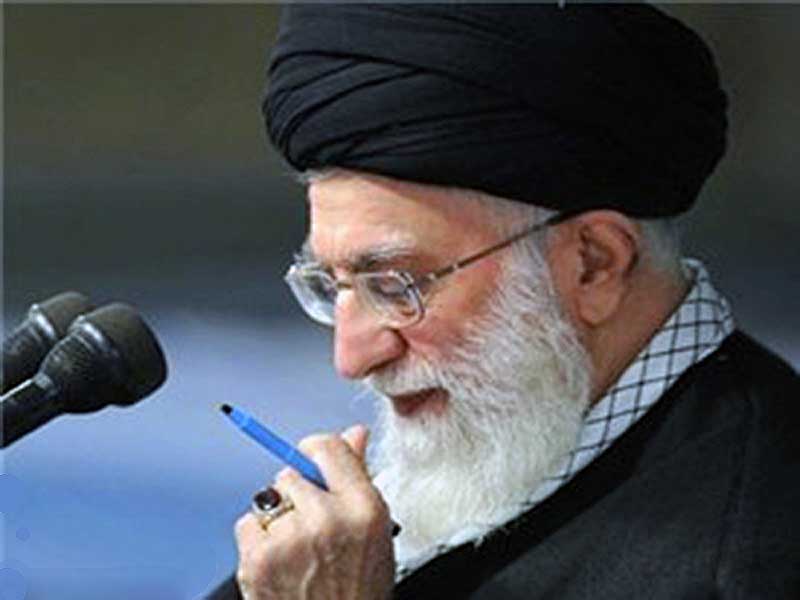
Benefits of Beard / Fiqhi Reason on Shaving Beard

Question 590: Salaam. I want to ask that what are the benefits of beard?

Answer 590: Rulings of the divine religion of Islam are legislated based on the real benefits and harms behind actions, meaning that if Islam orders for something to be done, or for something to be refrained from, one can be sure that all of the different effects and dimensions of such an action have been weighed up and taken into consideration; the obligation of keeping the beard being no exception.

According to all of the maraji’, the permissibility of shaving the beard entirely, is disputable and cannot be verified[1], but for something to be called a beard doesn’t mean that it has to be kept long and thick. One can also trim it short and neaten it in a way that it is not said that it has been shaved off, or to somehow trim it in a way that won’t be harmful to one’s conjugal relationship and also brings about the wife’s satisfaction to an extent.[2]

Only shaving or trimming facial hair (beard)[3] with shaving machines in a way that people say there is no beard anymore, is impermissible based on obligatory precaution.[4] Also, shaving a portion of the beard has the same ruling as shaving all of it.[5] Thus, shaving the hairs on the cheeks or neck and behind the neck which aren’t considered part of the beard, and also the hairs under the armpits, etc., using such machines is permissible.

It is noteworthy that Islam pays special attention to cleanliness and has emphasized on getting rid of excess body hair.[6]

[1] Of course, some of the maraji’, such as Ayatullah Khu’i (rah) consider keeping the hair on the chin (which is also referred to as a ‘goatee’) and shaving the rest of the facial hair to suffice. See: Sirat al-Najat (of Ayatullah Khu’i annotated by Ayatullah Tabrizi), vol. 2, pp. 284-285.

[2] . Adopted from answer 1952 IQ (Index: The beard and its impact on conjugal life).

[3] The growth of facial first happened after Prophet Adam’s dua saying: “O Lord! Increase my beauty!” Allah (swt) answered I made the beard the zinah (adornment) of you and your children till the Day of Judgment.” In a hadith by the prophet of Islam, he says to keep the beards long in order not to resemble the Jews and Zoroastrians. See: Hilyah al-Muttaqin, fifth book, fourth and fifth chapters.

[4] Istifta’at of Imam Khomeini, vol. 2 (makasib muharramah), pg. 30, issue 79, pg. 31, issue 81, and pg. 32, issue 84.

[5] Is it permissible to have a goatee? All of the maraji’ (except Ayatullahs Makarim and Tabrizi): No, it doesn’t suffice and is the same as shaving the entire beard. Imam Khomeini, Istifta’at, vol. 2, makasib muharramah, issue 84; Ayatullah Wahid Khorasani, Minhaj al-Salihin, vol. 3, issue 43; Ayatullah Khamenei, Ajwibah al-Istifta’at, issue 1413; Ayatullah Sistani, www.sistani.org, beard shaving, questions 1 and 3; Ayatullah Safi Golpaygani, Jami’ al-Ahkam, vol. 2, issue 1743; Ayatullah Bahjat, Tawdih al-Masa’il, miscellaneous, question 4; Ayatullah Nuri, Istifta’at, vol. 1, issues 492 and 493; Ayatullah Fazel Lankarani, Jami’ al-Masa’il, vol. 1,issues 955 and 957.

[6] . Adopted from answers 3313 IQ – 1952 IQ.

post

The Secret of Prayer / Sirr us-Salat

Question 589: Salaam. I want to ask what the reason behind the every act of Namaz? What is the Secret of Prayer (Sirr us-Salat)?

Answer 589: Without doubt every divine ruling has its philosophy and reason, but we do not have to investigate every ruling and find its philosophy. A true Muslim must surrender before the message of revelation. This character of submission and acceptance creates perfection in the human being and essentially some rulings are obliged upon mankind to test and gage his level of obedience and faith. God’s command to Ibrahim (A.S.), to sacrifice his child Ismail, is a fine paradigm.

What you will realize in this brief response is that every Islamic ruling and worshipping code in Islam has its philosophy.

Firstly: because of hundreds of Quranic verses and hadith which encourage people to think and ponder.[1]

Secondly: one of the strongest criticisms of the Quran against mushriks and idol worshipers is that they blindly and unreasonably follow their ancestors.[2]

Thirdly: the Quran itself has mentioned rulings along with their philosophy.[3]

The infallible imams have attended to disclosing these secrets in the traditions received from them and Muslim scholars have written books on these secrets and philosophies.

In light of these points one must add:

  1. It isn’t indispensible that all people in all times know of all of these philosophies.
  2. We must be aware not to solely perceive the philosophy of Islamic rulings as material and worldly benefits and simply focus on the financial, sanitarian, etc., facets and neglect the spiritual and moral effects.
  3. One who believes that God is wise and obliges his rulings upon mankind accordingly, should not look for reasons and explanations and rely on the wisdom of his lord. However, reasons and philosophies have been mentioned regarding prayer, some of its essentials (arkan), details and recitations such as intention (niyyat), tashahud, ruku’, sujud, salam, etc. Here, we will point out a few examples.

Prayer Prohibits Evil

The Quran says: Prayer prohibits from evil and vice.[4]

Prayer and Effacing Negligence

In another section we read: Keep up prayer for My remembrance.[5]

Prayer and Tranquility

It also reads: By Allah’s remembrance are the hearts set at rest.[6]

Battle Against Pride and Arrogance

Prayer, which is the remembrance of the source of every greatness and appeal to the center of power and greatness, eliminates self pride and arrogance. In other words, prayer shatters pride and arrogance; because one who prays seventeen raka’ts of prayer in a 24 hour time span and places his forehead on the ground in humbleness in every raka’t, perceives himself as a tiny creature before his lord and tears open apart the veil of being self-conceit. This is why, after faith, Imam Ali (A.S.) describes the first and most important worship with this same goal, to be prayer: Allah has obliged faith to cleanse man from uncertainty and prayer for cleansing him from arrogance.[7]

Developing the Habit of Punctuality and Organization

Prayer develops the habit of punctuality; because this ritual must be done in certain times and performing it earlier or postponing it will invalidate it. The same goes for other parts of the prayer such as, intention, qiyam, ruku’, sujud, qu’ud. etc., which facilitate the tendency to be punctual and organized in other aspects of life.

Remembrance of Resurrection

One who prays remembers the hereafter and its greatness when reciting “Master of the Day of Judgment”. It reminds him that there is a world other than this one which is the result and manifestation of our actions and deeds in this world.

Expressing Love to the Good and Disassociation and Aloofness from Evil

Expressing love to the good and disassociation and aloofness from evil is one of the philosophies of reciting the verses of the holy surah of Al-Hamd. One who prays and recites “ایاک نعبد و ایاک نستعین، اهدنا الصراط المستقیم صراط الذین انعمت علیهم”, is seeking the friendship and closeness of God Almighty, the Prophets, the right doers, martyrs and the righteous and moves to their side and by saying “غیر المغضوب علیهم و لاالضالین”, distances himself from the mislead and deviated.

In the end we must point out that: the reason for the obligation of prayer is the remembrance of and admitting to Allah being our lord, battling with shirk and idol worshipping, standing before Allah in humbleness, admitting to our sins and asking for forgiveness and placing the forehead before Allah and His glory. Some of the other main reasons for praying are to be constantly aware, not allow negligence to takeover, become proud of oneself and self-conceit, humbleness and for our blessings to blossom.[8]

These were some of the Quranic verses and ahadith which unveil some of the secrets and philosophies of prayer.

Before concluding it is necessary point out that numerous books and articles have been written about the secrets and philosophies of prayer by different authors and Shiite scholars.[9]

Sources for further research:

Ilal al-Sharaye’, Sheikh Saduq

Sirr al-Salah and Ādāb al-Salah, Imam Khomeini

A Glimpse at the Philosophy of Prayer, Mohsen Qara’ati

For further information on this issue, please refer to the following sources:

The Secret of Prayer, Sirr us-Salat, by Imam Khomeini (ra). (PDF version)

Ilal al-Sharaye’, Sheikh Saduq

A Glimpse at the Philosophy of Prayer, Mohsen Qara’ati

[1] Nahl:44; Aal Imran:191.

[2] A’raf:173.

[3] Ankabut:45; Baqarah:183.

[4] Ankabut:45.

[5] Taha:14.

[6] Ra’d:24.

[7] Nahjul-Balaghah, saying 252. “وَ قَالَ (ع) فَرَضَ اللَّهُ الْإِيمَانَ تَطْهِيراً مِنَ الشِّرْكِ وَ الصَّلَاةَ تَنْزِيهاً عَنِ الْكِبْر”.

[8] Sheikh Saduq, Man la Yahduruhu al-Faqih, vol. 1, pg. 214, Jame’eye Mudarresin, Qum, second edition, 1404 AH; Sheikh Saduq, Ilal al-Sharaye’, vol. 2, pg. 317, Davari, Qum, first edition, “إنّ علة الصلاة أنها إقرار بالرّبوبية للّه عزّ و جلّ، و خلع الأنداد و قيام بين يدي الجبّار جلّ جلاله بالذّلة و المسكنة و الخضوع و الاعتراف، و الطّلب للإقالة من سالف الذّنوب، و وضع الوجه على الأرض كلّ يوم إعظاما للّه جلّ جلاله و أن يكون ذاكرا غير ناس و لا بطر.و يكون خاشعا متذلّلا راغبا طالبا للزيادة في الدّين و الدنيا مع ما فيه من الإيجاب، و المداومة على ذكر اللّه عزّ و جل باللّيل و النهار و لئلّا ينسى العبد سيّده و مدبّره و خالقه، فيبطر و يطغى و يكون ذلك في ذكره لربّه عزّ و جلّ، و قيامه بين يدي”.

[9] . Adopted from answer 13873 IQ.

post

Ifk, the Slander / Shia Beliefs about Aisha

Question 180:  Salam everyone, I’m not Shia Muslim but my husband is Shia Muslim. I have several question, since I saw lots of story about Sunni and Shia in internet. How are Shia beliefs about Aisha (i.e. about Ifk, the Slander)? Does is true that in Shia Muslim Aisyah position is not too good as others wife’s prophet?

Answer 180: In order to give a clear answer to the question, we must deal with various subjects so that after analyzing them, we may reach an appropriate conclusion in this regard. Those subjects are the following:

  1. Which is the verse in the Quran that you intend to refer to and what story does it relate to?
  2. What does the term “momeen” (faithful) mean in the verse of the Quran? Do you mean to say that if a person is described as momeen in the Quran, he turns into a legendary and unobjectionable personality?!
  3. To what extent can men influence the lives of their wives? If a woman is a prophet’s wife, does it mean that she is immune to all kinds of errors and mistakes?
  4. What is Shi’ah belief about Aisha? What are our criticisms of Aisha?

We will discuss the above questions in the same order:

  1. Most probably, the intended verse in your question is verse 23 of Sura al-Al-Noor which was revealed in connection with the “slander” story. It says:

“ان الذین یرمون المحصنات الغافلات المؤمنات لعنوا فی الدنیا و الآخرة و لهم عذاب عظیم”


“Surely those who accuse chaste believing women, unaware (of the evil), are cursed in this world and the hereafter, and they shall have a grievous chastisement.[1]

Some commentators of the Holy Quran is of the view that this verse is general and that it applies to every person who accuses a chaste woman of an indecent action. Such an interpretation seems to be more coherent and suitable as it can be inferred from the context of the verse. Some other scholars are of the view that the verse is particular to wives of the Prophet (s). There is also a third group of scholars who say that the said verse relates to the “slander” story and the person of Aisha[2]. If so, all these interpretations lead to a fixed conclusion which is the meanness and abominableness of accusing others without a valid reason because it is not wise to say that it is mean to accuse only the wives of the Prophet not those of others. Therefore, assuming that your interpretation of the verse is correct and that it relates to the “slander” story and Aisha, then we have to see what the “Ifk, the slander” story is.

It is better to hear the story from Aisha herself since she has narrated this event at length but the summary of the story narrated by her as under:

“Whenever the Prophet (S) would intend to go on a journey, he would cast lots amongst his wives. So whoever’s lot would be picked, would accompany the Prophet (S). So he cast these lots on one of these expeditions and my name came up, so I traveled with the Prophet (S). This was after the verses pertaining to hijab were revealed and therefore I would travel in my hawdaj and be carried in it. After the expedition had finished and we were returning to Madinah, the Prophet (s) gave orders to camp the night outside of Madinah. When the orders were given to encamp, I stood up and walked away from the army to relieve myself. When I returned, I felt my chest and noticed that my onyx necklace had broken [and fallen] so I returned to where I had been [to search for it]. I was delayed in searching for it and in the meantime the people that were assigned to carry my hawdaj had already placed it on top of the camel, presuming that I was [back] in it. So they sent the camel forward and I found my necklace after they had gone. By the time I returned to the caravan camping ground, there was not a soul in sight. One of the companions was also lagging behind the army.  For some reason he was late so he was not up with the army and he walked up to my place. We both moved out together and reached the army of the Messenger of Allah.  This led some people to spread gossip about me and finally the verse of Ifk was revealed and which was a proof of my chastity. [3]

Now, we should see as to who were most involved in spreading this gossip. What is understood from the historical narrations in this regard is that Abdullah bin Ubai, Hassan bin Thabit and Musattah bin Athatha were at the top gossipers.[4] As for the social position of those who spread the gossip, this is an inquiry that also needs to be replied. The answer to this inquiry helps us reach a correct analysis of the story:

  1. A) Abdullah bin Ubai: He is one of the famous and renowned hypocrites who left no stone unturned to weaken the Holy Prophet (s)? It is very natural on his part to exploit this incident for his own benefit.
  2. B) Hassan bin Thabit: He is a poet who has composed a lot of poems on different occasions about different events during the period of the Holy Prophet (s) but Shiites criticize him for his performance in the ensuing years after the demise of the Prophet (s). His actions against the Commander of the Faithful are not approved of by Shiites. Hassan is one of the poets who composed different poems about the first caliphs and even in praise of Aisha but he also had a hand in this gossip. Years later, after the demise of the Holy Prophet (s) Hassan composed a poem in which he expressed his willingness to meet Aisha but she rebuked him expressly for his involvement in the accusation or what was known as “slander event”. [5]
  3. C) Musattah bin Athatha: This man was Abu Bakr’s maternal cousin who due to poverty was also finally supported by him. Sunni exegetes are of the view that Abu Bakr no longer supported him after the slander incident when he learned that he was involved in accusing his daughter. But then a verse was revealed saying that it was not good to do such an action and Abu Bakr started giving him his support afresh.[6]

Almost all Shi’ah jurisprudents have narrated the story in the same way as reported in Sunni books and they believe that the verse of Ifk (slander) is in regard with the same event.[7] There is a small minority of commentators of the Quran who do not consider this verse to be about Aisha saying that the verse has been about Maria al-Qibtiyya.[8] This was a brief explanation of the story of “Ifk” about which the verse in question has been revealed.

  1. The next point to mention is that even if we suppose that the verse in question makes an explicit reference to Aisha’s iman (faith) then our question is: Does the verse imply that whosoever is described in the Quran as faithful, it is guaranteed that he/she will remain faithful until the end of his/her life or that his/her actions will not be subject to any criticism?! We do not accept such an interpretation because, as the Quran says, there were some believers who returned to disbelief and infidelity and became even further stern than other disbelievers.[9] Also, the Holy Quran has many a time addressed some people as momeen (faithful) yet it has threatened and rebuked them in the severest manner.[10] Some Sunni brothers have made the same mistake about the companions of the Holy Prophet (s). Relying on some Quranic verses which implies God’s pleasure and satisfaction with the companions at a particular period of time, the Sunni scholars have considered their positions higher than they can be objected and they believe that despite the fact that many of the companions fought one another and engaged in bloodshed, it is not permissible for other Muslims to criticize them or make any remarks about them. Thus they believe that every companion of the Prophet (s) irrespective of whether he is a murderer or the murdered or impartial in an event must be respected. You can read more by referring to questions 3499 and 3517 on our website.

The conclusion we draw is that even if we assume that your interpretation of the verse is correct and that the term “faithful” in it concerns Aisha, we cannot, with reference to the said verse, consider Aisha to be a personality beyond any criticism.

  1. Perhaps, some may think that Aisha’s spousal relationship to the Holy Prophet (s) is a reason that makes us avoid raising any criticisms about her. We must say in this regard that if we go through the religious texts and Quran on top of them, we will find out that women have an independent personality and that it is they themselves who decide to be good or bad at the end of the day. Nevertheless, if we want to assess women in relation to their husbands, we can divide them into five separate groups:

1-3. The First group consists of women who both themselves and their husbands believe firmly in God and follow His commandments. Naturally, such an understanding is the best possible situation and believing men always pray to God to grant them such a success and bestow upon them such prosperity. They say: “Our Lord! Grant unto us wives and offspring who will be the comfort of our eyes, and give us (the grace) to lead the righteous.”[11] Couples like the Prophet (s) and the Mother of the Faithful, Khadijah and also the Commander of the Faithful, Ali (a.s) and the greatest lady of the worlds, Fatima (s.a) can be introduced as the most manifest examples of this group.

2-3. The second group consists of wicked and cruel women who, with the help and collaboration of their irreligious husbands, endeavor to oppose the prophets and divine saints.  Unlike the first group, such couples will be in the worst abode.

The Holy Quran has given an example of such women in Sura al-Masad. It reproaches Abu Lahab who despite having family relationship with the Prophet (s) hurt and tormented him. Also, his wife Umm Jamil, sister of the great enemy of Islam, Abu Sufyan has been reproached. [12]

3-3. There are also women who fail to get married in their lives due to the unavailability of means or opportunity but such women remain chaste and religiously adherent and Allah bestows special attention to them. Lady Maryam is in this group. There are many ayahs (verses) throughout the Qur’an which refer to Maryam[13] and there is a chapter in the Qur’an revealed in Maryam’s name.  She is a lady with such dignified position for whose protection and taking care, the pious ones quarreled with one another.[14]  And Zakariyah, the prophet of Allah, noticing the divine attention towards this great lady and despite being old and his wife being infertile, he prayed to God to grant him a child and his prayer was answered.[15]

4- 3. If we go through the historical reports, we come across ladies who, despite marrying oppressive and unjust rulers, maintained their faith and showed great resistance against their tyrant husbands. Asiya wife of Pharaoh can be introduced as a suitable model representing such ladies. She was harassed and tormented so much by Pharaoh that she prayed to God for death and martyrdom and she finally achieved her goal. The Quran praising the bravery and valor of this woman introduces her as a model for all faithful people irrespective of whether they are male or female.[16]

5-3. Contrary to the above group, we find women who enjoyed the privilege to become the prophets’ wives but unfortunately and to every one’s dismay, they not only did not help them and thank God for this great blessing but they continuously conspired against them, hurt and annoyed them and did whatever they could to create hurdles on the way of those prophets.  One of them was Noah’s wife; God, the Almighty, ordered Prophet Noah, after the typhoon had just started, to load from every species of animals a couple and He forbade him from picking his wife and one of his sons who did not believe in him.[17]

Prophet Lut’s wife also ended having an evil fate as she was subjected to divine punishment along with other unbelievers.[18]

In the last part of Sura al-Tahrim, God introduces these two women as ungrateful women who despite being married to noble and righteous people, acted treacherously towards them. Their relationship with the prophets was of no avail to them and therefore they were told to enter Hell along with other unbelievers.[19]

It is interesting to know that at the beginning of the same short chapter i.e. Sura Al-Tahrim in which reference has been made to the evil fate of Noah and Lut’s wives, two of the Holy Prophet’s wives have also been reproached and reprimanded for their unfavorable and annoying behaviors towards him.[20] They have been introduced to Islamic society as individuals whose hearts have been stained with darkness.[21]

Regardless of how they hurt and misbehaved with the Prophet (s), there is no doubt among the historians and exegetes – Sunni and Shia – that these two women were Aisha, the daughter of the First Caliph and  Hafsa, the daughter of the Second Caliph!

If you do not believe us and you think that Shiites have fabricated this story, we advise you to go through some of the most important Sunni sources to see to your amazement that they have also confirmed the same story seeing no one other than Aisha and Hafsa to be the manifestations of the aforementioned verses. We just cite only two examples of the traditions narrated in Sahih Bukhari and Sahih Muslim and leave the rest to you to study:

  1. A) Narrated Ibn Abbas: “I intended to ask ‘Umar so I said, “Who were those two ladies who tried to back each other against the Prophet?” I hardly finished my speech when he said, They were ‘Aisha and Hafsa.”[22]
  2. B) Narrated Ibn ‘Abbas: I had been eager to ask ‘Umar bin Al-Khattab about the two ladies from among the wives of the Prophet regarding whom Allah said ‘If you two (wives of the Prophet namely Aisha and Hafsa) turn in repentance to Allah, your hearts are indeed so inclined (to oppose what the Prophet likes) till ‘Umar performed the Hajj and I too, performed the Hajj along with him. (On the way) ‘Umar went aside to answer the call of nature, and I also went aside along with him carrying a tumbler full of water, and when ‘Umar had finished answering the call of nature, I poured water over his hands and he performed the ablution. Then I said to him, “O chief of the Believers! Who were the two ladies from among the wives of the Prophet regarding whom Allah said: ‘If you two (wives of the Prophet) turn in repentance to Allah your hearts are indeed so inclined (to oppose what the Prophet likes)?” He said, “I am astonished at your question, O Ibn Abbas. They were ‘Aisha and Hafsa.”[23]

Now, we want you to answer as to why God, the Exalted, speaks about the fate of another two ladies immediately after He reveals verses denouncing Aisha and Hafsa for their act of hurting the Prophet (s). Why does God speak about the fate of two women who, like Aisha and Hafsa, were the wives of prophets but their relationship to those prophets were of no avail to them?

Therefore, one cannot consider the wives of prophets as being utterly and absolutely beyond any criticism.

  1. Having said that, we can now meticulously illustrate Shi’ahs’ perspective about Aisha and say that she enjoys two positions according to us:

First position:  Although we criticize Aisha for the reasons mentioned above, we also respect her as one of the wives of the Holy Prophet (s) and because the Quran regards the Prophet’s wives as the mothers of the faithful.[24] We respect her to the same degree that our Master, Imam Ali (a.s.) respected her following his victory in the Battle of Jamal in which Aisha pleaded Imam Ali for forgiveness and the Imam returned her to Medina with full respect and with forty armed women accompanying and guarding her.[25]

Also, we do not accept the false accusation levied against her in the “slander” event. As stated in some Shia sources, we believe that such sins cannot be committed by a wife of the Prophet (s) and that what is mentioned in the Quran as treachery refers to other offences committed by her.[26] Basically, we do not assail anyone by levying false accusations against him/her simply because we have some objections towards him/her. We believe such an act, as per the Quranic verse, is unjust because the Quran says that our criticism of people should not incite us to act unjustly.[27]

Second position: We know that obeying a mother is incumbent to a limited degree determined by God. We are not allowed to obey her absolutely and under all circumstances.[28] Unfortunately, this wife of the Prophet (s) and the Mother of the Faithful, committed acts which have given rise to objections on the part of some Shiites as well as some fair-minded Sunnis. We shall now mention only two important instances and leave the rest to you to study:

First instance: “Aisha hurt the Prophet (s) many times during the period she lived with him. As was stated in the third part of this answer, a few verses were revealed denouncing her and one another wife of the Prophet (s).

Second instance: Aisha was one of the most important individuals involved actively in the internal and well-organized civil wars ignited among Muslims. She ignored the Prophet’s advice to her[29] as we shall explain below:

During the period of the third caliph when public indignation increased against some of his designees, Aisha was one of the people who propagated heavily against him and even likened him to a Jewish man named Na’thal. She even incited people to kill him telling them “Kill the Na’thal” but when the insurgency intensified, she left Medina for Mecca thinking that as soon as Uthman would relinquish from power, her relative, Talha, who was also one of the leaders of the insurgency, would take the reign and occupy the caliphate. On her way to Mecca, she learned that Uthman had been killed. She became happy hearing the news and immediately asked the reporter as to whom the caliphate had been transferred to. When she heard that the people had chosen the Commander of the Faithful, Ali (a.s.) as the caliph, she suddenly changed her position and expressed regret over Uthman’s murder! The reporter was taken aback with this sudden change of position. Therefore, he asked: “You were one of those people, who were instigating people against Uthman, how come you have now changed your opinion? Aisha answering this criticism and without denying her role in the insurgency answered: “Yes, I was among the opponents of Uthman but I believe the people must have made Uthman to repent and then they might have killed him! Then she returned to Medina and completed all preparations for the Battle of Jamal.[30]

What was presented in this study has been extracted from Sunni sources and one cannot deny or reject them.  Also, there are many other topics in the same books and also in Shi’ah sources each of which can give rise to  more criticisms but we are not going to discuss them for the sake of brevity but we want you to reply to our question without any prejudgment:

What is the reason a person cannot criticize a lady who enjoyed the honor to be the wife of the greatest Prophet sent to mankind but who with her annoying the Prophet (s) caused some intimidating verses to be revealed. In addition, she played an important role in starting an internal war among Muslims because she was involved in Uthman’s murder and, by ignoring the Holy Prophet’s warning, she launched the “Battle of Camel” causing the blood of thousands of her children to be spilled without any specific results.

If she is beyond any criticisms simply because she is the wife of the Holy Prophet (s), then why God considers, in Sura al-Tahrim, the wives of some of the prophets as being entitled to the Fire of Hell?! Why does God, addressing the Prophet’s wives, say that whoever among you commits a blatant sin will be punished twice as much as other people?[31] Do you find a sin more blatant and open than a military surge against the Prophet’s brother, his successor and the murder of thousands of people under the pretext of avenging the blood of a person in whose death she herself was primarily and overtly involved?

[1] – Al-Noor, 23.

[2] – Qurtubi, Muhammad bin Ahmad, Al-Jame’ le-Ahkaam al-Qur’an, vol.13, pg. 209, Nasir Khosro Publications, Tehran, 1364 (1985).

[3] – Sahih Bukhari, vol.3, pg. 154 – 155, Dar al-Fikr Publication, Beirut, 1401 A.H.

[4] – Sahih Bukhari, vol.6, pg. 13.

[5] – Sahih Bukhari, vol.5, pg. 61.

[6] – Tabari, Abu Ja’far, Jami’ul Bayan fi Tafsir al-Qur’an, vol.18, pg. 82, under verse 22 of Sura al-Noor, Dar al-Ma’arefah Publication, Beirut, 1412 A.H.

[7] – Vide: Tabarsi, Fazl bin Hasan, Jawame’ul Jami’, vol.3, pg.98, Tehran University Press, 1377 (1998); Tusi, Muhammad bin Hasan, Al-Tebyan fi Tafsir al-Quran, vol.7,pg. 415, Dar Ihya al-Turath al-Arabi, Beirut.

[8] – Ali bin Ibrahim, Tafsir Qommi, vol.2, pg. 99, Darul Kitab Institute, Qom, 1404 A.H.

[9] – Al-Nisa, 137; Al-Munafeqoon, 3; Al-Maedah, 54

[10] – Al-Tawbah, 38; Al-Maedah, 51, Al-Ahzab, 69; Al-Hojurat, 1-2; Momtahenah, 1; Al-Saf, 2; Al-Munafeqoon, 9; Al-Anfal,5.

[11] – Al-Furqan, 74.

[12] – Al-Masad, 1-5: Perish the hands of the Father of Flame! Perish he! No profit to him from all his wealth, and all his gains! Burnt soon will he be in a Fire of Blazing Flame! His wife shall carry the (crackling) wood – As fuel!- A twisted rope of palm-leaf fibre round her (own) neck!

[13] – Al-Tahrim, 12; Aal-e Imran, 42-43 etc.

[14] – Aal-e Imran, 44: “hou wast not with them when they cast lots with arrows, as to which of them should be charged with the care of Mary: Nor wast thou with them when they disputed (the point).”

[15] – Aal-e Imran, 37 -40: “There did Zakariya pray to his Lord; he said: My Lord! grant me from Thee good offspring; surely Thou art the Hearer of prayer.”

[16] – Al-Tahrim, 11: “And Allah sets forth, as an example to those who believe the wife of Pharaoh: Behold she said: “O my Lord! Build for me, in nearness to Thee…”

[17] – Hud 40: We said: “We said: Load therein two of every kind, a pair (the male and female), and thy household, save him against whom the word hath gone forth already, and those who believe.”

[18] – Hud, 81, “And let not any of you look back: but thy wife (will remain behind): To her will happen what happens to the people.”

[19] – Al-Tahrim, 10: “Allah sets forth, for an example to the Unbelievers, the wife of Noah and the wife of Lut: they were (respectively) under two of our righteous servants, but they were false to their (husbands), and they profited nothing before Allah on their account, but were told: “Enter ye the Fire along with (others) that enter!”

[20] – Read the full story in reliable Sunni or Shi’ah Tafsir (commentary books) under Chap. Al-Tahrim.

[21] – Al-Tahrim, 4-6: “If ye two turn in repentance to Him, your hearts are indeed so inclined; But if ye back up each other against him, truly Allah is his Protector, and Gabriel, and (every) righteous one among those who believe,- and furthermore, the angels – will back (him) up.”

[22] – Sahih Bukhari, vol.6, pg. 70

[23] – Sahih Bukhari, vol.6, pg. 147 – 148; Sahih Muslim, vol.4, pg. 192, Dar al-Fikr, Beirut.

[24] – Al-Ahzab, 6: “And his wives are their mothers.”

[25] – Shakh Mufid, Al-Jamal, pg. 415, Congress on Shaykh Mufid, Qom, 1413 A.H.

[26] – Majlisi, Muhammad Baqir, Behar al-Anwar, vol.11, pg. 308, Al-Wafa Institute, Beirut, 1404 A.H.

[27] – Al-Maedah, 8: “And let not the hatred of others to you make you swerve to wrong and depart from justice.”

[28] – Al-Ankabut, 8; Luqman, 15: “But if they strive to make thee join in worship with Me things of which thou hast no knowledge, obey them not; yet bear them company in this life with justice (and consideration).”

[29] – Ibn Kathir al-Demashqi, Al-Bedayah wan-Nehayah, vol.6, pg. 212, Dar al-Fikr, Beirut, 1407 A.H.

[30] – Tarikh al-Tabari, vol.4, pg. 458 – 459, Dar al-Turath, Beirut, 2nd edition, 1387 A.H.

[31] – Al-Ahzab, 30: “O wives of the prophet! whoever of you commits an open indecency, the punishment shall be increased to her doubly.”; Adopted from answer 4523 IQ.


post

Lamentation: Normal mourning for Imam Hussain (as)

Question 049: What measures should we take so that Mola Hussain (as) will accept our Azadari? What is the normal mourning for Imam Hussain (as)?

Answer 049: What has been mentioned with great emphasis in the verdicts of grand jurists and religious authorities is that mourning, lamentation, crying and being sad at the sad martyrdom of the Chief of Martyrs, Imam Hussein (a) is good and profusely rewarded. It should be noted that different cultures, communities and people hold different forms of mourning and ceremonies in commemoration of the martyrdom of Imam Hussein (a). No special form of mourning has been recommended in the traditions. Taking off clothes which is customary in some countries or places are subject to the same area’s customs and habits; they have no special virtue or value nor has any special emphasis been laid on them. In fact, at places where there are women and these ceremonies are held in their presence, it is better and more appropriate to hold these ceremonies without taking one’s shirts.[1] Read More

post

Abortion Law / Kaffarah of Abortion

Question 123: Is it allowed to terminate pregnancy early for those who don’t want to continue pregnancy? What is the abortion law and lts Kaffarah?

Answer 123: This question is answered through a series of question & answer though the Grand Marja’ as follows:

Q 1260: Is it permissible to practice abortion due to financial problems?

A: Mere financial problems don’t make abortion permissible.

Q 1261: After inspecting the mother in her early months of pregnancy, the doctor says that continuing with pregnancy can be life threatening to her and that there are also chances of the baby being born with defects and deformation, thus recommending abortion. Is this permissible? Is it permissible to abort a baby before its spirit has been breathed into it?

A: Deformation of the fetus isn’t enough to make abortion permissible before its spirit has been breathed into it, but if a trusted doctor with expertise says that it threatens the life of the mother, it is permissible before its spirit has been breathed into it.

Q 1262: Using new methods and instruments, practitioners today can learn if the fetus has defects or not. Considering the hardships these children will face in their lives, is it permissible to abort babies that have been diagnosed with such by experts?

A: Aborting the baby just because it has defects or will face hardship in the future doesn’t make it permissible at any time. [1]

Issue 2453: It is impermissible for a woman who has been impregnated through illegitimate intercourse to abort her baby.

Khoei, Araki, Golpaygani, Safi: If a woman is impregnated through illegitimate intercourse, in the case of her or the father or both being Muslim, she cannot abort her baby.

Makarem: A woman who has become pregnant through illegitimate means cannot abort the baby and it is considered her child, the only thing is that it won’t inherit from her.

Sistani: Abortion is impermissible, even if the baby is illegitimate, unless keeping it has an unbearable harm or severe hardship for the mother, which in this case it is permissible to abort the baby before its spirit has been breathed into it but it will entail diyah (blood money), but after spirit has been breathed into it, it is in no way permissible.[2]

Abortion of baby before spirit being breathed into it

Ayatollah Khomeini and other marja’s have said: “If a woman becomes pregnant through adultery, in the case of her or the man or both being Muslim, she cannot abort the baby.”[3] In this case the baby is the woman’s child, the only thing is that the baby won’t inherit from the mother.

This question was also sent to the offices of some of the maraje’ and the following are their responses:

The office of the grand Ayatollah Khamenei: Abortion is haram and the circumstances stated in the question aren’t an excuse for its permissibility.

The office of the grand Ayatollah Makarem Shirazi: It isn’t permissible unless there is a very big and important problem that can only be solved through such.

The office of the grand Ayatollah Sistani: If there is fear of the mother being harmed or if it entails severe hardship and difficulty it is permissible, but it must be done before spirit has been breathed into the fetus.

The office of the grand Ayatollah Safi Golpaygani: The excuses stated in the question in no way make abortion of the baby permissible.

Question: What is the kaffara of abortion?

Answer: In case the mother aborts the child, she must give the indemnity (blood money) to the father or other heirs. And if the father carries out the abortion, the indemnity is obligatory on him and he must give it to the mother. If it is the doctor who carries out the abortion, it is obligatory on him to give the blood money although he may abort the child on the parents’ request. He must give the blood money except for when the heirs exempt him. It would suffice for the blood money of the fetus into which soul has entered to give 525 mithqals of silver. That is when the fetus is male and if it is female, half of that amount should be paid. As a measure of obligatory precaution, the indemnity of the fetus which dies in the womb is also the same. If the fetus is lifeless and it is in the form of a fertilized ovum (zygote), 105 mithqals of silver would suffice for the blood money. In case it is in the form of a leech-like substance, the indemnity is 210 mithqals. If it develops into a chewed-like substance, the indemnity is 315 mithqals. If the fetus has bones, 420 mithqals of silver would suffice. If it has developed into a complete human body with grown up limbs and organs, the indemnity is 525 mithqals of silver. If the fetus is soulless, there is no difference between a male fetus and a female one as an obligatory precaution. Soul enters the body at the fourth month of pregnancy except for when it is proved otherwise through modern equipment. If the fetus is alive and it is aborted, the indemnity is 5250 mithqal of silver for a male child and 2625 mithqal for a female child.[4]

[1] . Ajwibatul-Istifta’at (Farsi), pg. 278; Tawzih al-Masael of the Maraje’, vol. 2, pg. 945.

[2] . Tawzih all-Masael of the Maraje’, vol. 2, pg. 498.

[3] . Ibid, Makarem.

[4] . The official website of the office of Sayyid Sistani (ha), Q&A “Abortion.

post

Ajwabat al-Istiftaat: Risalah of Ayatollah Khamenei

Question 192:  Do you know where I can find the risalah of Ayatollah Khamenei online? Is there another name for risalah? Maybe I am searching for it wrong. Any help would be appreciated.

Answer 192:  Ayatollah Khamenei did not publish His risalah yet, but a number of people left him with no other choice. They knew his fatwas and wrote a risalah according to his fatwa and published it.

There are two volumes of the book of Ajwabat al-Istiftaat that have been translated from Arabic to Farsi and English languages.

In order to find his own fatwa you can refer to the following references:

  1. The book Tawzih al-Masael of Maraja’s (where the verdicts of twelve marja’s have been gathered).
  2. The book Ajwabat al-Istifta’at (which are available in Farsi, Arabic and English[1] languages).
  3. A new book called educational risalah (Risala’ye Amoozeshi) which is available in Farsi language.[2]
  4. To ask your question or correspond with him, you can refer to or call his office.[3]
  5. In case you have got any question you will be able to submit it through his Website.[4]
  6. You can also refer to Tahrir al wasilah and the Fiqhi books (which is available in English Language) on his website.[5]

For further information in this regards, please refer to the following answer:

Index: Ways to obtain the verdict of a Mujtahid, answer 555.

[1] . English version of Ajwabat al-Istiftaat that is knows as Practical Laws of Islam; PDF version.

[2] . http://farsi.khamenei.ir/news-index?nt=56

[3] . Qom, Shuhada (Safaeeyeh) Street, office of Ayatollah Khamenei, PO Box. 4141.

[4] . http://www.leader.ir/en/istifta.

[5] . For further information in this regards, please refer to “A Guide to Religious Laws, According to the Religious Verdicts of Imam Khomeini with Verdicts of Sayyid Ali Khamenei”.

post

Permissibility of a Father giving Daughters Picture to Non-Mahram

Question 084: What’s the ruling about parents giving Daughters Picture to Non-Mahram (suitor) or his family, without asking the daughter for her opinion, if she agrees to marry the boy or not? If the matter is rejected, what would be the ruling of the pictures (of the girl with and without hijab)? What’s the ruling of exchanging pictures with the intention of marriage between families, not caring if the matter would be rejected or not?

Answer 084: There is a right for the father to intervene, like the right of getting married for a virgin girl and the like, then it is quite obvious that his order must be carried out.[1] So, there would be no problem for a father to give his daughter’s picture to a family (covered one) or a boy (with or without hijab) in this regards.

Note: If a girl comes of age, reaching the age of bulugh and obligation, and is rashidah (meaning that she can tell what is to her benefit and what isn’t), she needs to get her father or grandfather’s (in the case of not having a father) permission if she is a virgin. If she isn’t a virgin as a result of legitimate intercourse [with a permanent or temporary husband], there is no longer any need for her father or grandfather’s permission.[2]

The following are some important rules we are recommended to take them into consideration:

Giving One’s Picture to a Non-Mahram

  1. There is no objection to a boy seeing your picture, if he has a genuine intention to marry you. 2. It is haram for him to look at your picture with lust. 3. If you do not want him to keep your picture with him, he must return you the picture and he does not have the right to keep it. 4. If the picture has no hijab, they would commit sin by seeing your picture without your permission.

The grand maraja’ answer in this regards (giving veiled (with hijab) picture to a boy whom he decided to marry you) is as follows:

Khamenei: There is no problem in it per se.

Makarem Shirazi: There is no problem in it in the said case.

Saafi Gulpaigani: If the man intends to marry her, he can see your picture but try not to let the picture remain with a non-mahram.

Rules regarding Looking at a Woman’s Body for Marriage – It is permissible for a man to look at a woman whom he intends to marry provided that:

– It is not with the intention of pleasure.

– It is to find out about her beauty or her defects.

– There should not be any barrier or hurdle to the marriage.

– He considers it problem that the girl will not reject him[3], in which case he can look at a woman’s face, hands up to the wrists, hair and a part of her body (neck and upper part of the chest).[4]

It should be noted that Grand Ayatollah Saafi believes that, “As an obligatory precaution, he must suffice to looking at her face and hands up to the wrists”.[5]

For further information in this regards, please refer to the following answer:

Index:  Premarital relation with non-Mahram is impermissible, answer 082.

[1] . See: Wasa’ilul-Shia, vol. 14, pp. 11-120.

[2] . Tawdhihul-Masa’ele of Maraje’, Vol.2, Pg. 387, question 2376.

[3] . Khamenei, Sayyid Ali, Ajwebat al-Istefaat, question 525; Sistani, Sayyid ali, Minhaj al-Salehin, vol.2, Nikah (Marriage), issue No. 28; Bahjat, Muhammad Taqi, Resalah Tawzih al-Masail, issue No.1944; Makarem Shirazi, Naser, Ta’liqat Alaa al-Urwat al-Wuthqa, Nikah (Marriage), issue No, 26; Fazel Lankarani, Muhammad, Ta’liqat Alaa al-Urwat al-Wuthqa, Nikah (Marriage), issue No. 26.

[4] . Makarem Shirazi, Naser, Ta’liqat Alaa al-Urwat al-Wuthqa, Nikah (Marriage), issue No, 26; Ali bin Abi Talib Religious School, Qom; Sistani, Sayyid Ali, Minhaj al-Saalehin, vol.2, Nikah, issue No. 28; Tabrizi, Jawad, Isteftaat, question 1580, p. 355, Sarwar Publications, Sitara Publications, 3rd edition, 1385 (2006); Bahjat, Muhammad Taqi, Resalah, Tawzih al-Masail, issue No. 1944, p. 386, Publications of the Office of the Supreme Leader, Amir Printing Press, 18th edition,Qom, 1378 (1999). Tawzih al-Masail (with annotation by Imam Khomeini) vol.2, p. 485, issue No. 2433; Imam Khomeini, Sayyid Rohullah, Tahrir al-Wasilah, vol.2, Nikah (marriage), issue No. 28, Payam Printing House, fifth edition, 1365 (1986).

[5] . Saafi, Lotfullah, Hidayat al-‘Ibad, vol.2, Nikah (Marriage), issue No. 28. Adopted from answer        26645 IQ.

post

Mourning for Imam Hussain (as) while you are grieving

Question 047: Is mourning for Imam Hussain (a.s) while you are grieving allowed?

Answer 047: There are no restrictions limiting the time of mourning for Imam Hussain (as) to the Day of Ashura. When you are grieving for any worldly things and want to forget about them you can remember the tragic incidents that took place in Karbala against Imam Hussain (as) and His family and Followers.

In this regards, Imam Reza (as) said: O Son of Shabib! If you want to cry over something, then do so over Husain bin Ali bin Abi Talib (as). This means that if you are grieving you would be recommended to mourn for Imam Hussain (as).[1]

Arabic version:

يَا ابْنَ شَبِيبٍ إِنْ كُنْتَ بَاكِياً لِشَيْ‏ءٍ فَابْكِ‏ لِلْحُسَيْنِ‏ بْنِ عَلِيِّ بْنِ أَبِي طَالِبٍ ع‏

Also, there is a hadith in which Imam Ali (as) said: If you cannot be patient, then act as if you are patient (i.e. behave like a patient person), because it is very unlikely that a man make himself like a group of people but does not become like one of them.[2] We can find a similar saying suggested by psychologists: Fake it till you make it.

Arabic version:

إِنْ لَمْ تَكُنْ حَلِيماً فَتَحَلَّمْ فَإِنَّهُ قَلَّ مَنْ تَشَبَّهَ بِقَوْمٍ إِلَّا أَوْشَكَ أَنْ يَكُونَ مِنْهُم

So, according to the previous mentioned ahadith, you can mourn and cry for Imam Hussain (as) anytime you want even when you are grieving.

For further information in this regards, please refer to the following answers:

Index: Cry or Pretend to Cry over our Sins, for Imam Hussain (as) or Fear of Allah (SWT), 048.

Index: Qama Zani / How the Infallible Imams (pbuth) mourned for Imam Hussain (as), answer 507.

[1] . Al-Amali of Sheikh Sadouq, al-Nass, Pg. 130; Uyūn akhbār al-Riḍā (as), Vol. 1, Pg. 299; Wasael al-Shia, Vol. 14, Pg. 502; Bihar al-Anwar, Vol. 44, Pg. 286.

[2] . Nahj al-Balaghah, H. 203.

post

Every day is Ashura and Every Place is Karbala

Question 071: Is the statement “Every day is Ashura and every place is Karbala” a hadith? How reliable is its chain of narrators (sanad)?
Answer 071: We weren’t able to find such a hadith[1] saying: “Every day is Ashura and every place is Karbala”.[2]

Yet, this sentence is a correct conclusion obtained from the incident of Karbala and the line of movement of our imams and contains some valuable and instructive points; because although another Ashura will never take place, but oppression and tyranny will always continue, until Imam Mahdi (as) reappears and roots out and eliminates all of it.  The culture of Ashura will go on forever and Karbala will remain the symbol of resistance and fighting against injustice and oppression.  Our religious leaders have taught us to stand up against tyranny, and would do so themselves.  Therefore, it isn’t true that Ashura was an incident that took place in a certain time and place and is to be forgotten afterwards.

The sentence “Every day is Ashura and every place is Karbala” signifies that the battle between good and evil is to go on and isn’t limited to any time or place, and that this battle is linked to the ones before, forming a single chain.  The incident of Ashura and Karbala is one of the clearest links of this very long chain.  Good and evil are always face to face, and libertarians are responsible for the guardianship of the good and fighting the evil, thus, being careless regarding this battle is considered turning away from religion.

Imam Khomeini, who was the establisher of the Islamic Republic, a true follower of Imam Husein (as) and fought against the oppressors of his time, refers to this statement (Everyday is Ashura and…) as “The Great Statement” and stresses on keeping the message of Ashura alive and putting it into practice saying: “This statement is a great one…our nation must always pay attention to the fact that even today is Ashura and that we must stand up against oppression and that we are currently in Karbala and must act according to it, Karbala isn’t limited to a specific land.  The incident of Karbala isn’t limited to a group of seventy-something people in the land of Karbala, all lands must play the same role as Karbala did.”[3]

In reality, with the belief that the rise and martyrdom of Imam Hussain (as) must be the guideline for all Muslim social activities, Imam Khomeini made the rise of Imam Hussain (as) the foundation of his movement.  “…what Imam Hussain (as) did, the idea that he had and his way and his victory after his martyrdom and consequently, the victory of Islam.  This statement brings forth a responsibility for us, while bringing about good news as well.  The responsibility is that the oppressed, no matter how little in number, must stand up like Imam Hussain (as) against their oppressors, regardless of their number, how armed they might be and the evil power they might possess.  The good news being that this statement has considered our martyrs (that stand up as a result of following Imam Husein [as]) as part of the martyrs of Karbala.”

During the imposed war on Iran, the great leader of the revolution stated: “Although the battle of Ashura was the shortest one time wise (half a day), it is the longest battle between good and evil as far as length goes , therefore, whenever one wishes that he/she were one of the companions of the imam (as) and one of the martyrs of Karbala (یا لیتنا کنا معکم‏ فنفوز فوزا عظیما)[4], the battle of Karbala is still going on and the clash of Ashura is continuous (so there still is hope to be able to reach such a rank).”[5]

In other words, as Imam Hussain (as) is the inheritor and successor (wareth) of Prophets: Adam, Ibrahim, Nuh, Musa, Isa, and Muhammad (peace and blessings of Allah be upon all of them), the followers of Imam Hussain (as) are the inheritors and successors of the red line of Jihad and Shahadah (martyrdom) and will never put down the flag of Karbala, and this is the valuable asset of Shi’ism in its political dimension, as Imam Hussain (as) himself says: “فلکم فی اسوة‏،  در کار من برای شما الگو است  (there is a good exemplar in me for you)”[6].  This viewpoint of Imam Khomeini, rejects theories that say Karbala and Imam Hussain’s (as) movement were all a personal responsibility that were only for the imam himself and others can’t follow him in it.

One writer even says: “We are certain that if Imam Hussain (as) were to be alive today, he would create another Karbala out of Quds, southern Lebanon, and most Islamic regions, holding the same grounds he held against Mu’awiyyah and Yazid.[7]

Index: Cry or Pretend to Cry over our Sins, for Imam Hussain (as) or Fear of Allah (SWT), 048.

Index: Qama Zani / How the Infallible Imams (pbuth) mourned for Imam Hussain (as), answer 507.

[1]  Of course, some quote this statement from Imam Sadiq (as) without any hadithic backup, see: Abbas Azizi, Payame Ashura (The Message of Ashura), pg. 28 and Javad Muhaddethi, Farhange Ashura, pg. 371.

[2] Some have even submitted evidence that this statement isn’t a hadith. See: Ulume Hadith Magazine, no. 26.

[3] Sahifeye Noor (A collection of the late Imam Khomeini’s sayings), v.9, pg. 202.

[4] Ziyarat Ashura

[5] Sahifeye Noor, v.20, pg. 195.

[6] Tabari, v.4, pg304.

[7] Hashem Ma’ruf Al-Hasani, Al-Intifadhat al-Shi’iyyah, pg.387; Adopted from answer 822 IQ.

post

Nazr, Religious vows of Imam Sadiq on the 22nd Rajab

Question 343: Assalam o alAikum, I wanted to ask about Nazr (Religious vows) of 22nd Rajab ul Murjib. Which relates with Imam Jafer Sadiq as. In Pakistan and India Sunni and Shia are observing it every year. But, as I came across with some Saudi , Lebanese and Bahraini shia, they are not aware of it. Kindly explain

Answer 343: In Shia sources, there has not been mentioned any hadith related to this topic. Perhaps, the reason why the 22th day of Rajab has been considered as a joyful day unto the believer is that an enemy of Ahlul Bayt (pbuth) had been killed on this day, according to Sheikh Mufid.[1]

So, as a sign of gratitude for the perdition of the enemy (i.e. Muʿāwiyah ibn ʾAbī Ṣufyān), it is Mustahab to fast on this day.[2]

[1] . Sheikh Mufid, Muhammad bin Muhammad, Masar al-Shia, Pg. 59, Sheikh Mufid Congress, Qom, 1413 A.H.

[2] . Sayyid ibn Tawus, Iqbal al-A’mal, Pg. 667, Dar al-Kutub al-Islmaiya, Tehran, 1988; Ibid, Pg. 176.