post

Four of the Prophets are Alive / two are in the Heavens and tow are in Land

Question 277: Assalamu alayka ya dear brothers and sisters wa rahmatullahi wa barakatoh. Can someone briefly relate me what states have Hazrat Idris (a.s.), Hazrat Khidr (a.s.), Hazrat Iliya (a.s.) reach, if there are differences between each of theirs states, how they reach these states, and what is their present and future relation with our 12th Imam (mAhhr) ?

I ask this because, I heard that there are five persons that literaly elevated to heaven before death and taken to unknown celestial realm and continue to live there, each one of them are in different state, until the reapparenc oh the Mahdi (mAhhr).

May Allah reward you.

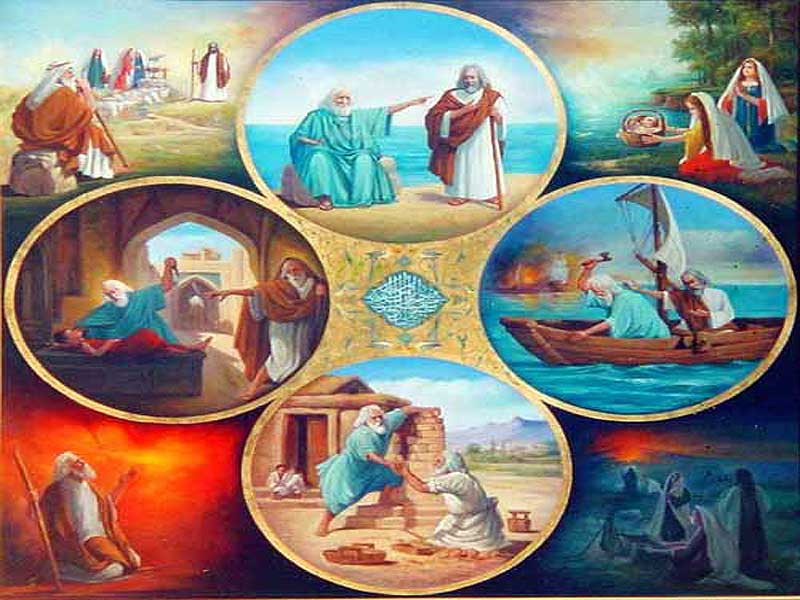
Answer 277: Four of the prophets are alive two of whom are in the heavens: Jesus and Edris, and two of them are in the land: Khidr and Elias, Ilyas (Elias). As for Khidr, he is in the sea but his companion is in the land.”[1]

Prophet Jesus: In the Holy Quran Allah (SWT) says about the Prophet Jesus (as) as follows: “and for their saying,” We killed the Messiah, Jesus son of Mary, the apostle of Allah” though they did not kill him nor did they crucify him, but so it was made to appear to them. Indeed those who differ concerning him are surely in doubt about him: they do not have any knowledge of that beyond following conjectures, and certainly they did not kill him”.[2]

In other verse of the holy Quran Allah, the Almighty says: “When Allah said,” O Jesus, I shall take you] r soul [, and I shall raise you up toward Myself[3]”.

According to the previous verses of the holy Quran, we can come to the conclusion that the Prophet Jesus (as) is still alive. He is in the Heaven, though, considering the meaning of the word ‘Mutawaffika‘’ mentioned in the verse, the Prophet’s soul had been taken and He brought back to Allah, according to some interpreters of the holy Quran. [4]

Prophet Ilyas: It is said that Prophet Ilyas (Elias) is in the Heaven, too. He had been inviting people of the Baalbek to the Prophet Musa’s Shariah Law for 22 years. Some say that Prophet Ilyas is Prophet Idris (Enoch). They say: He was one of the Harun’s children and the Prophet Khidr’s brother.[5]

Prophet Khidr: Khidr is one of the four prophets recognizes as being alive. It is said that He drank from the water of life and is alive forever. He is at the Sa’sa’ah and Sahlah Mosques. Sayyid ibn Tawus narrated that when Imam Ali (as) martyred Prophet Khidr participated in the funeral. He went to Imam Hasan and Hussain (pbuth) condoled them and showed them the place of the Prophet Noah’s (as) grave.[6]

Some hadiths and verses of the Quran imply that he was a prophet and messenger of Allah (swt) to his tribe and people, to invite them to tawhid (the oneness of God) and accepting Allah’s (swt) prophets and the divine books. His miracle was that whenever desired, he could revive any dead and dry branch or dry and barren land, making it green again, thus being given the title “Khidhr”. His real name is Talya ibn Malekan ibn Aber ibn Arafkhshad (ارفخشد) ibn Sam ibn Nuh.

As for the prolonged life of this prophet, we would like to draw your attention to a hadith from Imam Sadiq (as): “… As for the servant of Allah (swt) Khidr, Allah (swt) extended his life, but not because of his prophetic mission, nor in order to reveal a book onto him, nor to nullify through him, the religion of the past prophets, nor for him to become leader to a nation following him, nor for the obedience that Allah (swt) had made obligatory upon him, but He (Allah (swt)) extended his life because He chosen to lengthen the occultation of the Qa’im (Imam Mahdi (as)) and knew that some of the people would begin doubting about him as a result, so He lengthened the life of this good servant of His in order for it to be reason for accepting the long life of the Qa’im and so that his life would be compared with the imam’s, rejecting the objection and criticism of the enemies and the bad-minded.[7]

He is, without a doubt, still alive and is currently more than six thousand years old.[8]

Prophet Idris: According to the following verse of the Holy Quran in which Allah (SWT) says about the Prophet Idris, He is still alive. “And mention in the Book Idris. Indeed he was a truthful one, a prophet”.[9]

The two Prophets who are in the Heaven, Prophet Idris and Jesus. And the two are still alive and are in the land, Prophet Khidr and Ilyas.

Prophet Idris’ name mentioned twice in the Quran, he has revered and celebrated as truthful, prophet, patient, righteous etc. Prophet Idris is among the grandsons of Prophet Seth reaching Adam (a.s.) through five intermediaries. One of his grandfathers is Prophet Noah (a.s.). Most historians have said that he lived 365 years before his ascension, or his death according to another report. Based on narrations, four of the prophets are still alive two of whom i.e. Prophet Khizr and Prophet Ilyas (Elias), peace be upon them, are living on earth and the two others i.e. Prophet Idris and Prophet Jesus, peace be upon them are in the heavens.

Allamah Tabatabai (RA) interpreting the verse 65 of Surah al-Kahf (Then they found one from among Our servants whom We had granted mercy from Us and whom We had taught knowledge from Ourselves[10]) appertained to Prophet Moses (AS) and Prophet Khidr (AS) quotes narrations from a number of Sunni and Shia sources about some prophets being alive.

Among the narrations he has quoted is a tradition from Jalaluddin in his Al-Durr al-Manthur which is narrated from Shahin from Khasif that says:[11]

«أربعة من الأنبیاء أحیاء اثنان فی السماء: عیسى و إدریس، و اثنان فی الأرض الخضر و إلیاس- فأما الخضر فإنه فی البحر و أما صاحبه فإنه فی البر»

It is noteworthy that this narration is also available in Shia sources but it is narrated from Sunni sources.[12]

Those Prophets and Imams (pbuth) who will return and accompany Imam Mahdi’s (ajtf) reappearance: The Holy Prophet (pbuh) says: “When the Twelfth Imam (aj) appears and leadership is passed on to him, at that time, the Prophet (pbuh) and Amir al-Muminin (as) shall appear. Amir al-Muminin will carry with him a cane and a branding iron.[13]

Upon the cane there is a figure which reads ‘bismillah’ (in the name of Allah), which he will use to mark the foreheads of those who are believers. The figure upon the branding iron reads ‘bismilkafir’ (in the name of disbelievers), which he will use to brand the foreheads of the disbelievers. This way, believers and disbelievers will once again be distinguished. At that time, all of the Imams (as) shall return to assist Amir al-Muminin (as) and Imam Mahdi (aj). Prophets who endures much hardship and strife in the way of Allah, such as Zakariyyah (Zachary), Yahya (John), Hizqil (Ezekiel), and other Prophets which were injured or killed at the hands of the disbelievers shall also return to this world. Verily, news has been given to me of their reappearance to bring about swift retribution to their killers and oppressors as well as seek justice from those who spilt the blood of Hussain (as).”[14]

Narrations pertaining to the reappearance of the Twelfth Imam (aj) state that Prophet Isa (Jesus) (as) shall be once again sent to this world at the permission of Allah. He shall appear before everyone as one of the companions of Imam Mahdi (aj) and shall stand in prayer behind the Imam. It is narrated that the Holy Prophet said: “I swear by that which has instated me as a bearer of the truth, if there remains but one day to this world, Allah shall prolong that day until my son Mahdi (aj) reappears. After his reappearance, Prophet Isa (Jesus) Ruhollah (as) will descend to this world and will stand in prayer behind the Imam. It is then that Allah shall light up the world with His Light, and the government of Imam Mahdi shall encompass everywhere from east to west.”

Imam Sadiq (as) says: The first Imam to return is Imam Hussein (as), after which he will govern [the Islamic nation] for a lengthy period of time. He will govern for so many years that his eyebrows will cover his eyes as a result of old age.[15]

[1] . Tabatabai, Sayyid Muhammad Hussein, Al-Mizan fi Tafsir al-Qur’an, vol.13, p. 353, Islamic Publications Office, Qom, fifth edition, 1417.

[2] . Surah al-Nisa, verse 157.

[3] . Surah Ale Emran, verse 55.

[4] . Tafsir Nemooneh, Vol. 2, Pg. 431.

[5] . Emad Zadeh Esfahani, Qasas Qurani, Pg. 680.

[6] . Ibid.

[7] . Kamaluddin, vol. 3, pg. 357; Biharul-Anwar, vol. 51, pg. 222.

[8] . Yawmul-Khalas, pg. 157.

[9] . Surah Maryam, verse 56.

[10] . Surah Kahf, verse 65. «فَوَجَدا عَبْداً مِنْ عِبادِنا آتَیناهُ رَحْمَةً مِنْ عِنْدِنا وَ عَلَّمْناهُ مِنْ لَدُنَّا عِلْماً»

[11] . Suyuti, Jalaluddin, al-Durr al-Manthur fi Tafsir al-Ma’thur, vol.4, p. 239, Ayatollah Mar’ashi Najafi Library, Qom, 1404 A.H.

[12] . Majlisi, Muhammad Baqir, Behar al-Anwar, vol13, p. 402, Dar Ihya al-Turath al-Arabi, Beirut, second dition, 1403 A.H; Ibn Tavus, Ali bin Musa, Sa’ad al-Saud Lil-Nofus Mandhud, p. 163 – 164, Dar al-Dhakhaer, Qom, first edition (date missing).

[13] . In Arabic: میسم.

[14] . Majlisi, Muhammad Baqir, Biharul-Anwar, translation of 13th volume by Davani, pg.1165.

[15] . Majlisi, Muhammad Baqir, Biharul-Anwar, vol. 53, pg.46.

post

The number of soldiers who came to Karbala to fight against Imam Hussain (as)

Question 568: Dear Scholars. We have varying numbers relating to the forces in Yazids (la) army in the battle of Karbala. Tabari mentions 1000 troops under the regiment of Hur and 4000 under Umar ibn Sa’ad and therefore 5000 in total. What is a more authentic account?

Salaams and duas

Answer 568: Umar bin Saad was the commander in charge of Yazids army. Although, records differ as to the number of soldiers who came to Karbaa to fight against Imam Hussain (as), but, according to the most reliable sources, they were 30 thousand people. The two following hadith support this idea. Read More

post

Premarital relation with non-Mahram is impermissible

Question 082: I am in love with my teacher’s daughter and she also loves me very much. We have met each other a few times and message each other daily. Is there any problem and restrictions in our relation according to the Islamic laws?

Answer 082: Islam has prescribed marriage (temporary and permanent) to address this need, in addition to any sexual need, be it flirting, touching, caressing, and so forth, must only take place after marriage has been contracted. Even if boy and girl who are fiances and are planning on getting married in the future, but haven’t contracted any form of marriage yet, cannot take such pleasures in each other, even if it is only limited to having an intimate conversation or shaking hands.

As was said, in Islam, fulfillment of such needs must be within Islamic limits. Temporary marriage is one solution, but has stipulations and conditions that must be met, one of those being the consent of the virgin girl’s father (the rest of the conditions can be looked up in the risalahs).

According to the Shia point of view, the baligh virgin girl must get her fathers or paternal grandfathers (in the case of not having a father) permission if she wants to get married. In the case of her father or paternal grandfather not being present in a way that she can’t get their permission, and her having the need of getting married, their permission will no longer be a condition, if she can distinguish between what is to her benefit and what isn’t.

The same goes for the woman who isn’t a virgin; she doesn’t need to get permission either, if her virginity was lost to a previous husband. In the case of her virginity being lost by a mistaken intercourse, or even adultery, it is a mustahabb precaution to get permission if possible (which means it is better, although it still isn’t a condition and isn’t wajib).[1]

According to Sayyid Sistani (ha), it is not permissible for a boy and a girl to make friendship with each other in order to know each other before marriage. His Excellency also said: pre-marital relation between a boy and a girl is not permissible under any circumstances. [2]

For further information in this regards, please refer to the following answer:

Index: Permanent or Temporary marriage of a married man without the permission of his wife, answer 565.

The official website of the office of Sayyid Sistani (ha), Question & Answer » Marriage. Ibid, Marriage » General Rules.

[1] . Tawdih al-Masa’il of the maraji’, vol. 2, Pgs. 449-460, 701-707 and 734-736 and 458-459.

[2] . The official website of the office of Sayyid Saistani, Question & Answer » Pre-marital Relation.

post

Pretending to cry over our Sins, for Imam Hussain (as) or Fear of Allah (SWT)

Question 048: What is the ruling of one who desires to cry for his sins, but is unable to do so, so he pretends to cry? Is pretending recommended? What procedures does one have to go through in order to be able to shed tears?

Answer 048: When you want to pray, supplicate or fear Allah, the Almighty you had better to cry or pretend[1] to cry. This act is a psychological example of an artificial effect on our soul.

According to a hadith, in order that your prayers be granted by Allah, the Most High you should cry or pretend to cry. Also, try to have at least one drop of tear coming out of your eyes, even by remembering a memory of one of your relatives who has passed away. In this regards, there is a hadith narrated from the holy Prophet (pbuh) that if one cries or pretends to cry while reciting the holy Quran or hearing it, he will certainly go to the Heaven. Furthermore, if you fear Allah (SWT), the punishment of Hell and desire to go to the Heaven you are supposed to cry or pretend to cry especially at the time of offering prayers, ta’qibat, supplications, dhikr, and during the practices of hajj, especially in Sa’y, stay in Arafa, and on top of Marwa Mount.[2]

Read More

post

How to calculate Khums on a house purchased with Sahm e Sadat

Question 046: A member of Ask Islam group contacted me privately about a situation that was brought to him for advice. There is a need for at least 2-3 academically credible sources, which Inshaa’Allah should include references from some of the Grand Marja’ (rulings from Sistani, Makram Shirazi and Khamenei are specifically being requested).

History: A brother, took financial responsibility for some of his extended family. He had an uncle, an aunt, three nieces, and a nephew who were financially dependent on him because his uncle (the head of the family) had a debilitating disability which left him paralyzed. This brother paid for the families expenses.

The house they lived ended up in a court dispute. The family thought the house belonged to them while some other party claimed it didn’t. After a court battle, it was found that the house did not in fact belong to the family that was living in it. The owners came to the house and told the family that they either had to immediately vacate the home or purchase the home. It would have caused great hardship for the family to move due to the uncles disability however they didn’t have any money to purchase the house either, as they were already financially dependent on the brother due to the disability.

Some family members and the uncle approached the brother and asked him to purchase the house since he had the means. The brother did not have the means but he did have some savings that he used in addition to an allocation of Sahm e Sadat that he had arranged for the family with the permission of the marja they followed. With the combination of his savings and the khums, the brother was able to purchase the home, where the family was able to live.

After some time, one of the daughters died, the uncle died, the aunt died, and the two remaining daughters were able to get married. There was only one family member left in the home, which was the teenage son.

The brother came into some financial troubles and needed to sell the house. The son is currently under the financial care of the brother as the child is an orphan.

Since, the home was originally purchase with a share of Sahm e Sadat, the brother has a few questions. He not only has concerns about the orphans well-being but he has concern about the share of Sahm e Sadat used to buy the home originally.
Questions: Should the Sahm e Sadat that was used to purchase the home be returned to the marja or should the brother give it to the orphan son that remains? The child has no inheritance as his father was financially dependent on the brother.
In addition, the home sold for a much greater price than it was purchased for. Does the brother need to add any inflation to the amount of Sahm e Sadat, when he pays it to either the marja or the orphan, in order to make things right?

Is there any other information that the brother needs to know in order to financially settle the son or the marja that he is religiously bound by fiqh? He wants to make sure that there is nothing he needs to worry about in the grave, he wants to make sure hes not being unjust.

If there is any additional information needed, please reach out for me. I know many more details and if there are details I don’t know, I can get them. Please, also see the financial breakdown below:

Brothers Personal Share – Rs 640,000

Sahm e Sadat – Rs 290,000

Buying Price of the House – Rs 930,000

Selling Price of the House – Rs 1,600,000

Profit from the Sell – Rs 670,000

Answer 046: The first order of business is to pay the amount of 498,924 to the orphan. The Sahm e Sadat that was arranged for the family to help purchase the house remains with the family. The orphan is the remaining member so, it should be paid to him. There is inflation on the original 290,000 due to the selling price of the house and the formula is as follows:

290,000 x 1,600,000 ÷ 930,000 = 498,924.

The second order of business is that khums must be paid to the brother’s marja on the remaining money of 1,101,076. The amount that he is to pay to his marja is 220,215. 1/5 or 20% is the amount that is used to figure the amount of khums and the formula is as follows:

1,600,000 – 498,924 = 1,101,076 x 20% = 220,215.

The amount must be paid to the orphan before the amount of khums is paid. The brother’s share of the selling price of the house is 880,861.

1,600,000 – 498,924 = 1,101,076 – 220,215 = 880,861.

498,924 – Orphan

220,215 – Khums

880, 861 – Profit.[1]

For further information in this regards, please refer to the following answers:

Index: Islamic Laws / Khums.

[1] . While these formulas are agreed upon among all Grand Maraja’, this particular scenario and the formulas used to reach these figures were confirmed by the Office of Ayatollah Makarem Shirazi (ha).

post

Zakat of Fitrah, Zakãt al-Abdan (or Zakãt of Bodies)

Question 045: What is Zakat al-Fitrah and on whom its payment is obligatory? Can you also please let me know the commodity for, and the quantity of and the time when Zakãt of Fitrah becomes obligatory Zakät?

Brief Answer 045: At the time of sunset on Eid ul fitr night (i.e. the night preceding Eid day), whoever is adult and sane and is neither unconscious, nor poor, nor the slave of another, he should give, on his own behalf as well as on behalf of all those who are his dependents, about three kilos per head of wheat or barley or dates or raisins or rice or millet etc. It is also sufficient if he pays the price of one of these items in cash. As per obligatory precaution, he should not give from that food which is not staple in his place, even if it be wheat, barley, dates or raisins.[1] Read More

post

Things on which Payment of Zakat is Obligatory or Recommended

Question 044: Can you please tell us those things on which payment of zakat is either obligatory or recommend?

Answer 044: Zakãt is obligatory on three cattle, namely, camels, cows and sheep (male and female both), two rich minerals, namely, gold and silver, and four cereals, namely, wheat, barley, dates and raisins (or currants), and it is not obligatory except on these nine items.

Note: some scholars have considered Zakat to be payable on the wealth in business, as a necessary precaution.[1] Some other scholars consider payment of Zakat on invested capital as recommended.[2]

Zakãt is approved on fruits and other things grown on land including even saitwort excluding vegetables or green crops (of grain) like Qatt (a grain eaten by desert people after pounding it), brinjal (or aubergine), cucumber, melon and the like. It is not free from difficulty in declaring payment of Zakät to be approved in case of (other) grains The same is the case with merchandise and mares. As regards horses, ponies and donkeys, Zakãt is not approved in their case.

The followings are rules relating to the nine items (1. Wheat, 2. Barley, 3. Dates, 4. Raisins, 5. Gold, 6. Silver, 7. Camel, 8. Cow, 9. Sheep (including goat).), on which Zakãt is obligatory.

Payment of Zakat on Cattle: There are four conditions for the obligation of Zakat on cattle in addition to those mentioned earlier. They are: the Nisabs (criteria of payment of Zakat), grazing in the pastures, completion of one full year and their not being employed for service.

  1. Nisãbs of Zakat on Camels: There are the following twelve Nisäbs on camels:
  2. One sheep on each unit of 5 camels.
  3. Two sheep on each unit of 10 camels.
  4. Three sheep on each unit of 15 camels.
  5. Four sheep on each unit of 20 camels.
  6. Five sheep on each unit of 25 camels.
  7. One Bint-i Mukhãd on each unit of 26 camels.
  8. One Bint-i Labun on each unit of 36 camels.
  9. One Hiqqah on each unit of 46 camels.
  10. One Jadha’ah on each unit of 6l camels.
  11. Two Bint-i Labun on each unit of 76 camels

11 Two Hiqqah on each unit of 91 camels.

  1. On each unit of 121 camels Zakãt shall be charged in the following way one Hiqqah on each 50 camels, one Bint-i Labun on each 40 camels, which means that it shall be obligatory to charge the Zakãt according to the rates of these numbers wherever applicable. If action cannot be taken without both these numbers, both of them shall be taken into account. One may take into account either or both of them Therefore, one cannot imagine a case where action cannot be taken accordingly; rather, it can be attained in one of the ways in case of groups of ten Of course, in case of a number consisting of units (i. e., numbers from one to nine) lying between two groups of ten, one cannot imagine action on them .So action shall be taken by counting in a way that may take in

all the numbers without taking into account the units So in case of the number being 121 camels, three forties shall be taken into account and three Bint-i Labuns shall be payable as Zakãt.

Again, in case of the number being 130 camels, two forties and one fifty shall be taken into account, and two Bint-i Labuns and one Hiqqah shall be payable as Zakãt. In case there are 140 camels, two fifties and one forty shall be taken into account, and two Hiqqahs and one Bint-i Labun shall be payable as Zakãt In case there are 150 camels, three fifties shall be taken into account, and three Hiqqahs shall be payable as Zakãt Where there are 160 camels, four forties shall be taken into account, and four Bint Labuns shall be payable as Zakãt. Action shall be taken in a similar way until the number reaches 200 camels, when one may account for five forties and pay five Bint-i Labuns, or account for four fifties, and pay four Hiqqahs.

  1. Nisãbs of Zakát on Cows & Buffaloes: There are two Nisabs for cows including buffaloes, one where they are 30 and the other where they are 40. So for each 30 cows one Tabi’ or one Tabi’ah, and for each 40 cows one Musnah shall be paid as Zakãt. Here too the rule should be applied, as far as possible, taking into account the above standard of payment of one Tabi’ or Tabi’ah for each 30 Cows and one Musnah for each 40 cows. There is no Zakãt until the number reaches sixty. When the number reaches sixty one cannot imagine that the rule cannot be applied to groups of ten, when they are accounted for according to thirty – thirty or forty – forty or they may be together (i.e.30-40). So in case of 60 cows, they shall be counted as two thirties, and two Tabi’s shall be paid as Zakät. In case of 70 cows, they shall be accounted for as 30 and 40, and one Tabi’ and one Musnah shall be paid as Zakãt. In case of 80 cows, they shall accounted for as two forties, and two Musnahs shall be paid as Zakat. In case of 90 cows, they shall be accounted for as three thirties, and three Tabi shall be paid as Zakät. In case of 100 cows, they shall be accounted for as two thirties and one forty, and two Tabi’ahs and one Musnah shall be paid as Zakãt. In case of 110 cows, they shall be accounted for as two forties and one thirty. (and two Musnahs and one Tabi’ah shall be paid as Zakat). In case of 120 cows, one may either account for as four thirties or three forties (and make payment accordingly)
  2. Nisãbs of Zakãt on Sheep: There are five Nisãbs of Zakãt on Sheep.
  3. For each unit of 40 sheep – one sheep.
  4. For each unit of 121 sheep – two sheep.
  5. For each unit of 201 sheep – three sheep.
  6. For each unit of 301 sheep – 4 sheep, according to the more cautious opinion The problem is, however, very difficult.
  7. For 400 sheep or above, for each 100 sheep – one sheep, how high so ever the number may be.

Rules Concerning Grazing in Pastures: It is a condition that the cattle (on which payment of Zakãt is obligatory) should have grazed in the pasture throughout the year, so that if it happens to be fed on fodder during the year in a way that according to the custom or tradition it may cease to be called a cattle grazing in the pasture, it shall not be obligatory to pay Zakat on it

Rules Concerning (Completion of a Whole) Year: A year is considered to be complete after the passage of eleven months. Apparently the Zakãt is shifted to its owners (i.e. those who are entitled to receive it) at the start of the twelfth month when it becomes their wavering ownership and its payment becomes obligatory unwaveringly, and so it is not permissible for the owner of the property to make any changes in it which may deprive those entitled to receive it of their right. In case he does, he shall be held responsible for it. Of course, if any of the conditions are not fulfilled unintentionally in a way that the property falls short of the Nisab during the twelfth month, the property shall return to its previous owner, and the obligation for the payment of Zakãt shall be dropped. According to the stronger opinion, twelfth month shall be counted in the first year and not in the second.

Rules Concerning the Last Condition: It is also a condition (for the payment of Zakat) that the cattle (on which Zakãt is to be charged) should not have been employed for service throughout the year. In case they are employed for service, although for a short period of time, no Zakat shall be payable for them, even if they happen to be grazing (in the pasture). The criterion for determining whether they are employed for service is the prevalent or usual practice.

Note: Neither sick cattle shall be accepted as Zakät for healthy cattle, nor shall old cattle for the Zakät of young cattle. Similarly, defective cattle shall also not be accepted as Zakãt for sound cattle, even if they fall under the Nisãb.

Zakät on Gold and Silver: The following are some conditions in addition to the general conditions already understood.

First: Nisäb

I – Nisãb of Zakat on Gold: In case of gold, the Nisãb of Zakat is twenty Dinars, whose Zakãt is ten Qirats which is equal to half a Dinar, and one Dinar is one Shar’i Mithqal which is equal to 3/4th of a Sayrafi Mithqal. So twenty Dinars come to fifteen Sayrafi Mithqals, and its Zakãt amounts to 4/8th of a Mithqal. There shall be no Zakat on less than twenty Dinars of gold, nor if it exceeds a little until the excess reaches four Dinars, and that is equal to three Sayrafi Mithqals whose Zakãt is two Qirats, as one Dinar = 20 Qirãts. The same amount shall be payable for each excess of four Dinars, and there shall be no Zakãt on any amount of gold which is less than four Dinars, but not in the sense that there shall be no Zakãt on it at all, as is the case when gold is less than twenty Dinars, but what is meant by exemption of whatever lies between two Nisabs is whatever exceeds the amount of Nisãb until its reaches another Nisab shall be supposed to belong to the previous one. So the first Nisab of gold begins from twenty Dinars until twenty-four Dinars, and it falls under the first amount of Zakãt that is half a Dinar.

Once the amount reaches twenty-four Dinars, two Qirats shall be added to the amount of Zakãt, and it shall remain so until it reaches twenty-eight Dinars, when another two Qirats shall be added to the amount of Zakãt, and so on.

2 – Nisãb of Zakat on Silver: The Nisãb of Zakãt on Silver is two hundred Dirhams of which Zakãt is five Dirhams. Then on each amount exceeding forty Dirhams, there shall be an addition of one Dirham in the amount of Zakãt, whatever the amount may be. There shall be (initially) no Zakãt on silver of less than two hundred Dirhams, and so also there shall be no Zakãt on an excess of less than forty Dirhams, in the sense already explained under the rules relating to the Zakãt on gold. A Dirham is equal to six Dawaniq, which is equal to half of one-fifth Shar’i Mithqal, as each ten Dirhams are equal to seven Shar’i Mithqals.

Explanation: The general rule in the payment of Zakãt on gold and silver is that when each of them reaches the Nisab i.e. twenty Dinars in case of gold and two hundred Dirhams in case of silver, 1/40th of the amount of gold or silver, as the case may be, shall be paid as Zakãt, and so its owner shall be considered to have paid what was due. If a person pays a bit more than the due amount of Zakãt, there shall be no objection, rather it shall be better and shall add to the beneficence.

Second: For the obligation of payment of Zakãt on a gold or silver coin, it should bear the seal of a king or somebody like him of whatever time or place, belonging to Islam, or a non-believer, with writing on it or without it, even if the writing has been obliterated for some reason. In case a coin of gold or silver does not originally bear a seal or writing, payment of Zakãt shall not be obligatory on it, except when it was in currency, in which case, according to the more cautious opinion, it shall be obligatory to pay Zakát on it. If a coin (of gold or silver) is used, for example, as an ornament for decoration, then it shall not be obligatory to pay Zakãt on it, regardless whether its value exceeds (the limit of Nisäb) or falls short of it, and whether it was used in a way as transaction or not.

Third: Completion of a year. It is also a condition that the whole Nisab should subsist for a full year. If, therefore, during the year it falls short of the required limit or it is changed in substance, etc., or by means of casting, even if in order to escape payment.[3]

For further information in this regards, please refer to following answer:

Index: Zakat of Gold and Silver and its criterion, answer 039.

Index: Zakat and difference between Sayyid and non-Sayyid holms, answer 040.

[1] Tawzih al-Masail (with annotation by Imam Khomeini), vol.2, p. 107, issue No.1853, Grand Ayatollah Sistani: “As an obligatory precaution, upon the wealth in business”.

[2] Ibid. Grand Ayatollah Fazel Lankarani: “It is recommended that Zakat should also be paid from the capital of business, trade and commerce every year”; Ayatollah Makarem Shirazi: “It is recommended that Zakat should also be paid from the capital of business, trade and commerce every year. Similarly, it is recommended to pay Zakat on grains other than wheat, barley, dates and raisins.”

[3] Tawzih al-Masail (with annotation by Imam Khomeini), vol.2, Pg. 107, issue No.1853; Ibid, Pg. 131; Tahrir al-Wasilah, vol.2, Pgs. 614-615, issue No. 5-7; Ibid, Vol. 1, rules concerning “Things on which Payment of Zakàt is Obligatory or Recommended”.

post

studying in the month of Ramadhan is not a valid excuse to escape fasting

Question 572: Is it permissible for a student who has to attend his classes in the month of Ramadhan and also has important exams in this month, not to fast in order to better concentrate on his studies and during the exams?

Answer 572: Attending your classes and studying in the month of Ramadhan is not a valid excuse to escape fasting. Of course, if one is left with one of the two options i.e. he should attend his class or observe fast and that not attending his classes will put him into such difficulty that is not bearable normally, he should make niyyah of fasting at dawn and should abstain from eating and drinking until it becomes extremely difficult to fast in which case it is permissible to eat or drink at the time of extreme hunger and thirst sufficing to the necessary amount (of food or water). He should observe the qadha of that day after the month of Ramadhan and he will not be liable to any kaffara.

If a person has the means and can go out of the city with the intention to travel as far as 44 kilometers, he can go on a short journey and break his fast during the journey and come back to his hometown to attend his classes or exams.

One should travel 44 kilometers to break his fast. If the outward and return distances make 44 km, he should break his fast. Remember, the beginning of 8 farsakh (44 km) should be calculated from a point beyond which he will be deemed a traveler, and this point is represented by the last boundary of a city. In certain very big cities, it would be probably reckoned from the end of locality.[1]

For further information in this regards, please read the following answer:

Index: Things from which a person keeping fast must abstain & Kaffarah (Expiation), answer 372.

Index: Number of things which are disapproved (Makruh) for a person observing fast, answer 566.

[1] . The official website of the office of Sayyid Sistani (ha), Q&A: Fasting and Education; Majma’ al-Masael (by Golpayegani), Vol. 1, Pg. 274; New Istiftaat (Makarem), Vol. 2, Pg. 151.

post

Authenticity of traditions of the emergence of Dajjal from Isbahan

Question 488: I have often heard bakri kuffar claim that the dajjal (LA) will be aided by Jews from Isfahan wearing shawls. Many Shia Ulama claim this is untrue. Can you prove it to be wrong? Provide all kinds of evidence t disprove it’s authenticity

Answer 488: One of the signs of the reappearance of Imam Mahdi (as)[1] is the coming of the “Dajjal”.  According to Arabic literature experts, any liar and trickster can be called a dajjal.

Different unusual traits have been related to him in hadiths (in which are mostly found in Sunni sources), namely: he falsely claims his lordship[2], is high in age[3], along with him is fire and water[4], he cures the blind and those suffering from leprosy[5].

As for who the dajjal really is, one can’t reach a definite conclusion, but in a nutshell, it can be said there are several possibilities regarding this matter:

1) The dajjal is a true person that does extraordinary things using witchcraft and magic that will appear at the end of time.  He will be the head of a great trouble-making that will take place for all of mankind.  As the literal meaning of dajjal suggests, he is a user of witchcraft and a trouble-making individual with many materialistic facilities and capabilities.  Some hadiths name him “the messiah of misguidance” which is the opposite of “the messiah of guidance”, meaning Prophet Isa (pbuh).

During the reappearance of Imam Mahdi (as), he will begin to work against him.  He is of those who have long lives and is and will remain alive until the day he appears.  He will take over the whole world expect for Makkah (Mecca) and Madinah (Medina).[6]

2) Iblis or Satan is the dajjal.

3) The Sufyani  is the dajjal.

4) The dajjal has a symbolic and secret side to it (and isn’t a true person):

“The dajjal symbolizes the highest levels of civilization, culture and Western technology that are in conflict with Islam and its principles; a culture that tries to conquer and enslave all.  We can clearly see today how the West’s materialist culture and technology has taken over all societies today, even Muslim ones…”[7]

Is it true that Dajjal will emerge from Esfahan?

The following are some traditions narrated in this regards we need to evaluate if they are accurate or not?

First traditions: Dajjal will emerge from Jews people of Isbahan (one of the Esfahan’s villages) in a way that seventy thousands of Jews will support it.[8]

Arabic version:

یخرج الدجال من یهودیه اصبهان معه سبعون الفا من الیهود علیهم التیجان.

حَدَّثَنَا مَنْصُورُ بْنُ أَبِي مُزَاحِمٍ، حَدَّثَنَا يَحْيَى بْنُ حَمْزَةَ، عَنِ الْأَوْزَاعِيِّ، عَنْ إِسْحَاقَ بْنِ عَبْدِ اللهِ، عَنْ عَمِّهِ أَنَسِ بْنِ مَالِكٍ، أَنَّ رَسُولَ اللهِ صَلَّى اللهُ عَلَيْهِ وَسَلَّمَ قَالَ: «يَتْبَعُ الدَّجَّالَ مِنْ يَهُودِ أَصْبَهَانَ، سَبْعُونَ أَلْفًا عَلَيْهِمُ الطَّيَالِسَةُ». [9]

Evaluation: This hadith hasn’t been mentioned in Shia sources. It is just narrated (by Anas bin Malik) from the Holy Prophet (pbuh). In his musnad Ahmad bin Hanbal is the first person from ahlul sunna that quoted this hadith.[10] It is also narrated by Ibn Hamad who was in jail with Ahmad, but He didn’t attributed to the holy Prophet (pbuh).[11] Also, Ibn Hamad quoted from Yahya bin Saeed al-Attar from Salman bin Eisa this following hadith: Dajjal will emerge from an Island of which is located in the sea in Isbahan!

Esfahan hasn’t any sea to say there is an island. According to Shia and Sunni, ibn Hamad is a weak narrator that all of his works are not reliable.

The same hadith also mentioned in Musnad abi Ya’la.[12]

In Mojam Awsat, Tabarani quoted this hadith from Awzaee from Rabiah from Anas bin Malik. Awzaee was a person whom is not reliable.

This hadith is also mentioned in Mustadrak Hakim[13], history of Damascus City (Vol. 38, Pg. 10), Ibn Kathir (Vol. 1, Pg. 122). They all mentioned that this hadith is narrated by Ahmad whom is weak.

Some sunni also narrated this hadith without mentioning any Shia sources.

In Mojam al-Boldan Hamoodi explained the place where dajjal will emerge from as follows:

Isbahan is a city for Esfahan where Jey was the first city center. When Nebuchadnezzar conquered Jerusalem he captured the people of Jerusalem and took the Jews people of Jerusalem with him to Esfahan dwelled them in a place beside Jey (Esfahan city center) named it Judaea. [14]

Note: Hamoodi was a NasibiThis tradition hasn’t been mentioned in any Shia sources. Considering this issue that we approve this hadith, but it impossible that seventy thousands of Jews people live in a village. Because, most of people who live in Esfahan are Shia Muslims. Therefore, Esfahan is not the seat of Jews government.

Second tradition: Dajjal will emerge from Esfahan from a village known as Judaea.[15]

Evaluation: This hadith quoted by a narrator named Nazal bin Sabrah that his name has never mentioned in any Shia Rijali books. He is also unknown, however he has praised in Sunni sources.

Third tradition: The commander of the faithful, Imam Ali (as) was busy delivering a sermon when he repeated three times: “Ask me (all that you need) before you lose me.”  A righteous individual by the name of Sa’sa’ah ibn Sawhan stood up and asked: “Oh commander of the faithful!  Who is the Dajjal?”

In response to this question, Imam Ali (as) replied: “Be aware that the (name) of the dajjal is Sa’ed ibnul-Sa’ed.  The unfortunate one is he who acknowledges and accepts him, and the fortunate being the one who rejects him.  He will emerge from a place called “Isbahan”, from an area which is known to be the area of the Jews.  His right eye is shut, bearing no eyeball.

His other eye is in his forehead, shining so brightly that it resembles the morning star in brightness.  In his eye there is a piece of meat that seems to have mixed with some blood and on his forehead, in between the two eyes, it has been written “Kafir” in a way that every literate and illiterate person can read.  He travels over the oceans and the sun accompanies him.  In front of him, there is a mountain of smoke and behind him there is a white one that people perceive to be food.  He will appear during a very hard drought.  He will be riding a dark or green donkey.  Every step this donkey takes is equal to one mil (mile).  He will travel and go here and there on earth.  Every water source or spring that he crosses will turn and remain dry till the Day of Judgment.  He will shout with a voice heard by all in the East and the West saying: “Come to me, Oh friends and followers of mine!”  I (am a God) who has created, who has created the faces, has measured every persons portion (of sustenance), and is your guide.  I am the exalted Lord!”  He is a liar!  He is Allah’s (swt) enemy…and in the end he will eventually be killed by the one Isa (pbuh) prays behind (Imam Mahdi (as))”.[16]

Evaluation: The hadith is weak! Because, the one who narrated it from Imam Ali (as) is unknown.

Forth tradition: Dajjal will emerge from Isbahan.[17] This tradition mentioned in Tabarani from Muhammd bin Hayat al-Jawhari al-Ahwazi from Muhammad bin Mansoor al-Nahwi al-Ahwazi from Abu Hammam Muhammad bin al-Zabarqan, Thana Younis bin Abid from al-Hasan (Hasan Basri) from Omran bin Hasin that the Holy Prophet  (pbuh) has said this hadith.[18]

Evaluation: This above hadith has some problems in its Sanad even according to Ahlul Sunna. Also, this tradition has not mentioned in any shia sources.

Fifth tradition: When Imam Mahdi (ajtf) appeared He will be received an information that Dajjal emerged from Isbahan. According to this tradition, Dajjal cannot be a sign for His reappearance as Dajjal will emerge after Imam Mahdi (ajtf).[19]

Arabic version of this hadith is as follows:

خرج المهدي إلى بلاد الروم، وجيشه مائة ألف فيدعو ملك الروم إلى الايمان فيأبى فيقتتلان شهرين فينصر الله تعالى المهدي… يفتح رومية بأربع تكبيرات ويقتل بها ستمائة ألف ويستخرج منها حلي بيت المقدس، والتابوت الذي فيه السكينة، ومائدة بني إسرائيل، ورضاضة الألواح، وحلة آدم وعصي موسي، ومنبر سليمان، وقفيزين من المن الذي أنزل الله عز وجل على بني إسرائيل أشد بياضا من اللبن، ثم يأتي بالمدينة (كذا) يقال لها القاطع طولها ألف ميل وعرضها خمسمائة ميل ولها ستون وثلاث مائة باب يخرج من كل باب مئة ألف مقاتل، فيكبرون عليها أربع تكبيرات فيسقط حائطها فيغنمون ما فيها، ثم يقيمون فيها سبع سنين ثم ينتقلون منها إلى بيت المقدس، فيبلغهم أن الدجال قد خرج في يهود أصبهان

Evaluation: This hadith hasn’t also been mentioned in any Shia sources.

From where Dajjal will emerge: There are some different opinions about it. Some say Dajjall will emerge from Esfahan, some say from Bajestan (Sistan), Iraq, Balkh and others say Khorasan.[20]

In Bihar al-Anwar Allamah Majlesi narrated a hadith from Imam Muhammad Baqir (as) in which He has said: Dajjal will emerge from Balkh.[21]

Ibn al-Razzaq quoted a tradition from Kaab al-Akhbar that Dajjal will emerge from Iraq.[22]

In Muntakhab al-Athar Ayatollah Safi Golpayegani said: Dajjal will emerge from Bajestan (Sistan).[23]

According to Saeed Ayyoub, Dajjal will emerge from Israel.[24]

Arabic version of this hadith is as follows:

يقاتل بقيتکم المسيح الدجال علي نهر الاردن أنتم شرقي و هم غرب

[1] Of course this sign has been counted as one of the signs of the Day of Judgement (Sunan Tirmidi, vol.4, pp.507-519; Sunan Abi-Dawud, vol.4, pg.115; Sahih Muslim, vol.18, pp.46 and 81), yet in Shia hadith sources it has been counted as one of the signs of the nearness of the Day of Judgment (Biharul-Anwar, vol.6, pg.296, chapter 1 (The signs of the hour (Day of Judgment) and the story of Ya’juj) and also the signs of the reappearance of Imam Mahdi (as).  There is no problem in this sign being both the sign of the Day of Judgment and the reappearance of Imam Mahdi (as), because his reappearance is one of the signs of the end of time and the Day of Judgment.

[2] Sunan Ibn Majah, vol.2, pg. 1360.

[3] Sahih Muslim, vol.8, pg. 205.

[4] Sahih Bukhari, vol.8, pg. 103.

[5] Musnad Ahmad, vol.5, pg. 13.

[6] Al-Faqih, vol.2, pg. 564, the chapter on the respect and virtue of Medinah; Tahdhib, vol.6, pg. 12, chapter 5, The respect and virtue of Medinah.

[7] Seyyid Muhammad Sadiq, Tarikh ma badal-Dhuhur, pp. 141 and 142.  Quoted and obtained from: Ali Asghar Rizvani, Maw’ud Shenasi, pg. 533.

[8] Mojam Ahadith al-Imam al-Mahdi (ajtf), Vol. 2, Pg. 96.

[9] Qashiri Neishaboori, Muslim bin al-Hajjaj, al-Musnad al-Sahih, al-Mokhtasar, researcher Abdul Baqi, Muhammad Foad. Vol. 4, Pg. 2266, Dar o Ihya al-Turath al-Arabi, Beirut, Bita.

[10] Musnad Ahmad bin Hanbal, Vol. 3, Pg. 224.

[11] Vol. 2, Pg. 533, H 1509.

[12] Musnad abi Ya’la, Vol. 6, Pgs. 317-318, H 3639.

[13] Mustadrak Hakim, Vol. 4, Pg. 528.

[14] Yaqut Hamoodi, Mojam al-Boldan, Vol. 1, Pg. 206.

[15] Kamal al-Din wa Tamam al-Ne’mat, Sheikh Saduq, Pgs. 526-527.

[16] Lotfollah Safi, Muntakhabul-Athar, Chapter 3, pg. 532, hadith 8.

In some hadiths it has been stated that he will eventually be killed by Prophet Isa (pbuh) (Biharul-Anwar, vol.14, pg.348, chapter 24) or it has been stated that he will be killed by Prophet Isa (pbuh) at a gate in Sham.  For further information, see: Biharul-Anwar, vol.52, pp. 193 and 209; Kamaluddin, 525 and 526; Kashful-Ghummah, vol.3, pg.281; Al-Masa’ilul-Ashr, printed in the works of Sheikh Tusi, vol.3, pg. 122; Irshad, vol.2, pg. 371; Kanzul-Ummal, vol.14, pp. 198-200.

Of course, there is no conflict between these two statements that Prophet Isa (pbuh) is one of those who takes orders from Imam Mahdi (as) and one can relate the doing of a soldier to his commander.

[17] Mojam Ahdith al-Imam al-Mahdi (ajtf), Vol. 2, Pg. 61.

[18] Tabarani, al-Awsat, Alaa maa fee Majma al-Zawaed; Majma al-Zawaed, Vol. 7, Pg. 339 from al-Tabarani fee al-Awsat;  Kanzul ummal, Vol. 14, Pg. 327, H 38823 from tabarani in al-Kabir.

[19] Al-Qawl al-Mokhtasar, Ibn Hajar Heitami, Pg. 14, H 61;  Mojam Ahadith al-Imam al-Mahdi (ajtf), Vol. 2, Pg. 141. This hadith mentioned in Al-Etr al-Wardi, Pg. 68 from al-Hadiyyatal Nadiyyah.

[20] . al-Malahim wa al-Fitan, Pg. 126.

[21] . Bihar al-Anwar, Vol. 52, Pg. 190-194.

[22] . Musannaf ibn al-Razzaq, Vol. 11, Pg. 396.

[23] . Muntakhab al-A’thar, Pg. 425.

[24] . Aqidat al-Masih al-Dajjal fee al-Adyan, Saeed Ayyoub, Pgs. 279-280.

post

Istibra: liquid which comes out of body after Istibra is treated as pure

Question142: Sometimes while traveling a liquid comes out of my body, in which I am not able to recognize. What should I treat the liquid as?

Answer 142: If you performed Istibra after each urination, the liquid which comes out of your body afterward, is treated as pure.
Istibra is a recommended act for men after urinating. Its objective is to ensure that no urine is left in the urethra. There are certain ways of performing Istibra. The best way is after the passing of urine, if the anus also becomes najis, it is made clean first. Thereafter, the part between the anus and the root of penis should be pressed thrice, with the middle finger of the left hand. Then the thumb is placed on the penis, and the forefinger below it, pressing three times up to the point of circumcision, then the front part of the penis should be jerked three times

It is also considered as pure if you are doubtful whether or not it is urine, semen or other najas things.

Otherwise, if you didn’t perform Istibra or you are sure it is a kind of najas thing (such as semen or urine and etc.) it is regarded as impure.[1]

[1] . The official website of the office of Sayyid Sistani (ha).