post

Fasting and prayers of a traveler who travel after Zuhr

Question 384: Salam Alaikum! There is someone who lives in Stockholm and they work there too. But they decided during The Month Of Ramadhan to live outside the city, which that city is 50 km aways from Stockholm .But I know they can fast if they travel after Salat Aldhur ; here is the question, will the traveler’s Salat be Qasar or tamam?

My Marja: Ayatollah Al-Udhma Sayed Ali Al-Sistani

Answer 384: If they travel after Dhuhr (noon) their fast is treated as valid. If they have decided to stay in that city for 10 days they would have to offer their prayers tamam and fast till they are there for 10 days. Otherwise, they should offer their prayers Qasr and not to fast other days in this state.

According to Sayyid Sistani (ha), if a fasting person travels after Zuhr, he should, as a precaution, complete his fast. If he travels before Zuhr and had an intention from the previous night to do so, he cannot fast on that day. As a precaution, he cannot fast on that day even if he had no intention to travel from the previous night. In both the cases, he cannot break the fast till he has reached the limit of Tarakkhus. If he does, he will be liable to give Kaffarah.

If a traveller in the month of Ramadhan, regardless of whether he was travelling before Fajr, or was fasting and then undertook the journey, reaches his hometown before Zuhr or a place where he intends to stay for ten days, and if has not committed an act which invalidates a fast, he should fast on that day. But if he has committed such an act, it is not obligatory on him to fast on that day.

If after covering a distance which would add up to make 8 farsakh on return, the traveller abandons the journey, and if he decides to remain at that place, or to return after 10 days, or is undecided about returning or staying there, he should offer full prayers.

If a person abandons the journey after reaching a distance which would add up to make 8 farsakh on return, and decides to return, he should offer shortened prayers even if he wants to stay there for less than 10 days.

For the shar’i distance needed to travel in order for one’s prayer to become shortened, the fuqaha (Jurisprudents) have various rulings. Some say the distance necessary is approximately 22.5 kilometers.[1] Others say that the distance is approximately 21.5 kilometers.[2] Another group says that it is approximately 22 kilometers.[3]

A Farsakh is equal to three miles, while a mile is equal to four thousand cubits, whose length is equal to the breadth of twenty four fingers, and each finger is equal to the width of seven grains of barley, and each barley is equal to the breadth of seven average hair of a Turkish horse (or a pony). If the distance is less than that, even if to a minimal extent, the person on journey shall offer unreduced prayer.[4]

Note: A traveler for whom it is obligatory to shorten a four Rak’ats prayers to two Rak’ats, should not fast. However, a traveler who offers full prayers, like, a person who is a traveler by profession or who goes on a journey for a haram purpose, should fast while travelling.[5]

[1] Imam Khomeini, Ayatullahs Bahjat, Khamenei, Fadhil Lankarani, Safi and Nouri. Tawdhihul-Masa’el (of Marja’s), vol. 1, issue 1272.

[2] Makarem Shirazi, Tawzihul-Masa’el (of Maraji’), vol. 1, pg. 684.

[3] Tabrizi, Sistani and Vahid Khorasani, Minhajul-Salehin, issue 884.

[4] . The Official Website of Sayyid Sistani (ha), Prayers of a traveller » Prayers of a traveller (Musafir) & Fasting by a traveler; Tahrir al-Wasila of Imam Khomeini (ra), Vol. 1, Chapter on a Traveler’s Prayers and its Relevant Rules.

[5] . The official website of the office of Sayyid Sistani (ha), Fasting » Fasting by a traveller.

post

Doubts (shakk) during prayer whether wudu was performed or not

Question 036: If one gets Doubts (shakk) during the salah that wudu was not taken, should one break the salah to perform wudu?
Answer 036: If a person doubts during prayer (namaz) whether he has performed wuhu or not, his prayers is void, and he must perform wudhu and then pray. If a person is sure that he has performed wudu but doubts whether he has committed an act which invalidates it or not his wudu would be considered as valid.

If a person doubts whether his Wudhu has become void, he should treat it as valid. But, if he did not perform Istibra after urinating, and performed Wudhu, and thereafter some fluid was discharged about which he was not sure whether it was urine or something else, his Wudhu will be void.

If a person doubts whether he has performed Wudhu or not, he should perform Wudhu.

If a person is sure that he has performed Wudhu, and has also committed an act which invalidates Wudhu (e.g. urinating), but does not remember which happened first, he should act as follows: If this situation arises before his Namaz, he should perform Wudhu. If it arises during Namaz, he should break it and perform Wudhu. If it arises after Namaz, that Namaz will be valid, but for the next prayers, however, he should perform Wudhu.[1]

[1]. Tawzih al-Masael of maraja (with annotation), Sayyid Roohullah al-Moosavi al-Khomeini, Vol. 1, Pg. 179, question 301, eighth edition, 1424 A.H. http://www.sistani.org/english/book/48/2157/;  The Official Website of the Office of Sayyid Sistani, Rules regarding Wudhu.

post

The night prayer or Salatul Layl (Tahajjud)

Question 234:  Please let me know about tahajad namaz (The night prayer or Salatul Layl (Tahajjud)) time and tarika??

Brief answer 234: There are eleven Rak’ats of supererogatory for the night, of which eight Rak’ats are called (mid) night (Tahajjud) then two Rak’ats are called Shaf’ (or couple) and one Rak’at called Vitr (single) prayer which along with the Shaf’ prayer is the preferable prayer, while the two Rak’ats of Morning Prayer are even more preferable than both. It is permissible to confine oneself to Shaf’ and Vitr only; rather particularly to Vitr in case the time is too short, while in case otherwise, it may be offered with the hope (of being desirable to Allah).

The due time for the (mid) night (Tahajjud) prayer is from the mid-night to the actual dawn (Subh-I Sãdiq), while morning (Sahar) is preferable than any other time, the last one-third of the night being entirely morning (Sahar), while its preferable time is one close to the dawn (Fajr), and even more preferable than that is the early morning (Tafriq) as was the practice of the holy Prophet, Allah’s Blessing be on him and his Progeny.[1]

Detailed answer 234: The night prayer or Salat al-Layl is one of the acts of worship and prayers which have been greatly stressed upon and recommended. With this prayer in the middle of the night close to dawn when there is utter silence and the daily uproar and commotion have seized, one gets a very special state of concentration and excitement which is unique and indescribable. That is, the friends of God always choose the pre-dawn moment for invocation and supplication for they are composed and at rest at this time and there is no intention of showing off. At this time, one gets the best of concentration which extraordinarily helps build and revive the spiritual self. That is why the Holy Quran has promised those who offer the night prayer to grant them a position of great glory (maqam mahmood):
“وَمِنَ اللَّیْلِ فَتَهَجَّدْ بِهِ نَافِلَةً لَّکَ عَسَىٰ أَن یَبْعَثَکَ رَبُّکَ مَقَامًا مَّحْمُودًا”

“And during a part of the night, pray Tahajjud beyond what is incumbent on you; maybe your Lord will raise you to a position of great glory.”[2]

How to offer the Night Prayer: The night prayer consists of eleven rak’ats. Out of the 11 Rak’ats of the night Nafilah, 8 Rak’ats should be offered with the niyyat of the Nafilah, 2 Rak’ats with the niyyat of Shaf’a, and 1 Rak’at with the intention of Witr. All of these eleven rak’ats can be offered in short and long forms.

Short form:  In the short form of the night prayer, one can suffice to reciting only Hamd, the opening chapter (without Surah) in the prayers.

Long form: In this method, in the first initial rak’ats one should recite Hamd followed by a Surah (like Surah al-Kafiroon, Tawhid etc. which have been recommended). Indeed, according to some traditions, the Surah of Tawhid has been recommended to be recited up to ten times.

When it comes to the rak’ats of Shaf’a prayer, it is better to recite Surah Falaq after Surah Hamd in the first rak’at and to recite Surah Naas after Surah Hamd in the second rak’at. There remains one rak’at of witr prayer in which it is better to recite Surah Tawhid thrice after Surah Hamd along with Surah Falaq and Surah Naas. One can suffice to reciting only Surah Tawhid and then perform Qunut.
Qunut: The qunut of witr prayer is one of the highly rewarded mustahab acts and stress has been laid on prolonging it. It has been narrated from the Holy Prophet, peace be upon him and his family, that he said: “Whoever prolongs the qunut of his witr prayer in the world, will be at ease at the station of judgment.”[3] In Qunut, first pray for forgiveness of forty or more Mu’mineen who are either dead or living in the following manner. For example, you should say:
“اللهم اغفر لفلان

“Allahumma ighfir li-fulan”.

Instead of ‘fulan’, you should mention the name of the individual whom you want to pray for. Or recite:
اللهم اغفر للمؤمنین و المؤمنات

Allahumma ighfir lil-mo’meneen wal-momeenat.
“استغفر الله ربی و اتوب الیه‌”

Then recite seventy times “astaghfirullah rabbi wa atubu elayh.” Then recite:

“هذا مقام العائذ بک من النار”

Haza maqamul a’eze bika minan nar.

Then say three hundred times:

“العفو”

Al-Afw. Then the following dhikr is recited:

“رب‌ّ اغفرلی و ارحمنی و تب علی‌ّ انک انت التواب الغفور الرحیم‌”

Rabbi ighfirli wa irhamni wa tub ‘alayya innka antat tawwab al-ghafoor al-rahim.

Then you should bend for ruku and go down for prostration (sajda) and salam.

Indeed, there are many mustahab dhikr and supplications which one can recite in all the rak’ats of the night prayer. Should you like to learn more about those recommended dhikr.

Every Nafilahs and all mustahabb prayers in general are two rak’ats. if you dont have enough time to offer all eleven rak’ats, there would be no problem to offer 2 rak’ahs of the shaf’ prayer and 1 rak’ah of the watr prayer. if not you can offer the one rak’ah of the watr prayer, only.

[1] . Tahrir al-Wasilah of Imam Khomeini (ra), Vol. 1, rules concerning Preliminaries of Prayer.

[2] . Al-Isra (17): 79.

[3] . Tabatai Yazdi, Muhammad Kazem, Urwat al-Wuthqa, vol.1, p. 544 – 545, Dar al-Tafsir.

post

Can an illegitimate child lead congregational prayer

Question 271: A man has been a student at Hawza for 2 years. He reverted in 2011. He has just found out that there might be a problem because his mother never married his father. I have heard, and so has he during his studies, that people cannot pray behind an Imam that is illegitimately born. He’s wondering if there is any point in continuing as a seminary student if people cannot pray behind him? Is it the position of Khamenei and the other Grand Marja that he cannot be an Mola/Sheikh because of this reason? Does his illegitimate birth not count against him because he’s a revert? What is your advice on his continuance in seminary. Can an illegitimate child lead congregational prayer?


Answer 271: Each country has its own special nikah. Islam has respected the law obtained in each country regarding marriage and never considered a child born by such nikah as illegitimate.[1]

If his parents did, according to the rights that were obtained in their country in this regards, their marriage would be considered as valid and he is not illegitimate.

If they didn’t know the rules concerning marriage rights, their child is not considered illegitimate too. It is said to be a child of doubtful nature.[2]

According to common law, if his parents’ relationship is not considered as adultery but, instead it is considered as nikah, their relationship would be valid and the man is not illegitimate as well.

In these previous cases the man can lead congregation prayer.[3]

Otherwise, if they didn’t respect their religious rights (such as Christian, Islam, etc.) and the child was born in this situation and they had committed adultery according to common law he is not able to lead congregation prayer, however he would be able to continue learning and studying Islamic sciences and other acts, which he is allowed to do.

For further information in this regarding, please read the following answer:

Index: Qualification of an Imam of congregational prayers, answer 021.

[1] . Tahzibul Ahkam, Vol. 8, Pg. 29; Al-Tahzib, Vol. 7, Pg. 472, H 99, Wasael al-Shia, Pg. 588, H. 2.

[2] . Ameli, Baha al-Din Muhammad bin Hussain & Sawoji, Nidham bin Hussain, Jame’ Abbai  wa Takmil e an (its completion), annotated, researcher and editior: Mahallati Haeri, Sheikh Ali, Vol. 2, Pg. 280, Manshoorat al-Farahani Institution, Tehran, first edition.

[3] . Ale Usfoor al-Bahrani, al-Hussain bin Muhammad,  Sidad al-Ebad wa Rishad al-Ebad, Pg. 142, al-Mallati, Qom, first edition, 1421 A.H; Jawad, Miftah al-Kiramah fee Sharh e Qawaed al-Allamah, Vol. 10, Pg. 14, al-Nashr al-Islami al-Tabeah Lijama’at al-Modarresin Institution, Qom, first edition, 1419 A.H.

post

Rules of prayers and fasting performed without ghusl

Question 034: I used to masturbate, for the past few years, without knowing it was haram and that it voids the prayers and the fasts. I didn’t take the ghusl (ritual bath) and was fasting and praying in this impure state. Today I understand my mistake, but I don’t remember how many times I did it, nor how many fast/prayers it concerns. I’m 14 years old, and I don’t know which rules apply to me in order to pay the Qadha, as I didn’t know it was haram. I think I’ve missed at least three months of fasts. What’s the rule for someone who ignored that masturbation was illicit? I follow Ayatullah Khamenei.

Answer 034: Undoubtedly, one must make qada, as all the fasting and prayers have been done in the state of Janabat, according to Ayatollah Khomeini, Bahjat, Tabrizi, Khamenei, Makarem, Vahid and Sobhani.[1] If he\she knew that, his\her prayer and fasting in this state is regarded as invalid. What should one do if the one didn’t know the rule concerning this issue nor knew that performing ghusl is required for doing such acts?

Remember, to act based on your own marja’ ruling. Here are some of the answers of our contemporary scholars concerning this issue, as follows:

According to Imam Khomeini (May his soul rest in peace), who had replied to the question: What is the ruling on a woman who ignorantly didn’t know the rules concerning womens ihtilam and then she has done her worships without ghusl? He replied as follows: If they weren’t sure that they have become polluted, (jonob) there would be no need to compensate those prayers that have been offered in that state, however in any case, her fasting were considered as valid.

According to Ayatollah Khamenei, one must make qada for those of her prayers that have been offered in the state of janabat, but her fasting is considered as valid and doesn’t need to compensate it if she didn’t know the rules concerning the janabat itself.
According to Ayatollah Bahjat, one who doesn’t know that janabat ghusl is obligatory, his\her prayers that have been offered in that state are void and must compensate them.
Ayatollah Makarem has said, as long as the woman has performed hayd ghusl (as it is sufficient by which she doesn’t need to perform janabat ghusl), those of her prayers and fasting that have been done after the ghusl, are treated as valid. Those prayers that have been offered before performing ghusl and in the state of janabat are void and must be compensated. One who has become polluted by doing haram act is able to perform his\her ghusl by hot water.

According to Ayatollah Sistani, Safi Golpayegani and Fazel (ha): if you didn’t neglect learning Islamic laws your fasts have been done in this state would be in order, but you must perform Ghusl and fulfill the qaza of your prayers.[2]

Ayatollah Noori, Your fast is in order, but you have to qadha all your prayers offered in the state of Janabat.[3]

Note: Self-satisfaction which is referred to as masturbation or Istimna’ is a major sin and haram and has a heavy punishment.

In the Holy Quran Allah (SWT) says: “Say [that Allah declares,] ” O My servants who have committed excesses against their own souls, do not despair of the mercy of Allah. Indeed Allah will forgive all sins. Indeed He is the All-forgiving, the All-merciful.”[4]

[1] . Ayatollah Tabrizi, Serat al-Najat, Vol. 1, Q 107; Minhaj al-Salehin, Vol. 1, after rule 1004;  Ayatollah Wahid, Minhaj al-Salehin, Vol. 2, after rule 1004;  Sitiftaat, Vol. 1, Fasting, Q 31, Ayatollah Khamenei, Q 194.

[2] . Ayatollah Sistani, Minhaj al-Salehin, Vol, after rule 1004;  Ayatollah Fazel, Jame al-Masael, Vol. 1, Q 558.

[3] . Ayatollah Noori, Istiftaat, Vol. 2, Q 96.

[4] . Surah al-Zumar, verse 53.

post

Offering Qada Prayer if you forget to clean the dress carelessly

Question 033: I had wudu before suhoor yesterday and then I ate. After eating, my stomach was hurting so I went to the toilet and I saw light brownish marks from feces on my underwear. There wasn’t any actual feces on it, but just a faint mark. I wanted to clean it but I forgot and ended up doing wudu and praying Fajr. I only remembered when I was going to bed. I wasn’t sure whether I have to make up this prayer or not. In the morning, when I woke up, my menses started. What is the rule of Offering Qada Prayer?

Answer 033: If you were sure that the light brownish mark was from the feces and forgot to clean it, you have to make your Fajr prayer up (Qada). However, there wasn’t any actual feces on your underwear!

Otherwise, if you were not sure whether it was from feces and Najas or not your prayer is treated as valid.[1]

In Minhaj Ul Saliheen, Grand Ayatollah Sistani (ha) said, “According to an obligatory precaution, if it was due to carelessness, his prayer is treated as invalid whether he remembered after prayer or during prayer. Otherwise, if it wasn’t due to carelessness his prayer is valid.[2]

[1] . Tawzih al-Masaiel of Maraja’, Vol. 1, Pg. 85, Question 121;Ibid, Pg. 87, Question 123.

[2] . Minhaj al-Saliheen, Vol. 1, Pg.144, Question 422 & 426.

post

Qualification of an Imam of congregational prayers

Question 021: In our area we don’t have enough Mosques. The students make a Jamaat and among us, one leads the prayer. Usually one student from Saudi Arabia leads the prayer but recently we found out that he is involved in bad activities which is forbidden in Islam. He is the most knowledgeable among us, in terms of deen and he is also Hafiz in Quran. Should we still pray behind him after everything we know about him? What should we do now?

Answer 021:  Justice is one of the conditions that a person who leads the prayer should have. Justice meaning, the person is in a state of heartfelt God-fearing that keeps us from doing any capital (Kabirah) and venial (Saqirah) sin. The following are some conditions an Imam of Jamaat should have: Read More

post

Philosophy of Hijab during prayer

Question 020: Why must a women be covered when she prays to Allah (swt) in her own home and please provide Hadith. Is it merely to show respect? Is it to induce feelings of modesty and piety psychologically? It must be for our benefit as Allah (swt) is our creator and sees all whether we are we are covered or not. What is the philosophy of Hijab during prayer?
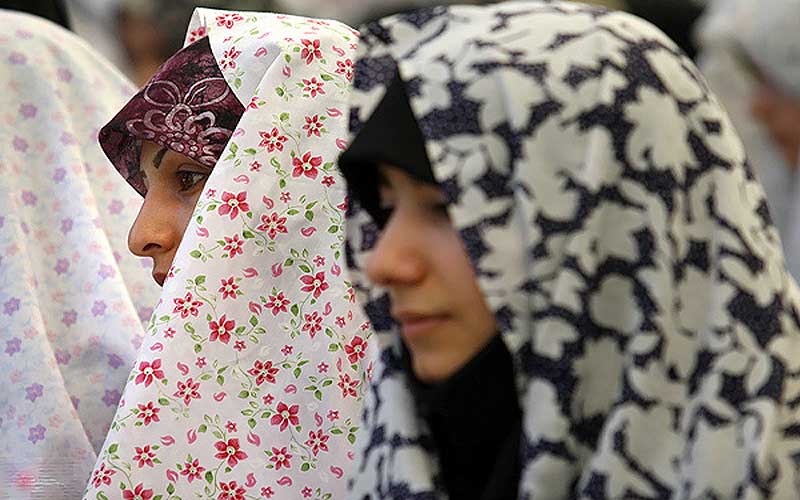
Answer 020: Setr (covering) is one of the Islamic Jurisprudence rules. In Islam, covering is not specialized for the women only and men have such special Islamic rules. Covering during praying is one of the rules in this matter. Perhaps the purpose of covering ourselves when praying is that the dignity and personality of a man requires him\her to show his\her respect for Allah (SWT) even there is no one in the room where praying can see him\her. Probably, we can conclude that the benefit of covering is at first observing this dignity and personality. The following are some reasons regarding why women must cover themselves when praying:

  1. According to all Muslims, in Islam every Islamic sects are unanimously agreed that a woman must have a particular covering.[1]
  2. Narrations: there has been narrated some traditions in which stated that a woman must have special covering during prayer as follows, so we can conclude that this is the one that scholars have been issuing such fatwa in this regards: [2]

  3. Imam Muhammad Baqir (as) has said: “A woman must offer her prayer on Khimar (scarf) and Dir’ in Arabic :

درعcloth like a shirt, called Dir’ (درع) which would cover from about the middle of their chest down to their knees or lower than the knees.) in case the dress is not thin”.[3] In Fiqhi term Khimar means something that a woman can cover her head and hair by. In the Holy Quran Allah (SWT) says: “And tell the faithful women to cast down their looks and to guard their private parts, and not to display their charms, except for what is outward, and let them draw their scarfs over their bosoms, and not display their charms except to their husbands, or their fathers, or their husband’s fathers, or their sons, or their husband’s sons, or their brothers, or their brothers” sons, or their sisters” sons, or their women, or their slave girls, or male dependents lacking] sexual [desire, or children uninitiated to woman’s parts. And let them not thump their feet to make known their hidden ornaments. Rally to Allah in repentance, O faithful, so that you may be felicitous”.[4]

  1. Ibn Abi Yafour has narrated from Imam Sadiq (as) as He said: “A woman must offer her prayer while she wore three kinds of clothes: Izar (the traditional long wide dress that envelope the body from head to toe, Dir’ and Khimar (scarf). There is no problem to cover her head and neck by Khimar. If she hasn’t these three clothes she must offer her prayer with two clothes. i.e. use one of the both as Izar (like skirt) and cover her lower part of body and the other as scarf (by which cover her head and the upper part of her body). I asked the Imam that what should the woman do if she has nothing but Dir’ and Malhafa (chador or bed sheet) and doesn’t have scarf? Imam has replied: No problem. She is supposed to use Chador in order to cover her body from head to toe.”[5]
  2. Zorara bin A’ayon has asked Imam Baqir (as): What is the minimum dress a woman can offer her prayer by? The Imam (as) has replied: “Dir’ and Malhafa (like Chador) in a way that covers all parts of her body.”[6]

Note: According to maraja, a woman is allowed to keep her face and hands uncovered in the presence of a non-Mahram man, provided that she does not fear of getting into a harãm act, that the exposure of her face and hand does not cause men to gaze at her in a forbidden way, and that it does not give rise to immorality in general. Otherwise, it is obligatory on her to conceal [her face and hands], even from those who are mahram to her. It is not permissible for a woman to expose the top part of her feet to a non-mahram onlooker. However, she is allowed to keep her feet —top as well as sole— exposed during salãt, if she is in a place where she is immune from the looks of a non-mahram person.[7]

[1] . Borojerdi, Hussain, Taqrir Bahth al-Sayyid al-Borojerdi, by: Ishtihardi, Sheikh Ali Panah, Vol. 1, Pg. 67, Office of Islamic Publication, Qom, 1416 A.H.

[2] . Refer to: Taqrir Bahth al-Sayyid al-Borojerdi, Vol. 1, Pg. 67.

[3] . Mahmood Abdul Rahman, Mojam al-Mustalihat wa al-Alfadh al-Fiqhiyah, Vol. 2, Pg. 79, Darel Fadilat, Cairo, 1407 A.H.

[4] . Surah al-Noor, verse 31.

[5] . Al-Kafi, Pg. 395 – 396. The Arabic version of this Hadith is follows: «مُحَمَّدُ بْنُ يَحْيَى عَنْ أَحْمَدَ بْنِ مُحَمَّدٍ عَنِ الْحُسَيْنِ بْنِ سَعِيدٍ عَنْ عُثْمَانَ بْنِ عِيسَى عَنِ ابْنِ مُسْكَانَ عَنِ ابْنِ أَبِي يَعْفُورٍ قَالَ قَالَ أَبُو عَبْدِ اللَّهِ ع تُصَلِّي الْمَرْأَةُ فِي ثَلَاثَةِ أَثْوَابٍ إِزَارٍ وَ دِرْعٍ وَ خِمَارٍ وَ لَا يَضُرُّهَا بِأَنْ تُقَنِّعَ بِالْخِمَارِ فَإِنْ لَمْ تَجِدْ فَثَوْبَيْنِ تَتَّزِر بِأَحَدِهِمَا وَ تُقَنِّعُ بِالْآخَرِ قُلْتُ فَإِنْ كَانَ دِرْعٌ وَ مِلْحَفَةٌ لَيْسَ عَلَيْهَا مِقْنَعَةٌ فَقَالَ لَا بَأْسَ إِذَا تَقَنَّعَتْ بِالْمِلْحَفَةِ فَإِنْ لَمْ تَكْفِهَا فَلْتَلْبَسْهَا طُولًا»

[6] . Sheikh Tusi, Tahzib al-Ahkam, researcher: Moosavi Khurasan, Hussain, Vol. 2, Pg. 217, Darel Kutubel Islamiyah, Tehran, fourth edition, 1407.

[7] . The official website of the office of Sayyid Sistani (ha), Women’s issues » General Rules.

post

The Daily Nafilah Prayers & Their due time

Question 018: I want to ask the basic problem of my Salat (Prayer). How many nafal and sunnat are in the 5 prayers. For example: If there are 2 rak’at of fajr but before offering fajr prayer I offer 2 rak’at nafal. What are all the rak’at with nawafil of 5 prayers? I need to know the timings of daily Nafilah prayers?

Answer 018: There are two kinds of Prayer: Obligatory (Wãjib) and Recommended (Mandüb).

The recommended prayers are innumerable. Among them are the daily supererogatory (Nafilah) prayers which are eight Rak’ats for Zuhr (noon), eight for Asr (after noon), four for Maghrib (Evening) and two Rak’ats for Ishã’ prayers, which are offered while sitting and are, therefore, counted as one Rak’at, and are called Vatirah, and their due time is extended with the extension of their principal prayer ( the Ishà’ prayer), and two Rak’ats for the morning (Fajr) prayer before the obligatory one, their due time being early dawn and is extended upto when the due time of morning prayer lasts until the appearance of the redness (or twilight). It is permissible to offer them with the midnight prayer (Tahajjud) before dawn even at the middle of the night. Rather, it is not far from being better to offer them some time after offering the midnight prayer after mid-night, but it is more cautious to offer both of them before the early dawn except by inserting them in the night prayer.

There are eleven Rak’ats of supererogatory for the night, of which eight Rak’ats are called (mid) night (Tahajjud) then two Rak’ats are called Shaf’ (or couple) and one Rak’at called Vitr (single) prayer which along with the Shaf’ prayer is the preferable prayer, while the two Rak’ats of Morning Prayer are even more preferable than both. It is permissible to confine oneself to Shaf’ and Vitr only; rather particularly to Vitr in case the time is too short, while in case otherwise, it may be offered with the hope (of being desirable to Allah).

The due time for the (mid) night (Tahajjud) prayer is from the mid-night to the actual dawn (Subh-I Sãdiq), while morning (Sahar) is preferable than any other time, the last one-third of the night being entirely morning (Sahar), while its preferable time is one close to the dawn (Fajr), and even more preferable than that is the early morning (Tafriq) as was the practice of the holy Prophet, Allah’s Blessing be on him and his Progeny.

Thus, the number of the supererogatory prayers (daily Nafilah prayers) after counting Vatirah as one Rak’at comes to thirty four Rak’ats, double of the (daily) obligatory prayers. Of these supererogatory Rak’ats, eight Rak’ats are dropped for Zuhr during a journey causing Qasr (reducing the number of Rak’ats of prayers), eight for Asr and the rest remain intact, while it is more cautious to offer the Vatirah with the intention of hope (of being desirable to Allah).

According to the stronger opinion, it is established that the Ghafilah prayer is recommended, though it is not among the daily supererogatory prayers. It has two Rak’ats which, according to the stronger opinion, is offered between the evening (Maghrib) prayers and the disappearance of the western twilight.

In the first Rak’at, after the Surah Al-Hamd (Chapter 1 of the Quran), one must recite (in Arabic): “When Dhu al-Nun went off in anger and deemed that We had no power over him, but he cried out in the darkness, saying: “There is no god but Thou. Be Thou glorified, and verily I was among the wrong-doers.” Then We accepted his prayer and saved him from the anguish. Thus we save the believers.” (Chapter 21, Verse 87)

In the second Rak’at, after the Surah Al-Hamd (Chapter 1 of the Qur’àn), one must recite (in Arabic): “And with Him are the keys of the Invisible. No one but He knows them. And He knows what is in the land and the sea. Not a leaf falls, but He knows it, there is not a grain in the darkness of the earth, nor anything fresh or dry except that it is (noted) in the true Book.” (Chapter 6, Verse 59).

After having finished it, one must raise both his hands, and say (in Arabic): “O Allah, ask Thee by the keys of the Invisible which no one knows but Thou to send Blessing on Muhammad and the Progeny of Muhammad, and do for me such and such”. (In the last sentence) must pray as one intends to do, and then must say, “O Allah, Thou art my benefactor and has power to grant my demand. Thou knowest my needs. So I ask in the name of Muhammad and the Progeny of Muhammad, Peace be upon him and them, (to grant me) what Thou hast decided for me.” Then he must ask Allah whatever one wants. God willing, it shall be bestowed upon him by Allah, the Exalted and Glorified.

It is permissible to offer the supererogatory prayers etc. in a sitting posture even when he is able to offer them in a standing posture, but it is better to count every two Rak’ats as one Rak’at even in case of Vitr, so that one must offer it twice, each time one Rak’at.[1]

[1] . Tahrir al-Wasilah of Imam Khomeini (ra), Vol. 1, Chapter on Preliminaries of Prayer; Tawdhihul-Masa’el (annotated by Sayyid Roohullah al-Moosavi al-Khomeini), vol. 1, pg. 425, issue 746. Muntahal-Amal, Imam Sajjad’s (as) life, using the Porseman software. Usul Kafi, vol. 2, pg. 352, hadith 7. Seyyid ibn Tawus, Iqbalul-A’mal, pg. 452. Tawdhilhul-Masa’el (Sayyid Roohullah al-Moosavi al- Khomeini’s annotations), vol. 1, pg. 426. Tawdhilhul-Masa’el (Sayyid Roohullah al-Moosavi al- Khomeini’s annotations), vol. 1, pp. 427-429.

post

Surah al-Hamd or Tasbihat in the third and fourth Rakaat of Prayers

Question 553: Asalam alaikum. Is it better to read sura fateha in the third and fourth rakat of salat or is it better to read subhanillahi alhamdolillahi walaillaha ilallah huwallahuakbar 3 times? Surah al-Hamd or tasbihat?

Answer 553: A person offering prayer is at liberty to recite Surat at-l-Hamd and Tasbihat: “Subhanallah, val hamdu lillah, va la illaha illallahu vallahu akbar” (in Arabic) in the third and fourth Rak’ats of obligatory prayers.

It is not far from being preferable for the Imam to recite the Surahs and for the followers to recite Tasbihat. But, for a person offering prayer individually, both are the same. Read More