post

Men and Women: Covering body in prayers

Question 594: Salam. I wonder what obligatory parts men and women need to cover when performing Salat?

Brief answer 594: While offering prayers, a man should cover his private parts even if no one is looking at him, and preference is that he should also cover his body from the navel up to the knee.

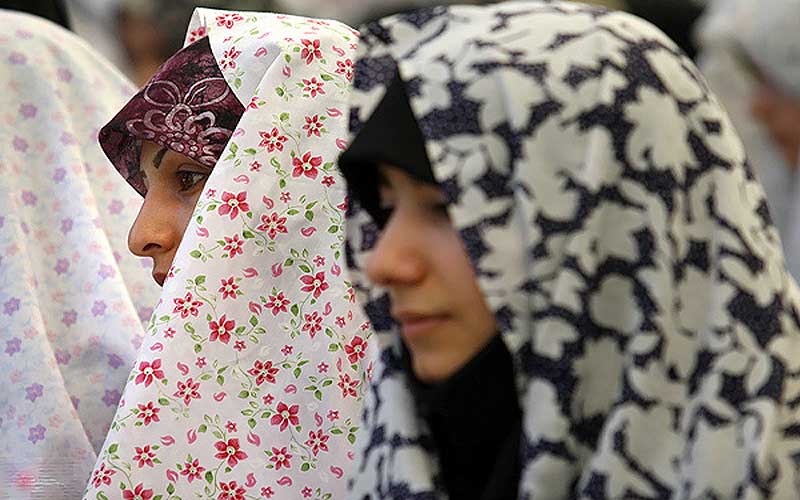
A woman should cover her entire body while offering prayers, including her head and hair. As a recommended precaution, she should also cover the soles of her feet. It is not necessary for her to cover that part of her face which is washed while performing Wudhu, or the hands up to the wrists, or the upper feet up to the ankles. Nevertheless, in order to ensure that she has covered the obligatory parts of her body adequately, she should also cover a part of the sides of her face as well as lower part of her wrists and the ankles.[1]

Detailed answer 594: In case of ability, it is obligatory to cover the private parts in prayer and its appurtenances like the Rak’at offered by way of caution, and according to the stronger opinion, the compensatory prayer for the forgotten portions, and according to the more cautious opinion, the two prostrations due to inattention, as also in the supererogatory prayers excluding the prayer of the dead, though, according to the more cautious opinion, also including it, while caution must not be given up during the performance of the circumambulation.

If the private part of a person becomes visible due to wind or negligence, or it was visible from the beginning of the prayer without the knowledge of the person offering praying, the prayer shall be valid. However, the person should cover it immediately, if he comes to realize about it during the prayer. It is more cautious to finish it, and start it anew.

The same rule applies in case he forgets in both cases.

The private parts of a man which are required to be covered and are forbidden to look at during prayer are the anus, the penis and both the testicles. It is more cautious to cover the indistinct figure of the private parts visible from behind the clothes without distinction of the color.

As regards the parts of a woman which are required to be covered during prayer, they include her entire body including even her head and hair excluding the part of her face which is required to be washed for ablution and both her hands upto the forearms and both feet upto the ankles. It is obligatory to cover a little of the parts mentioned as excluded from being covered.

It is obligatory on a woman to cover her neck and the lower part of her chin including even that much of it as can be seen after wrapping the scarf (khimãr).

A slave girl and small girl are treated at par with a free and adult woman, except that it is not obligatory on them to cover their head, hair or neck.

It is not obligatory to cover the private parts from below. Of course, if one is standing at the corner of the roof or net where a person may possibly pass and have a look at the private parts in case he looks up, then, according to the more cautious, rather stronger opinion, one should cover the private parts from below too, even if presently there is no person looking there.

In case, however, there is a net under which no person is expected to look from under as a.net on a well, then, according to the stronger opinion, it is not obligatory (cover the private parts from below), except when there is a person looking in the net.

The hiding from sight may be obtained through any means which may hide a thing from sight, including even a hand, coating with mud or dipping in water. Even both the hips are sufficient to cover the anus.

The hiding of the (private parts) in prayer is not sufficient by means of the things mentioned above, even in case of an emergency.

As regards covering (the private parts) by means of leaves, grass, cotton, and unwoven wool, according to the stronger opinion, it is permissible generally, though caution must not be given up in case of the first two.

According to the stronger opinion, if a person finds nothing to (cover his private parts), even grass or leaves, it is permissible for him to offer prayer, though it is more cautious for a person who finds something to coat with to add to his own condition the condition of one who could find something (to cover his private parts). [2]

When a person offers the forgotten Sajdah or tashahhud, he should cover himself in the same manner as in prayers, and the recommended precaution is that he should also cover himself at the time of offering Sajda-e-Sahv.

If while offering prayers, a person does not cover his private parts intentionally, or on account of not having cared to know the rule, his prayers is void.

If a person realizes while offering prayers, that his private parts are visible, he must immediately cover them, and it is not necessary for him to repeat the prayers. As a measure of precaution, he should not continue performing any part of the prayers, as long as the private parts are visible. If he learns after the completion of prayers that his private parts were visible, his prayers would be deemed valid.

If the dress of a person covers his private parts while he stands, but it may not cover them in another posture like in Ruku or Sajdah, his namaz will be valid if he manages to conceal them by some other means. However, the recommended precaution is that he should not pray in such dress.[3]

For further information in this regards, please read the following answers:

Index: Philosophy of Hijab during prayer, answer 020.

Index: The best place for a woman to pray is at home or mosque, answer 015.

[1] . The official website of the office of Sayyid Sistani (ha), Rules of Namaz » Covering the body in prayers, Q: 796-797.

[2] . Tahrir al-Wasilah of Imam Khomeini (ra), Vol. 1, Third Preliminary of Prayer: Permissible Garment of the Person Offering Prayer; Tawzih al-Masael of Maraja’ (annotated by Imam Khomeini), Vol. 1, Pgs. 441-445.

[3] . The official website of the office of Sayyid Sistani (ha), Rules of Namaz » Covering the body in prayers, Q: 798-801.

post

The Secret of Prayer / Sirr us-Salat

Question 589: Salaam. I want to ask what the reason behind the every act of Namaz? What is the Secret of Prayer (Sirr us-Salat)?

Answer 589: Without doubt every divine ruling has its philosophy and reason, but we do not have to investigate every ruling and find its philosophy. A true Muslim must surrender before the message of revelation. This character of submission and acceptance creates perfection in the human being and essentially some rulings are obliged upon mankind to test and gage his level of obedience and faith. God’s command to Ibrahim (A.S.), to sacrifice his child Ismail, is a fine paradigm.

What you will realize in this brief response is that every Islamic ruling and worshipping code in Islam has its philosophy.

Firstly: because of hundreds of Quranic verses and hadith which encourage people to think and ponder.[1]

Secondly: one of the strongest criticisms of the Quran against mushriks and idol worshipers is that they blindly and unreasonably follow their ancestors.[2]

Thirdly: the Quran itself has mentioned rulings along with their philosophy.[3]

The infallible imams have attended to disclosing these secrets in the traditions received from them and Muslim scholars have written books on these secrets and philosophies.

In light of these points one must add:

  1. It isn’t indispensible that all people in all times know of all of these philosophies.
  2. We must be aware not to solely perceive the philosophy of Islamic rulings as material and worldly benefits and simply focus on the financial, sanitarian, etc., facets and neglect the spiritual and moral effects.
  3. One who believes that God is wise and obliges his rulings upon mankind accordingly, should not look for reasons and explanations and rely on the wisdom of his lord. However, reasons and philosophies have been mentioned regarding prayer, some of its essentials (arkan), details and recitations such as intention (niyyat), tashahud, ruku’, sujud, salam, etc. Here, we will point out a few examples.

Prayer Prohibits Evil

The Quran says: Prayer prohibits from evil and vice.[4]

Prayer and Effacing Negligence

In another section we read: Keep up prayer for My remembrance.[5]

Prayer and Tranquility

It also reads: By Allah’s remembrance are the hearts set at rest.[6]

Battle Against Pride and Arrogance

Prayer, which is the remembrance of the source of every greatness and appeal to the center of power and greatness, eliminates self pride and arrogance. In other words, prayer shatters pride and arrogance; because one who prays seventeen raka’ts of prayer in a 24 hour time span and places his forehead on the ground in humbleness in every raka’t, perceives himself as a tiny creature before his lord and tears open apart the veil of being self-conceit. This is why, after faith, Imam Ali (A.S.) describes the first and most important worship with this same goal, to be prayer: Allah has obliged faith to cleanse man from uncertainty and prayer for cleansing him from arrogance.[7]

Developing the Habit of Punctuality and Organization

Prayer develops the habit of punctuality; because this ritual must be done in certain times and performing it earlier or postponing it will invalidate it. The same goes for other parts of the prayer such as, intention, qiyam, ruku’, sujud, qu’ud. etc., which facilitate the tendency to be punctual and organized in other aspects of life.

Remembrance of Resurrection

One who prays remembers the hereafter and its greatness when reciting “Master of the Day of Judgment”. It reminds him that there is a world other than this one which is the result and manifestation of our actions and deeds in this world.

Expressing Love to the Good and Disassociation and Aloofness from Evil

Expressing love to the good and disassociation and aloofness from evil is one of the philosophies of reciting the verses of the holy surah of Al-Hamd. One who prays and recites “ایاک نعبد و ایاک نستعین، اهدنا الصراط المستقیم صراط الذین انعمت علیهم”, is seeking the friendship and closeness of God Almighty, the Prophets, the right doers, martyrs and the righteous and moves to their side and by saying “غیر المغضوب علیهم و لاالضالین”, distances himself from the mislead and deviated.

In the end we must point out that: the reason for the obligation of prayer is the remembrance of and admitting to Allah being our lord, battling with shirk and idol worshipping, standing before Allah in humbleness, admitting to our sins and asking for forgiveness and placing the forehead before Allah and His glory. Some of the other main reasons for praying are to be constantly aware, not allow negligence to takeover, become proud of oneself and self-conceit, humbleness and for our blessings to blossom.[8]

These were some of the Quranic verses and ahadith which unveil some of the secrets and philosophies of prayer.

Before concluding it is necessary point out that numerous books and articles have been written about the secrets and philosophies of prayer by different authors and Shiite scholars.[9]

Sources for further research:

Ilal al-Sharaye’, Sheikh Saduq

Sirr al-Salah and Ādāb al-Salah, Imam Khomeini

A Glimpse at the Philosophy of Prayer, Mohsen Qara’ati

For further information on this issue, please refer to the following sources:

The Secret of Prayer, Sirr us-Salat, by Imam Khomeini (ra). (PDF version)

Ilal al-Sharaye’, Sheikh Saduq

A Glimpse at the Philosophy of Prayer, Mohsen Qara’ati

[1] Nahl:44; Aal Imran:191.

[2] A’raf:173.

[3] Ankabut:45; Baqarah:183.

[4] Ankabut:45.

[5] Taha:14.

[6] Ra’d:24.

[7] Nahjul-Balaghah, saying 252. “وَ قَالَ (ع) فَرَضَ اللَّهُ الْإِيمَانَ تَطْهِيراً مِنَ الشِّرْكِ وَ الصَّلَاةَ تَنْزِيهاً عَنِ الْكِبْر”.

[8] Sheikh Saduq, Man la Yahduruhu al-Faqih, vol. 1, pg. 214, Jame’eye Mudarresin, Qum, second edition, 1404 AH; Sheikh Saduq, Ilal al-Sharaye’, vol. 2, pg. 317, Davari, Qum, first edition, “إنّ علة الصلاة أنها إقرار بالرّبوبية للّه عزّ و جلّ، و خلع الأنداد و قيام بين يدي الجبّار جلّ جلاله بالذّلة و المسكنة و الخضوع و الاعتراف، و الطّلب للإقالة من سالف الذّنوب، و وضع الوجه على الأرض كلّ يوم إعظاما للّه جلّ جلاله و أن يكون ذاكرا غير ناس و لا بطر.و يكون خاشعا متذلّلا راغبا طالبا للزيادة في الدّين و الدنيا مع ما فيه من الإيجاب، و المداومة على ذكر اللّه عزّ و جل باللّيل و النهار و لئلّا ينسى العبد سيّده و مدبّره و خالقه، فيبطر و يطغى و يكون ذلك في ذكره لربّه عزّ و جلّ، و قيامه بين يدي”.

[9] . Adopted from answer 13873 IQ.

post

Rules Concerning Eid al-Fitr and Eid al-Adhã Prayers

Question 143: Why is the Eid prayer led by one person and the Eid qunut dua led by another person?

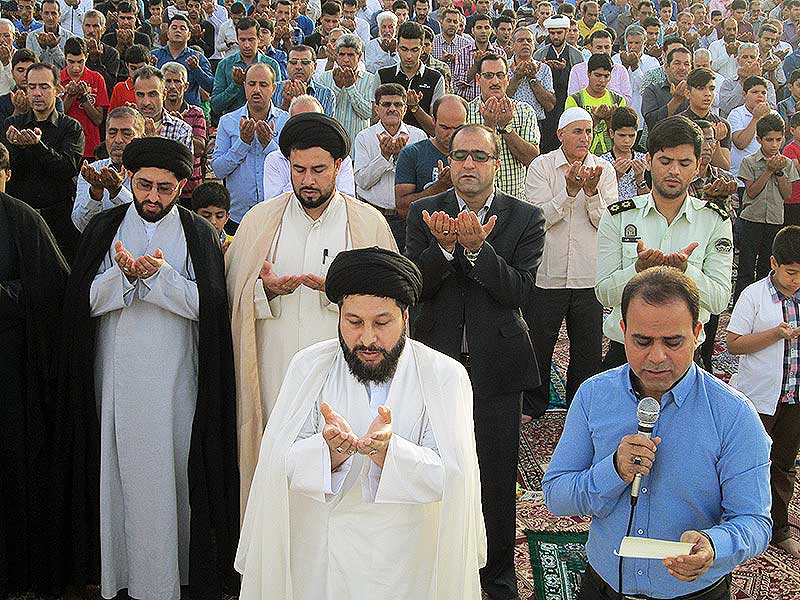
Answer 143: The Prayers for Eid al-Fitr and Eid al-Adha are obligatory during the presence of the Imam, Peace be upon him, and when he has complete freedom of action as well as the fulfillment of other required conditions, but they are approved during the Occultation (Ghaibat) of the Imam, and it is more cautious to offer them individually during the Period of Occultation of the Imam. There is, however, no objection in offering them with Jamã’at with the hope (that it shall be desirable to Allah), and not with intention that it has come down in the Shari’at The time for offering these two prayers is from the rising of the sun to noon. It does not become due if not offered.

They consist of two Rak’ats, in each of the Rak’ats one must recite the Sürat al-Hamd (Chapter 1 of the Quran) and some other Surah of the Quran. It is, however, preferable to recite Surat al-Shams (Chapter 91 of the Quran) in the first Rak’at and Surat aI-Ghãshiyah (Chapter 88 of the Quran) in the second Rak’at, or Surat al-A’la (Chapter 87 of the Quran) in the first Rak’at and Surat al-Shams in the second Rakat. After the recitation of the Surah from the Quran in the first Rak’at, one must recite five Takbirs and five Qunuts, one Qunut being after each Takbir, and in the second Rak’at four Takbirs and four Qunuts, one Qunut being after each Takbir.

In the Qunüt, it is permissible to recite any Dhikr or Du’ã’ like other prayers, and if one recites what is usual, there is no harm; rather, it would be approved, and that is as follows (in Arabic): “Allãhummã ahlal kibriyã’i val ‘azamati va ahlal judi val jabarut va ahlal ‘afwi var rahmah va ahlat taqwâ val maghfirah As’aluka bihaqqi hadhal yowmi ladhi ja ‘altahu lil Musilmeena Eidä va lil Muhammadin sallallãhu alaihi va àlihee dhukhran vasharafan va karãmatan va mazeeda an tusalli ‘alã Muhammadin va Al-i Muhammad va an tudkhilani fi kulli khairin adkhalta feehi Muhammadan va Al-a Muhammad va an tukhrijani min kulli su’in akhrajta minhu Muhammadan va Al-a Muhammad Salawàtuka ‘alaihi va ‘alaihim Allãhummã as’aluka khaira ma sa’laka bihi ‘ibãdukas Salihun va ‘audhu bika mimmasta’ãdha minhu ‘ibãdukal mukhlisun”.

Its English translation is as follows: “O Allah, Possessor of Majesty and Greatness, Possessor of Generosity and Almightiness, Possessor of Forgiveness and Mercy, Possessor of Protection and Pardon, I ask Thee, for the sake of this Day which Thou hast set for Muslims a Day of Rejoicing, and for Muhammad, Blessing be on him and his Progeny, (a source of) treasure, honour, dignity and even more, to send Blessing to Muhammad and his Progeny, and to enter me (or my name) in every good deed, Thou hast entered in it (the names of) Muhammad and Muhammad’s Progeny, and remove me (or my name) from every evil, Thou hast removed from it (the names of) Muhammad and Muhammad’s Progeny, Thy Blessing be on him and them. O Allah, I ask Thee for every good thing asked for by Thy pious Devotees, and seek of Thee for the refuge sought for by Thy pure Devotees.”

If a group of people offers these two prayers with Jamã’at with the intention of hope (that it would be desirable to Allah), the Imam shall deliver two Sermons after offering them with the intention of hope (that it would be desirable to Allah). It is permissible to give up both these prayers during the

Period of Occultation (of the Twelfth Imam). (When these prayers are offered), it is permissible to recite the words loudly by the Imam (when offered with Jamãat), or by the individual (when offered individually). It is also approved to raise the hands at the time of reciting the Takbirs, and offer it in large open spaces excepting Mecca. It is disapproved to offer these prayers under a roof.

Like all other Jama’ats, the Imam is not responsible in these prayers for anything except recitation.

If a person doubts about the number of the Takbirs or Qunuts (in these prayers), and the doubt occurs in its proper place (of compensation), he shall decide in favour of the minimum.

If a person does something entailing the performance of the prostration for error, it is more cautious to perform the prostration for error with the intention of hope (that it would be desirable to Allah), though its non-obligation, when the prayer be considered to be approved, (and not obligatory), is not devoid of force. The same is the case with the compensation for a forgotten Tashahhud or prostration

In the prayers for Eid al-Fitr and Eid al-Adhà, there is neither a call for prayer (Adhãn), nor a call for standing for prayer (Iqamah). Of course, it is approved for the Muadhdhin (one who calls for prayer) to call (loudly) three times: ‘Assalat’ (i.e., The prayer is ready).[1]

According to an obligatory precaution, it is said that two sermons (khutbas) be delivered after Eid prayer (in regards to the Jummah prayer, another difference is that the khutbah is delivered before prayer and with Eid prayer the khutbah is delivered after the prayer), and it is better the sermons should explain rules regarding Zakatul Fitr.

– If you are going to offer it individually, you must recite the whole Dhikrs by yourself.

– If you want to offer it in congregation, some of its Dhikrs are recited by the Imam and others by you and the Imam simultaneously.

– When the Imam of prayer is reciting Surah al-Hamd and al-Ikhlas (or al-A’la) others just listen and don’t recite these Surahs by themselves.

– Other Dhikrs such as Takbirs, dua in Qunut, Ruku, Sujood and Tashahhod are being recited by the Imam of Prayer and all Mamomeen altogether.

– Since this prayer comes only once a year, there is often difficulties about how to offer this prayer and recite the dua in Qunut. So, a mukabbir (one who pronounces takbir) is usually recite this dua in order to help others recite this dua correctly. However, the Imam of prayer and all Mamoneen are reciting it by themselves.[2]

For further information in this regards, please refer to the following answer:

Index: Zakat of Fitrah, Zakãt al-Abdan (or Zakãt of Bodies), answer 045.

Index: Zakat and difference between Sayyid and non-Sayyid holms, answer 040.

[1] . Tahrir al-Wasiah of Imam Khomeini, Vol. 1, Rules Concerning Eid al-Fitr and Eid al-Adhã Prayers.

[2] . Tawzih al-Masail (without annotation), Roohollah al-Moosavi al-Khomeini, Vol. 1, Pgs. 824 & 825 question 1516, 1519 & 1520.

post

Reciting Dua or Dikr in any language during the Prayer

Question 579: Hi. I have heard that Muslim can make Dua during Sajdah in his own language while praying. Is this true?

In which position that Dua would be recited. Will it be while saying Subhana rabbi al awla in Sajdah?

Answer 579: The followings are the answers of our maraja’ regarding this issue:

Imam Khomeini (ra), Ayatollah Araki (ra) Ayatollah Noori Hamedani:

There would be no problem to recite dua in any language other than Arabic while praying.[1]

Ayatollah Bahjat (ra):

Reciting dua or dikr in any language which is specialized for the person offering prayer is permissible, though it is against the precaution.[2]

Ayatollah Tabrizi (ra), Khoei, Shobairi Zanjani, Safi, Golpayegani and Vahid Khorasani:

There would be no problem to recite dua while praying, however you are supposed not to recite it in other than Arabic langage, according to a recommended precaution.[3]

Ayatollah Khamenei:

There is no problem to recite dua in any language during the prayer.[4]

Ayatollah Sistani:

Reciting Dua during the prayers is permissible. However, the recommended precaution is that one should not read Duas in any language other than Arabic.[5]

Ayatollah Fazel Lankarani (ra):

Reciting dua during the prayer is permissible, however it should be recited in Atabic language, according to an obligatory precaution.[6]

Ayatollah Makarem:

It is impermissible to recite dua in any language other than Arabic.[7]

Note: It is obligatory to recite Dhikr in prostration as mentioned under Rukü’, the major Tasbih here being: Subhana rabbiyal a’lã va bi hamdihi.[8]

It is mustahab to recite dua in the last sajdah of the prayer. In this regards, Imam Ali (as) says: It is not necessary to recite Surah al-Hamd and Ikhlas in Ruku and Sajdah. You are recommended to at first praise Allah, the Almighty and then make dua.[9]

The followings are duas we are recommended to recite. Although, they haven’t exactly mentioned in traditions, but there are some traditions that are related to these duas.

. Ya Latif irham ‘abdika al dhaeef al-Zaleel.[10]

. Ya Wali ul Aafeeya, As’aluka al-Afyiah, Aafyit al-Dunya wal Akhirah.[11]

For further information in this regards, please read the following answer:

Index: Number of things which invalidate the prayer.

Index:  Perform our prayers in Arabic language, answer 010.

[1] . Tawzih al-Masael, Pg. 154, q. 1135; ibid, Pg. 207, q. 1137; Ibid, Pg. 231, issue. 1136.

[2] . Istiftaat, Vol. 2, Pg. 151, q. 2029.

[3] . Tawzih al-Masael, Pg. 176, q. 1144; Ibid, Pg. 197, issue. 1144; Ibid, Vol. 1, Pg. 270, issue. 1144; Ibid, Pg. 229, issue. 1144; Ibid, Pg. 199, issue. 1144; Ibid, Pg. 408, issue. 1144.

[4] . New Istiftaat, N. 1, Pg. 16, code: 32304.

[5] . Tawzih al-Masael of Maraja, Pg. 232, issue. 1122; The official website of the office of Sayyid Sistani, rules concerning Things which invalidate prayers » Introduction.

[6] . Tawzih al-Masael, Pg. 192, issue. 1154.

[7] . Tawzih al-Masael, Pg. 193, issue. 1016.

[8] . Tahrir al-Wasilah of Imam Khomeini, Vol. 1, Rules Concerning Sajdah (Prostration).

[9] . Wasael al-Shia, Vol. 6, Pg. 310.

[10] . Sheikh Sadouq, Man la Yahduruhul Faqih, researcher and editor: Ghafari, Ali Akbar, Vol. 2, Pg. 165; Sayyid bin Tawus, Radi al-Din Ali, al-Iqbal bil Aamal al-Hasanah, researcher and editor: Qayoumi Esfahani, Javad, Vol. 1, Pg. 395.

[11] . Sheikh Sadouq, Oyoun Akhbar al-Rida (as), researcher and editor: Lajvardi, Mahdi, Vol. 2, Pg. 16; al-Iqbal bil Aamal al-Hasanah, Vol. 3, Pg. 39.

post

Essential Requirements of a Successful Marriage in Islam

Question 515: Please say that it is a hadith is Islam that you should get you daughter married in a house financially stronger and wealthier than you is that true? What are the Essential Requirements for having a Successful Marriage in Islam?

Brief Answer 515: There is a hadith narrated from the Holy Prophet (PBUH) in which He has said: If one gets married to a woman for her property Allah would leave him to her property, if one gets married for her beauty he would see an unpleasant thing inside of his wife and if one gets married to a woman for her religion Allah, the Almighty would collect all of the values (such as property, beauty and etc.) for him.

Some of the important teachings concerning marriage which must be taken into consideration are: ethical and moral adherence of the boy and girl, honesty and truthfulness, genealogical originality and equality of the boy and girl in terms of their cultural, financial, family, scientific and religious status.

Detailed Answer 515: Marriage is one of the beauties of creation and a tradition of all nations and peoples of the world. Islam also attaches great importance to it; it has been looked at from different angles and aspects in a way such that it is considered to be irreplaceable with anything. The conducts and practice of the imams and noble servants of God who have the highest degree of knowledge about Islam well endorse the above. Imam Baqir (a.s.) narrated from the Holy Prophet of Islam as having said: “There has not been created any institution in Islam which is more favored and dearer to Allah than marriage.[1]

The Commander of Faithful, Imam Ali (a.s) said: “Engage in marriage; because this is the tradition of the Prophet of Allah (pbuh).”[2]

The Prophet of Islam and all of the Imams have laid so much emphasis on the institution of marriage that it has been considered to be equal to safeguarding half of one’s religion. The Prophet of Islam, peace be upon him and his family, stated: “Whoever gets married has safeguarded half of his religion.”[3] That is to say, marriage causes a believer’s personality to reach a stage where he safeguards half of his faith. Imam Sadiq (a.s) stated: “Two Rak’ats (units) of a married person’s Salat (prayer) are better than seventy Rak’ats offered by a bachelor.”[4]

All this emphasis implies the extra-ordinary importance attached by Islam to marriage and formation of family. It is a structure in which the first nucleus of a healthy and divine society comes into being. Islam not only attaches importance to marriage itself but also to the way it is formed and continued.[5]

Islam has presented highly valuable guidelines and models for us, and it has explained the characteristics and features of a good spouse and a healthy marriage as shall be enumerated below:

  1. Having real faith and adherence to Islamic moral codes: Such a person, being in communion with God, is reliable. On the other hand, a young man who is not abiding by such principles is not likely to remain faithful to his commitments. Imam Reza (a.s) said: “If a man seeks your hand for marriage and you are happy with his religiosity and moral characteristics, give consent for marriage with him. Do not reject him because of his poverty.”[6]
  1. Having good moral characteristics which cause the parties to the marriage to be happy and have a prosperous family life. It is said in the traditions that a bad spouse leads a person into pre-mature old age.
  2. Honesty and truthfulness: If a man gives promises while seeking a woman’s hand for marriage but he does not remain committed, there would be no trust in their lives.
  3. Genealogical originality: The Holy Prophet of Islam (pbuh) said: “Keep away from the grass that grows on dirt i.e. a beautiful woman in a bad family. The Holy Quran says: He created mates for you from yourselves that you may find rest in them. According to the verse, the women are a source of comfort and good for men.
  4. Avoiding heavy dowry: The Holy Prophet (pbuh) says: “The best women of my Ummat (nation) are those who are beautiful in face and less in dowry.”[7]
  5. Cultural, financial, family, scientific and religious equality of man and woman: If a girl is not of equal status to man especially culturally, it will lead to serious problems in the couple’s lives. One should try, as far as he can, to marry someone who is considered to be his/her equal. It is only a faithful Muslim who is the equal of another faithful Muslim. The Holy Prophet said: ““If one with whose religion and character you are pleased comes to you (to seek your daughter’s hand in marriage), then marry (your daughter) to him.”[8]

There is a hadith narrated from the Holy Prophet (PBUH) in which He has said: If one gets married to a woman for her property Allah would leave him to her property, if one gets married for her beauty he would see an unpleasant thing inside of his wife and if one gets married to a woman for her religion Allah, the Almighty would collect all of the values (such as property, beauty and etc.) for him. [9]

Conclusion: There is no authentic hadith saying that you are recommended to marry your daughter to one who is wealthier than you or your daughter, whereas the both man and woman who want to get married to each other are supposed to be equal in cultural, financial, family, scientific and religious affairs as well as considering the other important teachings concerning marriage. On the other hand, we can see the marriage of Imam Ali (as) and Lady Fatimah Zahra (sa), the Holy Prophet (PBUH) and Lady Khadijah (sa) and the other Imams (pbuth) in order to make sure how they got married!

[1] – Ameli, Shaykh Hurr, Wasail al-Shi’ah,  vol.20, pg.13, Aalulbayt (a.s.) Publications.

[2] – Ibid, pg.15.

[3] – Ibid, pg.17.

[4] – Wasail al-Shia, vol.20, pg.20. رَكْعَتَانِ يُصَلِّيهِمَا الْمُتَزَوِّجُ أَفْضَلُ مِنْ سَبْعِينَ رَكْعَةً يُصَلِّيهَا غَيْرُ مُتَزَوِّجٍ

[5] – Question 2478 (site:2619), index: Abandoning Marriage

[6] – Rayshahri, Muhammad, Mizanul Hikmah, vo.4, pg.280, Darul Hadith Publication.

[7] – Question 1300 (site: 1283), Index: The Philosophy of Marriage in Islam

[8] – Nahjul Fasahah, pg. 37, hadith No.193.

[9] . Man La Yahdhuruhul Faqih, Vol. 3, Pg. 251; Wasael al-Shia, Vol. 20, Pg. 51, H 25008.

post

Fasting and prayers of a traveler who travel after Zuhr

Question 384: Salam Alaikum! There is someone who lives in Stockholm and they work there too. But they decided during The Month Of Ramadhan to live outside the city, which that city is 50 km aways from Stockholm .But I know they can fast if they travel after Salat Aldhur ; here is the question, will the traveler’s Salat be Qasar or tamam?

My Marja: Ayatollah Al-Udhma Sayed Ali Al-Sistani

Answer 384: If they travel after Dhuhr (noon) their fast is treated as valid. If they have decided to stay in that city for 10 days they would have to offer their prayers tamam and fast till they are there for 10 days. Otherwise, they should offer their prayers Qasr and not to fast other days in this state.

According to Sayyid Sistani (ha), if a fasting person travels after Zuhr, he should, as a precaution, complete his fast. If he travels before Zuhr and had an intention from the previous night to do so, he cannot fast on that day. As a precaution, he cannot fast on that day even if he had no intention to travel from the previous night. In both the cases, he cannot break the fast till he has reached the limit of Tarakkhus. If he does, he will be liable to give Kaffarah.

If a traveller in the month of Ramadhan, regardless of whether he was travelling before Fajr, or was fasting and then undertook the journey, reaches his hometown before Zuhr or a place where he intends to stay for ten days, and if has not committed an act which invalidates a fast, he should fast on that day. But if he has committed such an act, it is not obligatory on him to fast on that day.

If after covering a distance which would add up to make 8 farsakh on return, the traveller abandons the journey, and if he decides to remain at that place, or to return after 10 days, or is undecided about returning or staying there, he should offer full prayers.

If a person abandons the journey after reaching a distance which would add up to make 8 farsakh on return, and decides to return, he should offer shortened prayers even if he wants to stay there for less than 10 days.

For the shar’i distance needed to travel in order for one’s prayer to become shortened, the fuqaha (Jurisprudents) have various rulings. Some say the distance necessary is approximately 22.5 kilometers.[1] Others say that the distance is approximately 21.5 kilometers.[2] Another group says that it is approximately 22 kilometers.[3]

A Farsakh is equal to three miles, while a mile is equal to four thousand cubits, whose length is equal to the breadth of twenty four fingers, and each finger is equal to the width of seven grains of barley, and each barley is equal to the breadth of seven average hair of a Turkish horse (or a pony). If the distance is less than that, even if to a minimal extent, the person on journey shall offer unreduced prayer.[4]

Note: A traveler for whom it is obligatory to shorten a four Rak’ats prayers to two Rak’ats, should not fast. However, a traveler who offers full prayers, like, a person who is a traveler by profession or who goes on a journey for a haram purpose, should fast while travelling.[5]

[1] Imam Khomeini, Ayatullahs Bahjat, Khamenei, Fadhil Lankarani, Safi and Nouri. Tawdhihul-Masa’el (of Marja’s), vol. 1, issue 1272.

[2] Makarem Shirazi, Tawzihul-Masa’el (of Maraji’), vol. 1, pg. 684.

[3] Tabrizi, Sistani and Vahid Khorasani, Minhajul-Salehin, issue 884.

[4] . The Official Website of Sayyid Sistani (ha), Prayers of a traveller » Prayers of a traveller (Musafir) & Fasting by a traveler; Tahrir al-Wasila of Imam Khomeini (ra), Vol. 1, Chapter on a Traveler’s Prayers and its Relevant Rules.

[5] . The official website of the office of Sayyid Sistani (ha), Fasting » Fasting by a traveller.

post

Doubts (shakk) during prayer whether wudu was performed or not

Question 036: If one gets Doubts (shakk) during the salah that wudu was not taken, should one break the salah to perform wudu?
Answer 036: If a person doubts during prayer (namaz) whether he has performed wuhu or not, his prayers is void, and he must perform wudhu and then pray. If a person is sure that he has performed wudu but doubts whether he has committed an act which invalidates it or not his wudu would be considered as valid.

If a person doubts whether his Wudhu has become void, he should treat it as valid. But, if he did not perform Istibra after urinating, and performed Wudhu, and thereafter some fluid was discharged about which he was not sure whether it was urine or something else, his Wudhu will be void.

If a person doubts whether he has performed Wudhu or not, he should perform Wudhu.

If a person is sure that he has performed Wudhu, and has also committed an act which invalidates Wudhu (e.g. urinating), but does not remember which happened first, he should act as follows: If this situation arises before his Namaz, he should perform Wudhu. If it arises during Namaz, he should break it and perform Wudhu. If it arises after Namaz, that Namaz will be valid, but for the next prayers, however, he should perform Wudhu.[1]

[1]. Tawzih al-Masael of maraja (with annotation), Sayyid Roohullah al-Moosavi al-Khomeini, Vol. 1, Pg. 179, question 301, eighth edition, 1424 A.H. http://www.sistani.org/english/book/48/2157/;  The Official Website of the Office of Sayyid Sistani, Rules regarding Wudhu.

post

Impermissibility of making Wudu after Ghusl

Question 035: Is it obligatory to make wudu after ghusl in order to offer prayers?

Answer 035: Grand Ayatollahs Imam Khomeini, Bahjat, Khamenei and Saafi: One who has performed jinabat ghusl mustn’t perform wudu in order to offer his prayers, but one must perform wudu after he has performed another obligatory or mustahab ghusl.
Ayatollah Fazel: One who has performed jinabat ghusl mustn’t perform wudu if he wants to offer his prayers. If one has performed other obligatory ghusl, except medium Istihadah ghusl, then one would be able to offer his\her prayers without wudu, although it is better to perform wudu as well.

Grand Ayatollahs Khoei, Tabrizi, Sistani, Noori, Zanjani and Vahid: One who has performed jinabat ghusl mustn’t perform wudu in order to offer prayers. If one has performed other mustahab and obligatory ghusl except medium Istihadah ghusl, one would be able to offer his\her prayers without wudu, although one is supposed to perform wudu as well, according to a recommended (mustahab) precaution.

Ayatollah Makarem: One is allowed to offer his prayer by any obligatory and mustahab ghusl such as jinabat or other one, but, according to a recommended precaution, one should perform wudu if he has performed other ghusl but jinabat.

In Conclusion: One has to perform wudu if he\she wants to offer his\her prayers, however he has performed a mustahab ghusl, according to the fatwa of grand Ayatollahs Imam Khomeini, Bahjat, Khamenei, Safi Golpayegani and Fazel Lankarani.

However, according to the fatwa of grand Ayatollahs Khoei, Tabrizi, Sistani, Makarem, Noori, Zanjani and Vahid, one is allowed to offer his prayer by mustahab ghusl, however, according to a recommended precaution, one is supposed to perform wudu if he has performed mustahab ghusl.

Sayyid Sistani (ha) says: A person who does Ghusl of Janabat should not do Wudhu for the prayers. In fact one can offer prayers without performing Wudhu after all Wajib Ghusls (except the bath for medium istihaza) as well as after Mustahab Ghusls. In the case of Mustahab Ghusls, however, it is better to do Wudhu as a recommended precaution.[1]

[1] . Tawzih al-Masael of maraja’, issues 391 & 646; Tawzih al-Masael, Ayatollah Wahid, rule 397; Ayatollah Noori, rules 392 & 647.

post

Rules of prayers and fasting performed without ghusl

Question 034: I used to masturbate, for the past few years, without knowing it was haram and that it voids the prayers and the fasts. I didn’t take the ghusl (ritual bath) and was fasting and praying in this impure state. Today I understand my mistake, but I don’t remember how many times I did it, nor how many fast/prayers it concerns. I’m 14 years old, and I don’t know which rules apply to me in order to pay the Qadha, as I didn’t know it was haram. I think I’ve missed at least three months of fasts. What’s the rule for someone who ignored that masturbation was illicit? I follow Ayatullah Khamenei.

Answer 034: Undoubtedly, one must make qada, as all the fasting and prayers have been done in the state of Janabat, according to Ayatollah Khomeini, Bahjat, Tabrizi, Khamenei, Makarem, Vahid and Sobhani.[1] If he\she knew that, his\her prayer and fasting in this state is regarded as invalid. What should one do if the one didn’t know the rule concerning this issue nor knew that performing ghusl is required for doing such acts?

Remember, to act based on your own marja’ ruling. Here are some of the answers of our contemporary scholars concerning this issue, as follows:

According to Imam Khomeini (May his soul rest in peace), who had replied to the question: What is the ruling on a woman who ignorantly didn’t know the rules concerning womens ihtilam and then she has done her worships without ghusl? He replied as follows: If they weren’t sure that they have become polluted, (jonob) there would be no need to compensate those prayers that have been offered in that state, however in any case, her fasting were considered as valid.

According to Ayatollah Khamenei, one must make qada for those of her prayers that have been offered in the state of janabat, but her fasting is considered as valid and doesn’t need to compensate it if she didn’t know the rules concerning the janabat itself.
According to Ayatollah Bahjat, one who doesn’t know that janabat ghusl is obligatory, his\her prayers that have been offered in that state are void and must compensate them.
Ayatollah Makarem has said, as long as the woman has performed hayd ghusl (as it is sufficient by which she doesn’t need to perform janabat ghusl), those of her prayers and fasting that have been done after the ghusl, are treated as valid. Those prayers that have been offered before performing ghusl and in the state of janabat are void and must be compensated. One who has become polluted by doing haram act is able to perform his\her ghusl by hot water.

According to Ayatollah Sistani, Safi Golpayegani and Fazel (ha): if you didn’t neglect learning Islamic laws your fasts have been done in this state would be in order, but you must perform Ghusl and fulfill the qaza of your prayers.[2]

Ayatollah Noori, Your fast is in order, but you have to qadha all your prayers offered in the state of Janabat.[3]

Note: Self-satisfaction which is referred to as masturbation or Istimna’ is a major sin and haram and has a heavy punishment.

In the Holy Quran Allah (SWT) says: “Say [that Allah declares,] ” O My servants who have committed excesses against their own souls, do not despair of the mercy of Allah. Indeed Allah will forgive all sins. Indeed He is the All-forgiving, the All-merciful.”[4]

[1] . Ayatollah Tabrizi, Serat al-Najat, Vol. 1, Q 107; Minhaj al-Salehin, Vol. 1, after rule 1004;  Ayatollah Wahid, Minhaj al-Salehin, Vol. 2, after rule 1004;  Sitiftaat, Vol. 1, Fasting, Q 31, Ayatollah Khamenei, Q 194.

[2] . Ayatollah Sistani, Minhaj al-Salehin, Vol, after rule 1004;  Ayatollah Fazel, Jame al-Masael, Vol. 1, Q 558.

[3] . Ayatollah Noori, Istiftaat, Vol. 2, Q 96.

[4] . Surah al-Zumar, verse 53.

post

Offering Qada Prayer if you forget to clean the dress carelessly

Question 033: I had wudu before suhoor yesterday and then I ate. After eating, my stomach was hurting so I went to the toilet and I saw light brownish marks from feces on my underwear. There wasn’t any actual feces on it, but just a faint mark. I wanted to clean it but I forgot and ended up doing wudu and praying Fajr. I only remembered when I was going to bed. I wasn’t sure whether I have to make up this prayer or not. In the morning, when I woke up, my menses started. What is the rule of Offering Qada Prayer?

Answer 033: If you were sure that the light brownish mark was from the feces and forgot to clean it, you have to make your Fajr prayer up (Qada). However, there wasn’t any actual feces on your underwear!

Otherwise, if you were not sure whether it was from feces and Najas or not your prayer is treated as valid.[1]

In Minhaj Ul Saliheen, Grand Ayatollah Sistani (ha) said, “According to an obligatory precaution, if it was due to carelessness, his prayer is treated as invalid whether he remembered after prayer or during prayer. Otherwise, if it wasn’t due to carelessness his prayer is valid.[2]

[1] . Tawzih al-Masaiel of Maraja’, Vol. 1, Pg. 85, Question 121;Ibid, Pg. 87, Question 123.

[2] . Minhaj al-Saliheen, Vol. 1, Pg.144, Question 422 & 426.